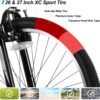
Description
Review of the HILAND 26 Inch Mountain Bike with 21 Speeds
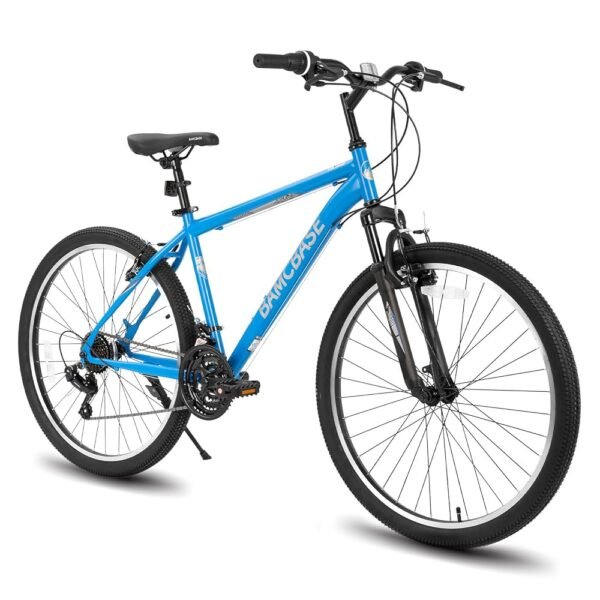
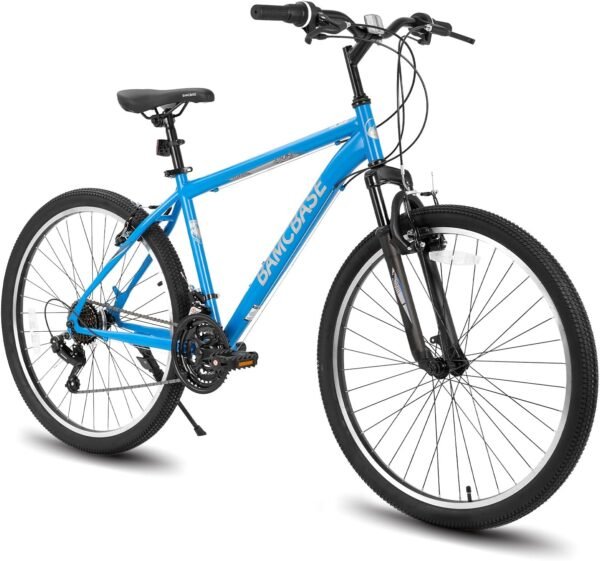
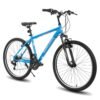
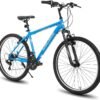
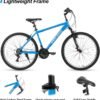
The HILAND mountain bike covered here is a hardtail built on a steel frame, sold with a 21 speed drivetrain, a suspension fork at the front and rim brakes at both wheels. It is aimed at adult riders who want a conventional mountain bike shape for paved paths, gravel and light trail use rather than anything technical. Everything below is drawn from the manufacturer listing and the specification block attached to it. No unit has been ridden or handled for this write up, and where the supplied data disagrees with itself, that disagreement is described rather than quietly resolved.
What the Listing Specifies
HILAND gives the frame as steel, the drivetrain as 21 speed, and the braking as V brakes acting on the wheel rims. The fork is described as a suspension unit, which is consistent with the hardtail description in the product title, meaning there is movement at the front and none at the rear. Assembly tools are listed among the included components. The bike is described as unisex and adult, and the manufacturer sells the same design in more than one wheel size.
The Size Question, Which the Listing Does Not Settle
This is the first thing a buyer needs to resolve, and the supplied data does not resolve it. The product title on this page says 26 inch. The manufacturer listing title covers three sizes at once, reading 26, 27.5 and 29 inch, because HILAND sells the same design across that range under a single listing. The specification block attached to this item then gives the model name as a 29 inch mountain bike and records the size field as 29. The reference code embedded in the listing address contains 26.
So the data supplied with this item points at both 26 inch and 29 inch wheels, and there is no way to tell from the listing text alone which one a given order will produce. That is not a small discrepancy. A 26 inch and a 29 inch wheel change the standover height, the reach, the rolling behavior over obstacles and the acceleration, and they are not interchangeable for a rider anywhere near the edge of either size range. The wheel size should be confirmed in the ordering options on the retail page rather than taken from any title.
Color Is Recorded Twice, Differently
The same pattern appears in a smaller way with the finish. The attribute block records the color as black. The specification list on the same item records it as blue. Listings that cover several finishes under one entry commonly carry whichever value happened to be captured first, so the color shown in the ordering options should be treated as the only reliable one here.
Frame Material
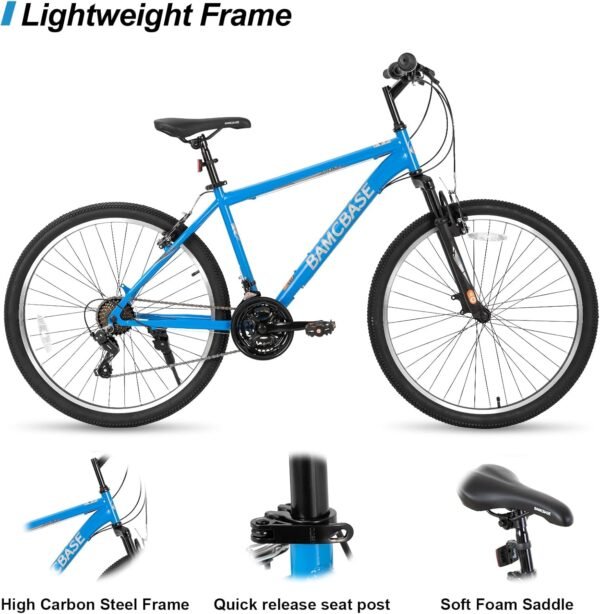
Two descriptions are in circulation for the frame. The manufacturer title calls it high tensile steel. The summary attached to this item calls it high carbon steel. Those are related descriptions rather than identical ones, and neither is an actual tubing grade. What can be said with confidence is that the frame is steel and not aluminum, which makes it heavier than an aluminum frame in the same bracket and generally more tolerant of knocks. Steel frames of this kind are also easier to have straightened if something is bent, which matters more for a bike that will live outdoors than for one kept in a hallway.
Drivetrain and Braking
Twenty one speeds means three chainrings at the crank and seven sprockets at the rear wheel. That layout is standard at this level and gives a wide overall range, which is why it survives on entry level mountain bikes even though front shifting is fussier than a modern single ring setup. Several of the twenty one combinations run the chain at a severe angle and are not intended to be used, so the number of genuinely usable gears is lower than the headline figure suggests.
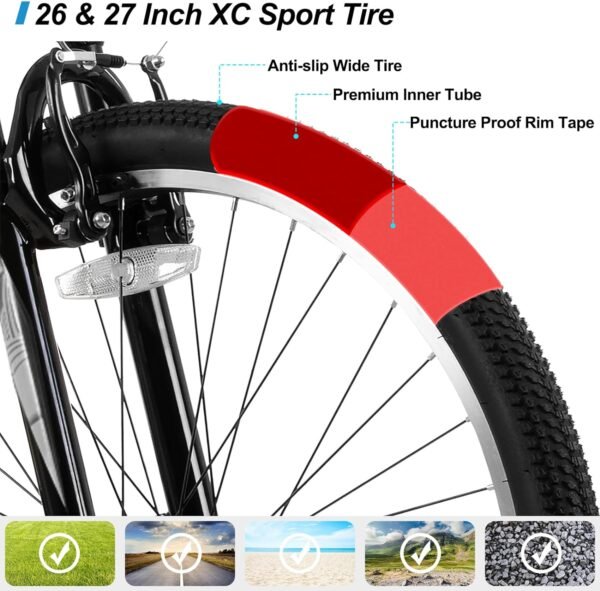
Braking is by V brakes, which are rim brakes rather than discs. On dry surfaces they work well and are simple to adjust with basic tools. In sustained wet weather or on long descents they lose bite compared with disc brakes, and they wear the wheel rim itself rather than a replaceable rotor. For paths and occasional light trail that is a reasonable trade. For steep or persistently wet terrain it is a genuine limitation and should be weighed before ordering.
Suspension
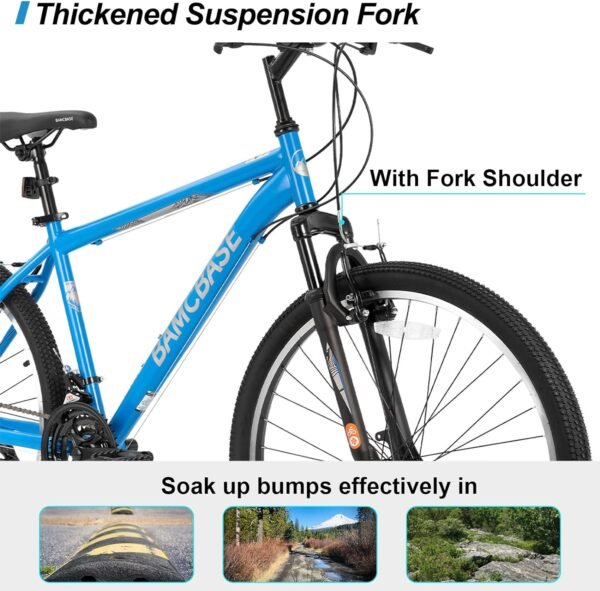
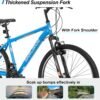
The fork is a coil sprung suspension unit of the type fitted throughout this part of the market. It takes the edge off broken pavement, potholes and gravel. It is not meaningfully adjustable and it adds weight at the front of the bike. A rider who expects to stay on smooth surfaces would be better served by a rigid fork, but that option is not offered on this listing.
Assembly
Tools are included and the bike arrives partly built, as nearly all bicycles sold this way do. The work usually left to the buyer is fitting the front wheel, handlebar, seat post and pedals, then setting the brakes and gears. Two points deserve care. Pedals are threaded in opposite directions on each side, and the left pedal tightens counterclockwise, which is where most first assemblies go wrong. Brake and gear cables also settle over the first few rides and will need retensioning afterward. Anyone not confident with that work should allow for a shop safety check, which is a modest cost set against the consequences of a badly seated wheel or an unadjusted brake.
Who It Suits
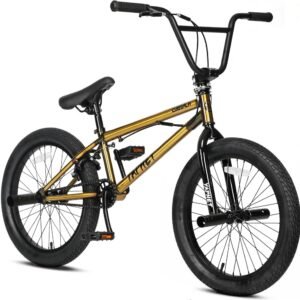
This suits an adult rider who wants a general purpose bike for paved paths, towpaths, gravel and occasional light trail, and who values a wide gear range and simple roadside maintenance over low weight. It also suits a household that wants a second bike which can be locked up outside without much anxiety. Riders who want something built for tricks and skatepark use rather than distance should look at the cubsala Yaphet freestyle BMX instead, which is built around an entirely different set of priorities.
Who It Does Not Suit
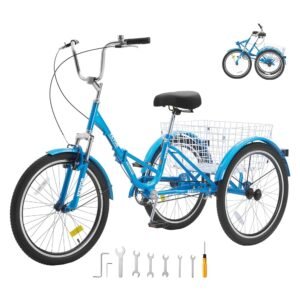
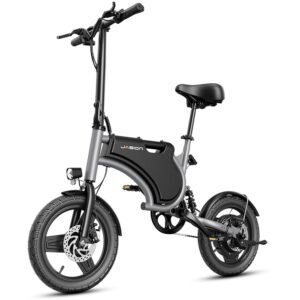
It does not suit a rider chasing road mileage, since a steel hardtail with a suspension fork and knobbly tires is slow and heavy on tarmac. It does not suit technical off road riding, where rim brakes and a basic fork become a real constraint rather than a compromise. Anyone who wants motor assistance rather than a wide gear range should look at the Jasion JC1 folding electric bike, and a rider whose balance makes two wheels difficult would be better served by the VEVOR folding adult tricycle.
Questions to Settle Before Ordering
Confirm the wheel size in the ordering options, given the conflict described above. Confirm the frame size against your own inside leg measurement rather than against the wheel size, since listings of this kind routinely conflate the two. Confirm the color if it matters to you. Check the return terms for an assembled bicycle as well, because a bike that has been built up and ridden is considerably harder to send back than one still boxed. The full product index shows everything else covered on this site.
A Note on the Supplied Data
Several values in the specification block for this item arrive with a stray character sequence attached to the front of them, a residue of the text encoding used when the data was captured. That affects how the values display rather than what they mean, but it is a reminder that this specification block is a machine capture of a retail listing and not a manufacturer datasheet. Where a figure here matters to a purchase, it is worth confirming against the retail page before ordering.