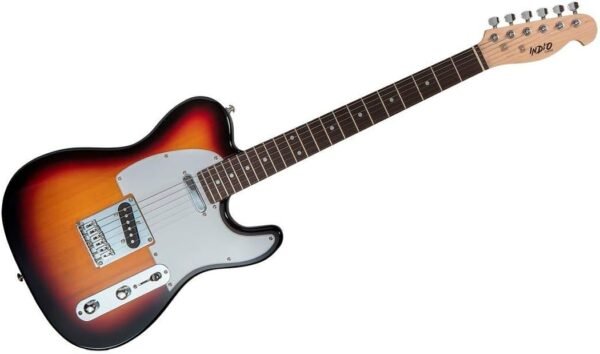
Description
Review of the Monoprice Indio Retro Classic Electric Guitar with Gig Bag
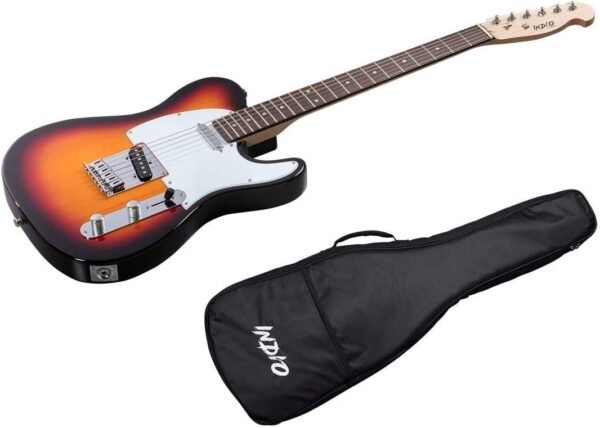
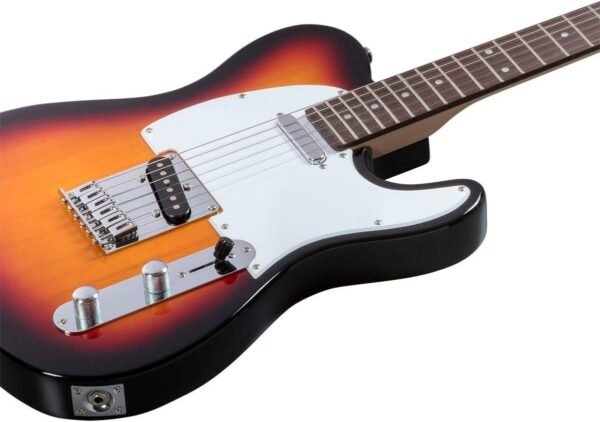
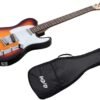
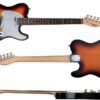
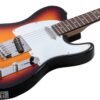
This is a solid-body electric guitar in a sunburst finish, supplied with a gig bag and a month of online lessons. It is aimed at a beginner who wants a familiar, industry-standard set of dimensions, and at experienced players looking for a cheap practice or backup instrument that can be modified without risking anything valuable.
Pros & Cons
- The important measurements are actually published. A 25.5 inch scale, 22 frets and a 9.5 inch fingerboard radius are all stated, which is more than most guitars in this bracket disclose and means the feel can be predicted before ordering.
- A satin neck finish is faster than gloss. Gloss lacquer grabs a sweaty hand and slows position shifts; satin lets the thumb slide, which matters more day to day than almost any tonal consideration.
- A hard tail bridge keeps things stable. With no floating tremolo the tuning holds better, string changes are simple and the guitar stays in pitch when one string is bent.
- The large control cavity invites modification. Swapping pickups or pots is straightforward when there is room to work, and the seller explicitly positions this as a platform for experimenting with aftermarket parts.
- The listing describes a different guitar. The specification bullet reads “The Cali Classic features 22 frets, a 25.5 inch scale, and a 9.5 inch radius” while the product on sale is the Indio Retro Classic. The numbers are plausible for either, but the copy has been lifted from a sibling model and that should be known before treating those figures as confirmed.
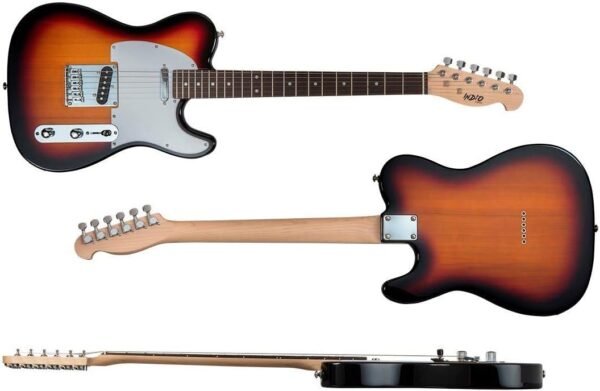
- The pickup count is contradictory. The description refers to pickups in the plural, while the specification table records the configuration as a single “S”. How many pickups are fitted, and in what positions, cannot be settled from the published data.
- The listed top material does not match the description. The table gives a maple top over a basswood body and back, but the description never mentions a maple cap. On a solid-body electric this affects both looks and price expectations.
- The 10 pound item weight is a shipping figure. A basswood solid body does not weigh that; the number covers the carton and the gig bag.
- The string material is recorded as an unformatted code. The table reads “nickle_steel”, a raw database value with a spelling error, which is a small sign of how carefully the listing was assembled.
Detailed Product Description
The body and back are basswood. Basswood is light, close-grained and tonally even, with no strong peaks of its own, which is why it is used so widely on affordable electrics and on guitars intended for heavy processing. It is soft, so it dents more readily than alder or ash and benefits from a strap with locking ends.
The neck is maple with a rosewood fingerboard, carrying 22 frets over a 25.5 inch scale. The longer of the two common electric scales gives slightly higher string tension at pitch, a firmer feel and a brighter attack. The 9.5 inch fingerboard radius is a modern compromise: flat enough for comfortable string bending high up, curved enough that first-position chords sit naturally under the hand.
The bridge is a hard tail, meaning the strings anchor to a fixed plate rather than a pivoting tremolo. This is the simplest and most stable arrangement available and is a sensible choice on a guitar aimed partly at beginners, since there is nothing to knock out of adjustment and no spring tension to balance.
Strings are nickel-plated steel in a light gauge. Light gauge bends easily and suits new fingertips, at the cost of a slightly thinner tone and a greater tendency to rattle if the action is set very low. The seller’s own framing of this guitar as a modification platform is the most useful thing about it: pots, switches and pickups are all standard-size parts and the cavity has room to work in. Where this shape sits among the other common outlines is covered in the guitar body shapes guide.
What Comes with the Product
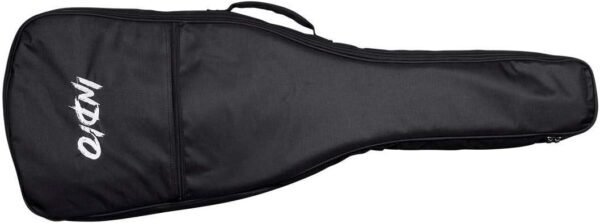
The listing states the guitar ships with a gig bag, and includes one month of free online lessons through a partner lesson site.
Not included: an amplifier, a cable, a strap, picks, a tuner, spare strings or any setup tools. This is a guitar with a bag, not a starter package, so anyone beginning from nothing needs at minimum an amplifier and a cable before a sound can be made. No padding thickness is stated for the gig bag, so treat it as transport cover rather than protection.
Who It Suits
This suits a player who already owns an amplifier and wants a cheap second guitar, a home modifier who intends to change pickups and hardware, or a beginner who values standard measurements over a bundled accessory pile.
It suits less well someone starting completely from scratch with no amplifier, or a buyer who needs the exact pickup layout confirmed before purchase, since the published data disagrees with itself on that point. Other options sit in electric guitars, and how brands in this price range differ is covered in the budget guitar brands guide.
How to Maintain
Wipe the strings after every session, since skin oils dull them faster than playing does. Keep the guitar out of direct sun and away from radiators, because heat and humidity swings move the neck and change the action.
Check the neck relief a few weeks after arrival, and again at each seasonal change. Oil the rosewood fingerboard once or twice a year if it looks dry. Check the output jack nut periodically; a loose jack is the usual cause of crackling. Satin necks polish to a shine where the hand travels, which is normal wear.
Tips and Recommendations
Expect to set the intonation at the bridge saddles once new strings have settled. This is quick on a hard tail and it is the difference between chords sounding right and sounding slightly sour up the neck.
If the pickups sound weak or muddy, adjust their height before assuming they need replacing. Raising a pickup a millimetre closer to the strings often solves what looks like a pickup problem. Dress any sharp fret ends with fine abrasive paper if the neck has dried in transit. When the time comes to modify, change one thing at a time and listen before moving on, and read the action and setup guide before touching the truss rod.
Product FAQ
Do the stated specifications apply to this model? The bullet giving 22 frets, a 25.5 inch scale and a 9.5 inch radius names the Cali Classic, a sibling model, not the Indio Retro Classic on sale. The figures are plausible but the copy is not written about this guitar.
How many pickups does it have? The description implies more than one, the specification table records a single “S”. The published data does not resolve it.
Does it come with an amplifier? No. Only a gig bag and a month of online lessons are included.
What comparable guitars are there? Close alternatives include the Monoprice Cali Classic, the Squier Debut Series Telecaster and the Squier Affinity Series Telecaster.