Description
Review of the BexGears Electric Guitar Kit with Okoume Body and Maple Neck
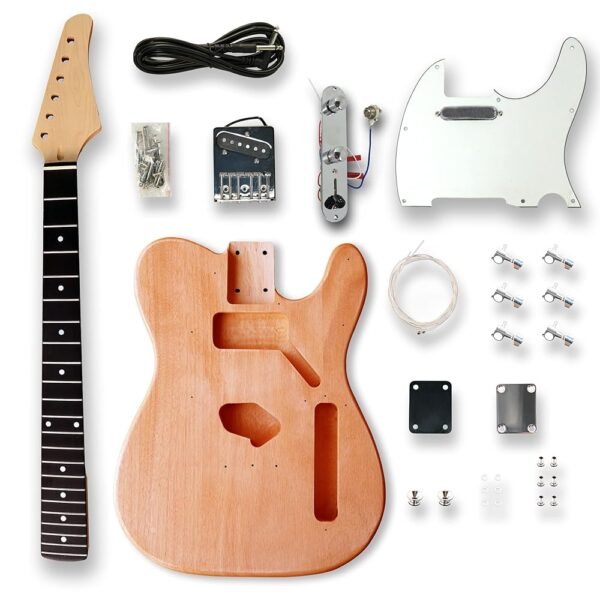
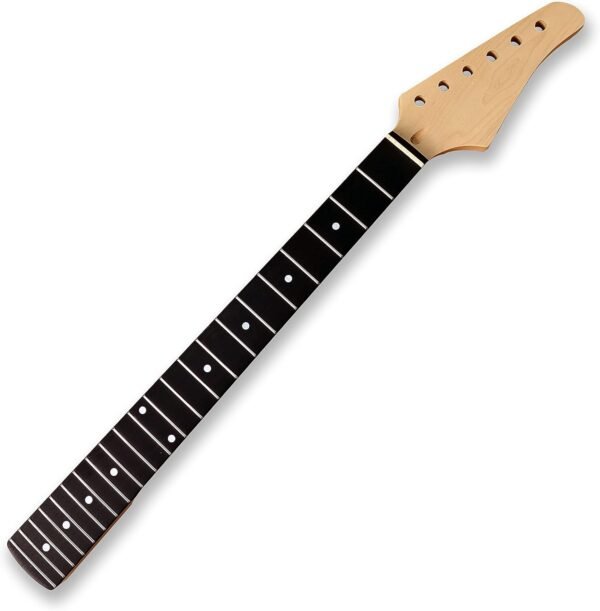
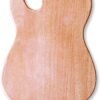
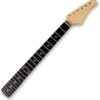
This is an unassembled DIY electric guitar kit in a single-cutaway T-style shape, built around an okoume body, a maple neck and a composite ebony fingerboard. It is aimed at someone who wants to build and finish a guitar themselves rather than buy a completed instrument, and the seller supplies printed instructions with the parts.
Pros & Cons
- The build itself is the point. Assembling a guitar teaches how the neck pocket, bridge position and electronics relate to each other, which is knowledge that pays back on every instrument owned afterwards.
- Okoume is a sensible body timber for a kit. It is light, soft enough to sand easily and takes stain and clear coat well, which matters when the finish is the builder’s responsibility.
- A composite ebony fingerboard is more stable than real ebony. Engineered boards do not crack or shrink with humidity swings, so a kit that may sit part-built for weeks is less likely to develop problems.
- The electronic parts are included. Sourcing pots, a switch, a jack and pickups separately is where most kit builds stall, and having them supplied keeps the project to one purchase.
- Instructions are supplied and replaceable. The seller states a PDF copy will be sent if the printed manual is lost, which is more support than most kits offer.
- The listing contradicts itself on the pickguard colour. The description says the kit comes with a black pickguard, while the colour attribute for this variant records “white pickguard”. Since the pickguard is the most visible cosmetic part, this disagreement matters when ordering a specific look.
- Nothing about the parts is specified in detail. No pickup type or output is given beyond an S-S configuration, no pot values, no bridge type beyond “fixed”, no fret count and no scale length. A builder cannot plan a finish or a wiring change from this data.
- No finishing materials and no tools are included. The body arrives raw, and sandpaper, grain filler, stain or lacquer, a screwdriver set, hex keys, a soldering iron and a tuner are all extra.
- It is not playable on arrival. Obvious for a kit, but worth stating plainly, because a buyer expecting a guitar will be disappointed.
Detailed Product Description
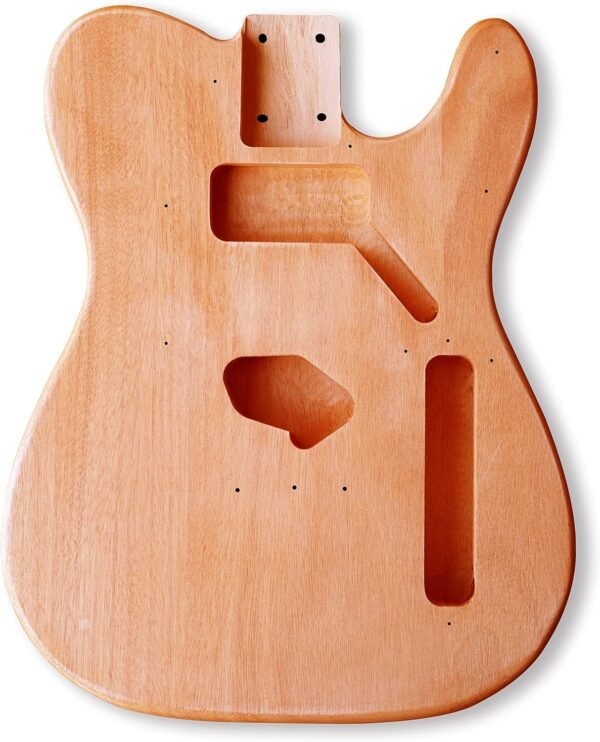
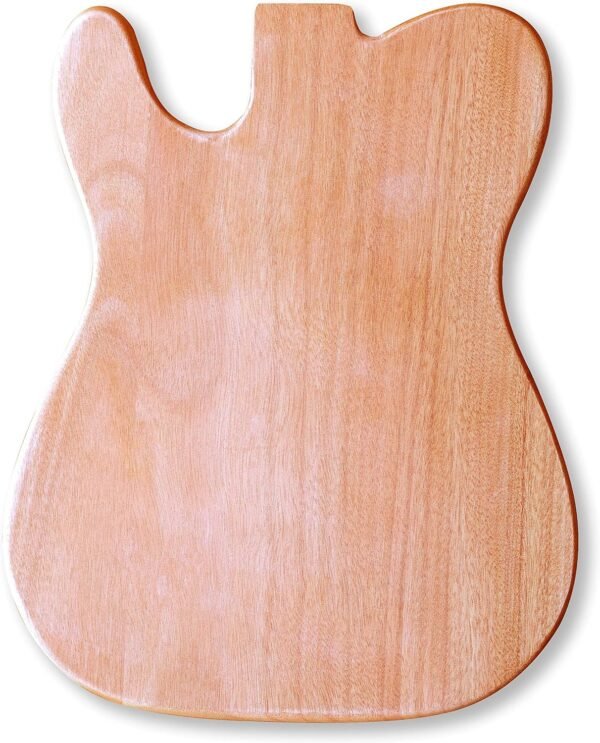
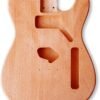
The body is okoume, listed for the top, back and body, so it is one timber rather than a capped build. Okoume is an African hardwood related to the mahogany family in use if not in botany. It is open-pored, which means grain filler is needed before a gloss finish or the surface will look pitted. It is also light, which suits a slab-bodied guitar that would otherwise get heavy.
The neck is maple with a composite ebony fingerboard. Maple is the standard bolt-on neck timber because it is stiff and stable. The composite board is a dense synthetic that behaves like a very hard fingerboard: it is fast under the fingers, does not need oiling and will not shrink and leave fret ends proud.
The pickup configuration is listed as S-S, meaning two single-coil pickups. In this body shape that usually means a bridge pickup mounted in a metal plate and a neck pickup under the pickguard, which gives a bright, cutting bridge sound and a rounder neck sound. The bridge is fixed, so there is no tremolo to set up and string changes are straightforward. Strings are stainless steel, which is harder-wearing and brighter than nickel and slightly rougher on frets.
The critical part of any kit build is the neck pocket and the bridge placement, because those two together set the intonation. Getting the neck screwed down tightly and squarely is what decides whether the finished guitar plays in tune, and the action and setup guide covers the order in which the adjustments should be made once it is together.
What Comes with the Product
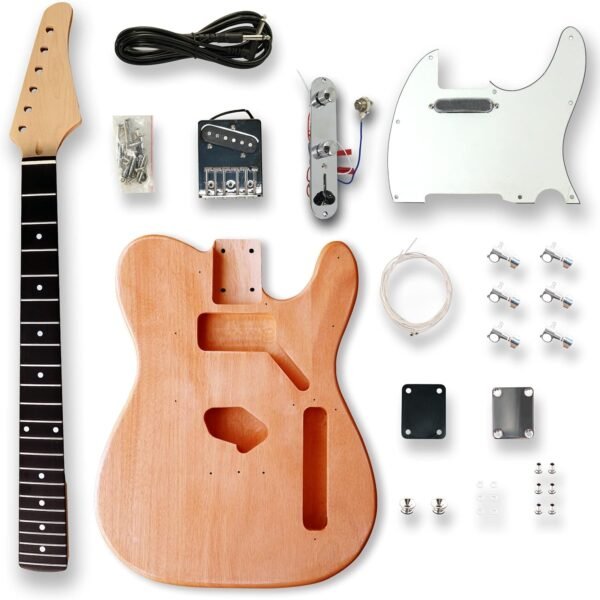
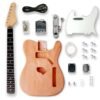
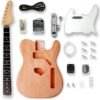
The listing states the kit contains the okoume body, the maple neck with composite ebony fingerboard, a pickguard and all electronic parts, plus printed assembly instructions.
Not included, and not claimed: any finish or finishing materials, a gig bag or case, a strap, a cable, an amplifier, a tuner, or the tools needed to build it. The listing also does not itemise the smaller hardware, so the exact tuners, bridge saddles and control knobs supplied cannot be confirmed from the published data before opening the box.
Who It Suits
This suits a hobbyist who enjoys woodwork and soldering, a player who wants a personalised instrument at a low parts cost, or a parent and child looking for a project to build together over a few weekends.
It suits less well anyone who wants to play in the first week, anyone without access to basic hand tools, or a complete beginner who has never set up a guitar and would struggle to tell a build error from a normal adjustment. Buyers who want a finished T-style instrument should look through electric guitars instead.
How to Maintain
Before assembly, keep the raw body and neck in a dry, stable room. Bare wood absorbs moisture quickly and a body that swells before finishing will move again afterwards.
After the build, treat it like any bolt-on electric. Wipe the strings down, check the neck screws after the first few weeks as the wood settles under tension, and keep it away from radiators. The composite fingerboard needs no oiling. Re-check intonation at the bridge saddles a month after stringing.
Tips and Recommendations
Mock the whole guitar up unfinished before applying any coating. Fitting the neck, bridge and pickguard first shows whether the holes line up and whether the bridge sits where it should, and it is far easier to correct a problem before there is lacquer on the wood.
Fill the grain before finishing. Okoume is open-pored and skipping this step is the usual reason a home-finished body looks rough. Tighten the neck bolts firmly and evenly; a loose neck joint makes the action impossible to set correctly and is easy to mistake for a warped neck. Fit a decent set of strings rather than whatever comes to hand, since the stainless supplied are bright and a nickel set will sound warmer.
Warranty & Support Information
No warranty term is stated in the listing. The seller does state that the assembly instructions are included with the product and that a replacement copy will be supplied in PDF format on request if the manual is lost.
Product FAQ
Is the pickguard black or white? The description says black. The colour attribute for this variant says white pickguard. The published data disagrees with itself, so the pickguard colour should be confirmed with the seller before ordering.
Does it arrive ready to play? No. It is a DIY kit that must be assembled, wired, finished, strung and set up.
What tools are needed? Not stated in the listing. In practice a screwdriver set, hex keys, a soldering iron, sandpaper, a string winder and a tuner are the minimum.
What comparable kits are there? Other build-it-yourself options include the BexGears S-style kit, the Leo Jaymz TL kit and the Leo Jaymz left-handed TL kit. Body outlines and what they change are covered in the guitar body shapes guide.