Description
Review of the BexGears DIY ST Style Electric Guitar Kit with Engraved Body
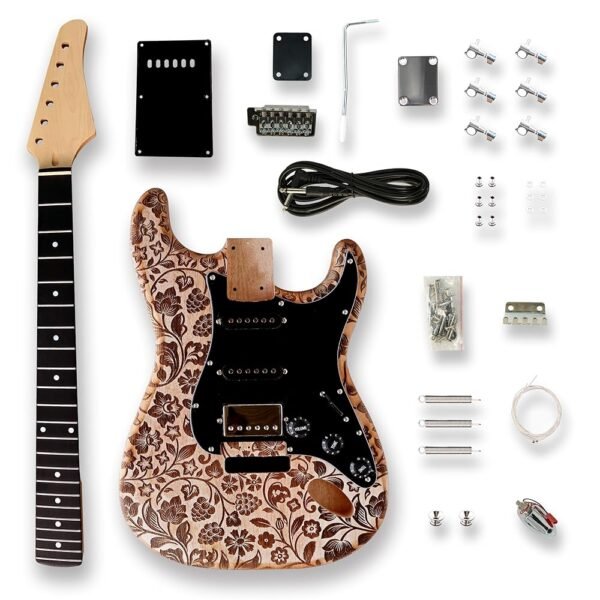
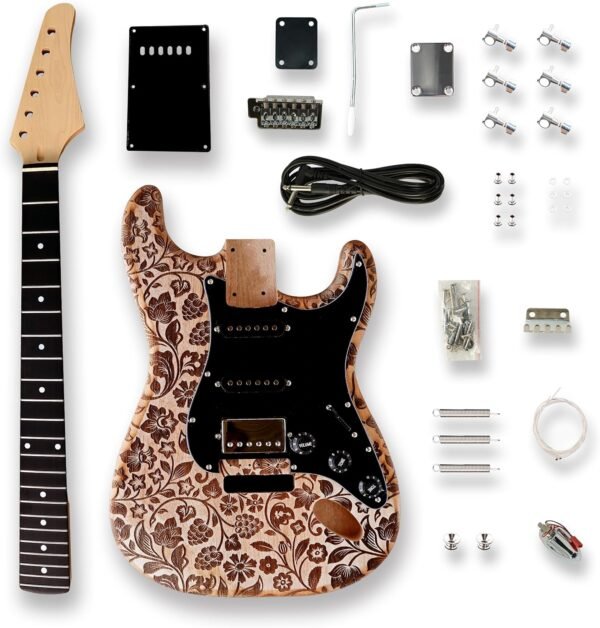
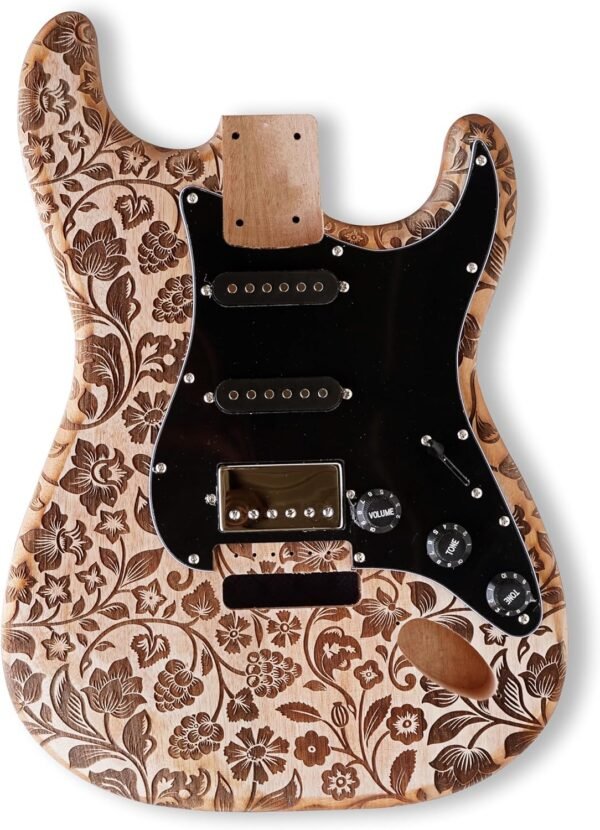
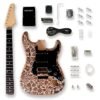
The BexGears DIY ST Style Electric Guitar Kit is not a finished instrument. It is a box of parts, a body with an engraved surface, a maple neck with a composite ebony fingerboard, a pickguard loaded with electronics and the hardware needed to assemble a double cutaway electric guitar. It is aimed at people who want the building process as much as the guitar, and at players who intend to finish the body themselves. It is listed under electric guitars, though it needs assembly before it belongs there.
Pros & Cons
Pros
- Building the guitar teaches how it works. Fitting the neck, wiring the pickguard and setting the bridge is the fastest way to understand string height, intonation and pickup height, which most players never learn on a factory finished instrument.
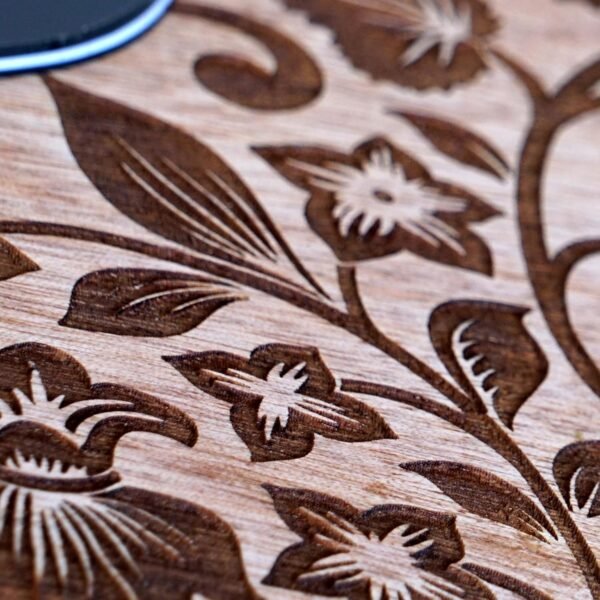
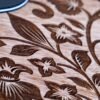
- An unfinished body can be finished any way the builder wants. Oil, stain, paint or a clear coat are all open, and the surface engraving gives a texture that stain will emphasise.
- Composite ebony fingerboard. Composite boards are dimensionally stable, do not need oiling, and do not shrink away from the fret ends in dry air the way natural rosewood can.
- The pickguard arrives loaded. The listing states the black pickguard comes with all electronic parts, so the wiring work is limited rather than starting from bare components.
Cons
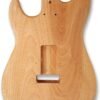
- The listing names two different body woods in consecutive lines. The first bullet says mahogany wood body, the second says the kit comes with an unpolished okoume body, and the title says mahogany. The specification table also says mahogany. Okoume and mahogany are different timbers with different weight, colour and grain, so the finished guitar will not look or weigh the same depending on which is actually in the box.
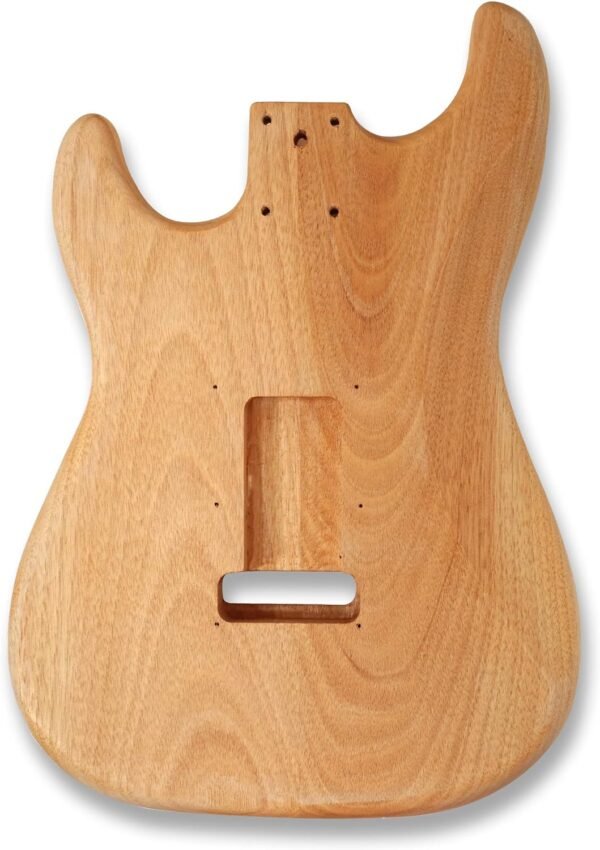
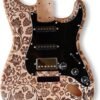
- The finish state is described two ways. The table lists the colour as “engraved surface” and the top material as “surface engraving”, while the description says the body is unpolished. An engraved and an unfinished body are different things, and only the builder opening the carton will know which arrives.
- No scale length, weight or fret count is published. These are the three numbers that decide whether replacement parts will fit, and none of them appear anywhere in the listing.
- The bridge type contradicts the style. The specification table lists a fixed bridge, while the double cutaway design this kit copies conventionally uses a tremolo. Nothing confirms which hardware is supplied.
- The pickup layout is S-S-H and not otherwise described. No pickup brand, output, or magnet type is given, and no switch or pot values are stated.
Detailed Product Description
The kit ships in a 30 by 19 by 3 inch carton, which is shorter than an assembled guitar and consistent with a body and neck packed separately. The body is described as mahogany in the title and the specification table, and as okoume in the description. Mahogany is a medium weight, open pored hardwood with a warm midrange emphasis. Okoume is lighter, softer and more uniform, closer in behaviour to basswood. The finished guitar will be noticeably lighter and less resonant if okoume is what arrives.
Electronics are described only as S-S-H, meaning two single coils and a bridge humbucker, supplied preassembled on a black pickguard. That layout is a sensible compromise, giving bright single coil clean tones from the neck and middle positions and a fatter, hum free bridge tone for driven sounds. Nothing in the listing states the pickup output, the switch type or the control values. Once assembled, the guitar will need a full setup, and the guide to guitar action and setup covers the sequence: neck relief first, then string height, then intonation, then pickup height.
What Comes with the Product
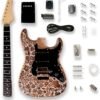
The listing states the kit contains the body, a maple neck with a composite ebony fingerboard, a black pickguard with all electronic parts, the hardware, and printed assembly instructions.
Not included: any finishing materials such as sandpaper, stain, paint, oil or lacquer, and no amplifier, cable, gig bag, strap, tuner or picks. Tools are not listed either, so a screwdriver set, a soldering iron for any rewiring, a set of feeler gauges or a ruler for setup, and an Allen key set will be needed. A checklist of what a player needs alongside the instrument is in guitar accessories beginners need.
Who It Suits
This suits someone who wants a project as much as an instrument: a player who already owns a working guitar, a parent and child looking for a weekend build, or a hobbyist who wants to learn to finish wood and set up a guitar without risking an expensive instrument. It also suits anyone who wants a one of a kind finish that no factory guitar offers.
Look elsewhere if the guitar is needed to play on straight away, or if the buyer is a complete beginner with no other instrument, because a badly assembled guitar is far harder to learn on than a mediocre factory one. Anyone who wants the same shape ready built should consider the Ashthorpe 39 inch electric kit. Other build projects on the site include the BexGears T style okoume kit and the Leo Jaymz DLH0051 left hand TL kit.
How to Maintain
Seal the body before it is played, because bare wood absorbs sweat and grime and cannot be cleaned afterwards. Once finished, wipe the body and strings after each session. A composite ebony fingerboard does not need oiling and should simply be wiped clean, since oil sits on the surface rather than soaking in. Check every screw after the first month of playing, as new hardware settles and works loose. Keep the guitar in a case or on a stand rather than leaning on a wall. Stainless steel strings last longer than nickel, so change them on feel rather than on a schedule.
Tips and Recommendations
Dry fit everything before applying any finish. Check that the neck sits square in the pocket and that the bridge lines up with the neck centre line, because a body and neck that do not align cannot be corrected once the finish is on. Sand the body progressively through grits and remove dust between coats, since a rough surface shows through every finish. Test the wiring by plugging in before final assembly, so a bad solder joint can be reached. Set the pickup height last, after the string height is correct, because raising a pickup too close to the strings pulls them out of tune. Finally, tune to pitch and let the neck settle for a day before setting intonation.
Product FAQ
What wood is the body? The listing gives two answers. The title and the specification table say mahogany; the description says the kit comes with an unpolished okoume body.
Does the body arrive finished? The description says the body is unpolished, meaning it needs sanding and finishing. The specification table describes an engraved surface, which is a different state.
Is soldering required? The pickguard is supplied with the electronics fitted, so full wiring from scratch should not be necessary, though a soldering iron is worth having in case a joint needs remaking.