Description
Review of the Epiphone SG Special Satin E1 Electric Guitar, Vintage Worn Walnut
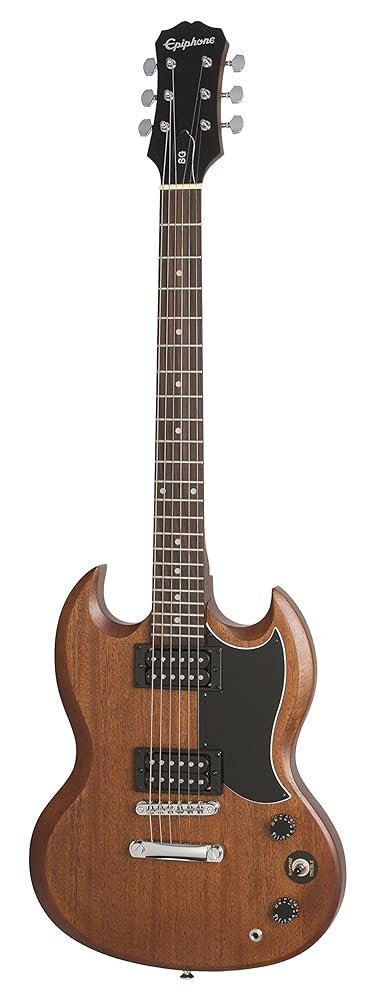
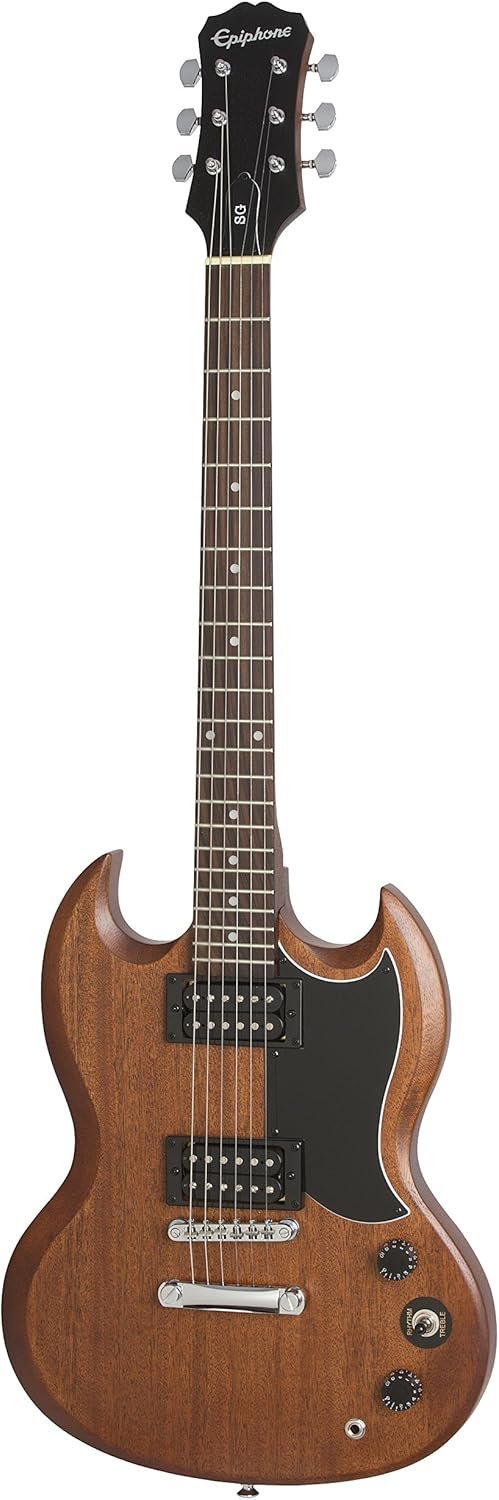
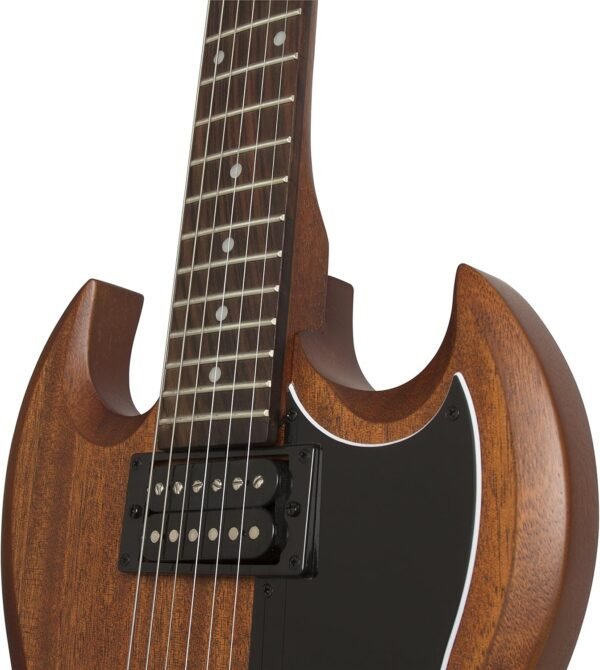
The Epiphone SG Special Satin E1 is the entry point into the SG family: a double cutaway solid body with two humbuckers, a slim taper neck and a thin satin finish instead of a thick gloss. It is built for players who want the SG shape and the SG sound without the cost of the higher tiers, and it sits in the electric guitars section. The published data for it disagrees with itself on the body construction and gives a weight figure that cannot describe the instrument.
Pros & Cons
Pros
- The 1960s SlimTaper D neck profile is fast and shallow. A SlimTaper has less depth front to back than a traditional carve, so the hand does not have to open as far to reach around it. That helps players with smaller hands and suits fast movement along the neck.
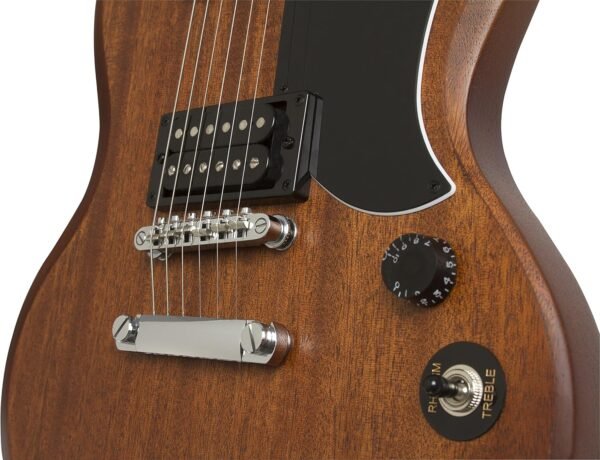
- Two humbuckers. Humbuckers cancel the mains hum single coils pick up and put out a thicker, higher output signal, which is what pushes an amplifier into natural overdrive. On an SG this is the whole point of the design.
- Twenty two medium jumbo frets. Taller fret wire means less finger pressure is needed for a clean note and bends feel smoother, which suits players still building hand strength.
- Deep double cutaway. The SG body gives better access to the top frets than almost any other traditional shape, because both horns are cut away and the neck joins the body high.
Cons
- The listed weight is not the guitar. The specification table gives 12 pounds. SG bodies are among the thinnest and lightest of the traditional solid body shapes, and the feature bullets on this page describe the guitar as lightweight. Twelve pounds is a shipping figure for the guitar plus its carton, not an instrument weight, and the listing never separates the two.
- The body construction is described two ways. Epiphone’s own description says a poplar body with a satin finish. The specification table says a poplar body with a mahogany veneer. A veneer changes how the guitar looks and, in some builds, what is underneath the finish, and nothing reconciles the two claims.
- Okoume is an unusual fingerboard wood. Both the description and the table list an okoume fretboard. Okoume is a light, soft, open pored timber more commonly used for bodies, and open pores collect grime while soft wood gives fret ends less to grip.
- No scale length is published. On an SG this matters, because the family uses a shorter scale than bolt on style guitars, which changes string tension and how far bends stretch.
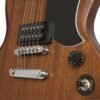
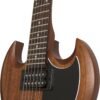
- The finish is named three ways. The description says satin finish and vintage worn finish, the colour field says Walnut, and the model name combines all of them.
Detailed Product Description
The body is poplar, with the specification table adding a mahogany veneer that the description does not mention. Poplar is light, stable and neutral sounding, which is why it appears across entry level electrics. The traditional SG is built from solid mahogany, and that wood contributes much of the thick midrange and long sustain the design is known for, so a poplar bodied version will sound slightly leaner and more neutral. Because a solid body electric takes most of its voice from the pickups and the amplifier, the difference is real but far smaller than the difference between two pickup sets.
The neck is mahogany in the 1960s SlimTaper D profile, with an okoume fingerboard carrying 22 medium jumbo frets. Mahogany is the correct neck wood for this family: dense enough to resist string pull and warm in character. A D profile has flatter shoulders than a C, which suits players who keep the thumb behind the neck. The SG body is thin front to back and deeply cut on both sides, which is what makes the shape comfortable standing up and gives it access to the highest frets.
What Comes with the Product
The listing describes the guitar alone, assembled and strung, in a vintage worn walnut satin finish.
Not included: an amplifier, a cable, a gig bag or case, a strap, a tuner, picks, spare strings, and any lesson material. A player starting from nothing needs at minimum an amplifier, a lead and a tuner. Suitable practice amplifier sizes are covered in guitar amp wattage for home practice.
Who It Suits
This suits a player who already owns an amplifier and wants the SG voice for rock, hard rock or blues, a beginner who has specifically decided on humbuckers rather than single coils, and anyone who finds heavier guitars tiring to play standing up. The slim neck also makes it a reasonable choice for a smaller player moving up from a short scale instrument.
Look elsewhere if bright, clean, articulate tones are the goal, since a single coil guitar handles those better, or if a complete package with an amp is needed in one purchase. SG bodies are also famously neck heavy on a strap, which is worth knowing before buying. Within the same brand, compare the Epiphone SG Special in cherry, the Epiphone Les Paul Special Satin E1, and the Epiphone Les Paul 100.
How to Maintain
Wipe the strings after every session, since nickel wound strings corrode from skin acid rather than wearing out from playing. Do not polish a satin finish with gloss products, because polish fills the texture and leaves permanently shiny patches. Use a dry or barely damp cloth on the body. Keep an okoume fingerboard clean and condition it lightly twice a year, as an open pored board holds grime. Check the strap buttons regularly, because an SG hangs with more weight on the neck side and puts more strain on the front button than most shapes. Full cleaning steps are in how to clean a guitar.
Tips and Recommendations
Fit a wide strap with a grippy underside, because the SG shape is neck heavy and a narrow slippery strap lets the headstock dive toward the floor. Strap locks are a worthwhile early upgrade for the same reason. Check the intonation after the first month once the neck has settled under string tension. If the guitar feels too bright through a driven amp, rolling the tone control back slightly on the bridge pickup is usually more effective than adjusting the amplifier. Keep it in a case rather than on a wall hook if the room gets cold, and let the guitar reach room temperature before playing it after transport.
Product FAQ
How much does it weigh? The listing gives 12 pounds, which is a shipping figure rather than the instrument weight. SG shaped guitars are among the lighter traditional solid bodies.
What is the body made from? Epiphone’s description says poplar with a satin finish. The specification table adds a mahogany veneer that the description does not mention.
What is the scale length? The listing does not publish one.