Description
Review of the Epiphone Les Paul Special Satin E1 in Vintage Sunburst
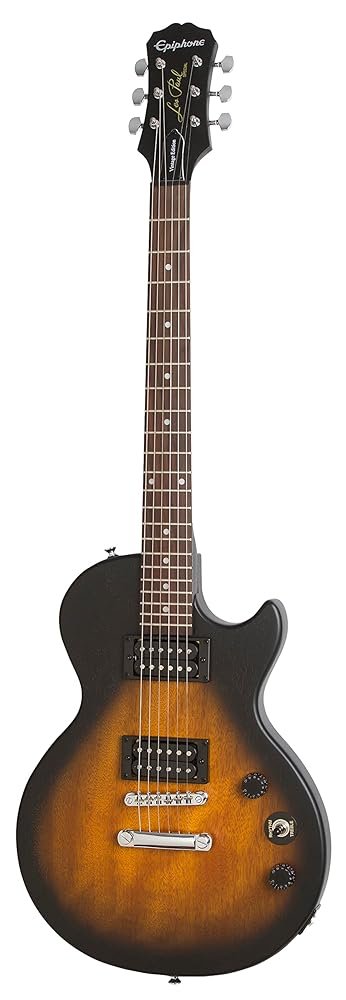
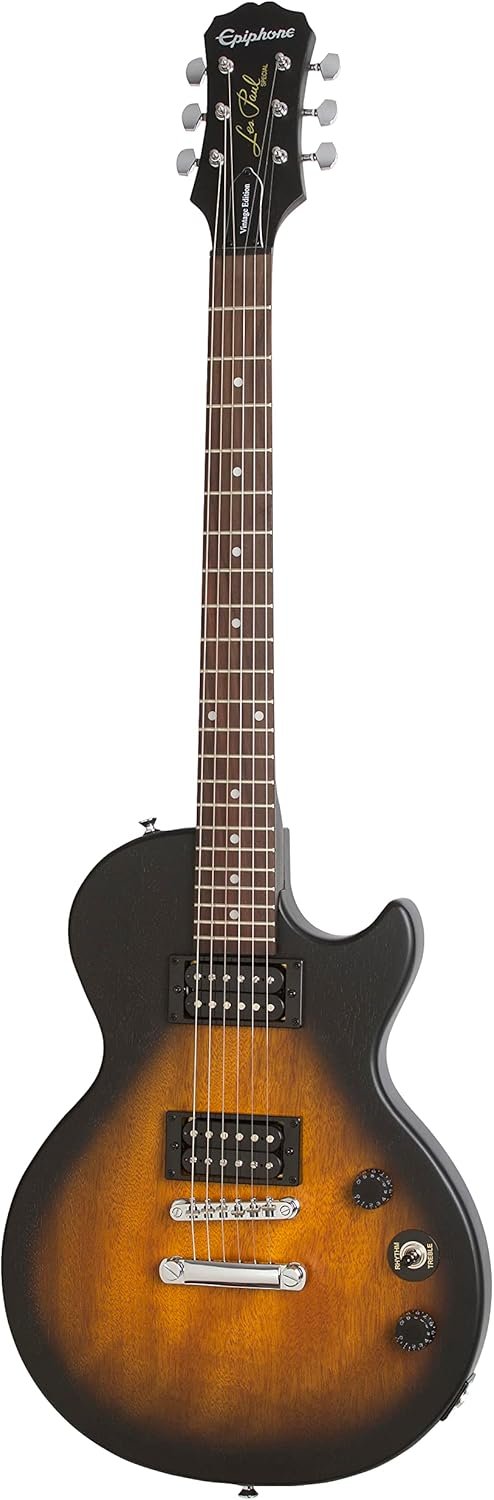
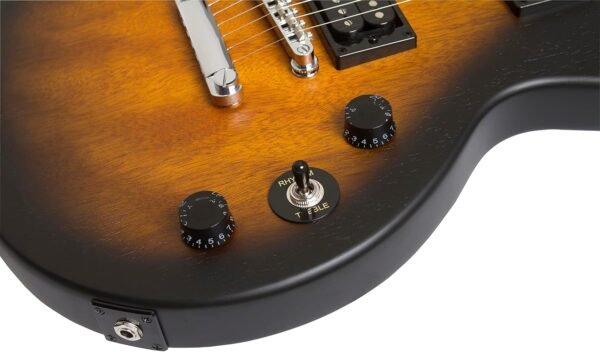
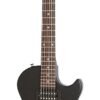
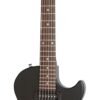
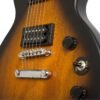
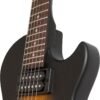
The Les Paul Special Satin E1 is a single cutaway solid body electric with a poplar body, a bolt on mahogany neck, a rosewood fingerboard and a pair of Epiphone open coil humbuckers. The finish is a satin vintage sunburst with no binding on the neck or body, which is the visual shorthand for the stripped back Special specification. It sits in the electric guitars range.
Pros & Cons
Pros
- Two open coil humbuckers, a 650R at the neck and a hotter 700T at the bridge. Humbuckers cancel the mains hum single coils pick up, and the deliberate output mismatch means the neck pickup stays warm for clean and blues playing while the bridge has enough output to drive an amp into overdrive.
- A 1960s SlimTaper D neck profile. SlimTaper is a shallow profile designed for fast movement, which suits players with smaller hands and anyone who finds a chunky vintage neck tiring.
- A bolt on neck rather than a set neck. This is a cost decision, but it has a practical advantage: a bolt on neck joint can be shimmed or reseated if the neck angle drifts, whereas a glued joint cannot.
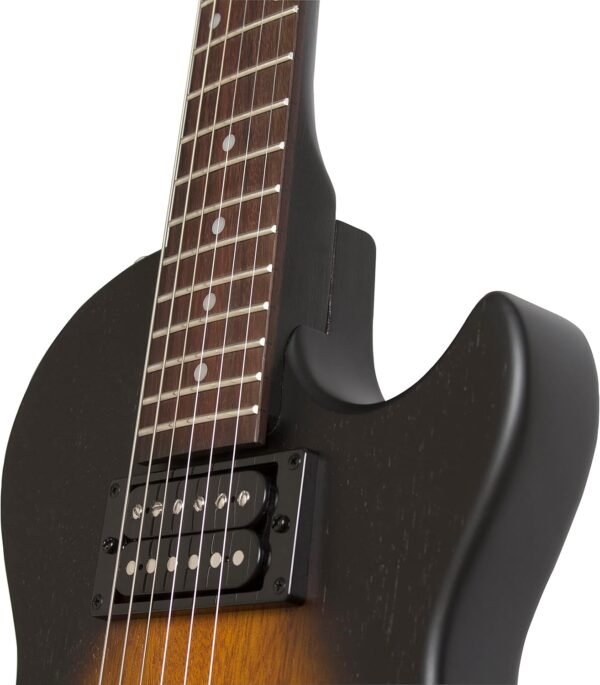
- A rosewood fingerboard with pearloid dot inlays. Rosewood is dense and oily, holds frets securely and needs no finish coat, and dot inlays are the simplest and most legible position markers.
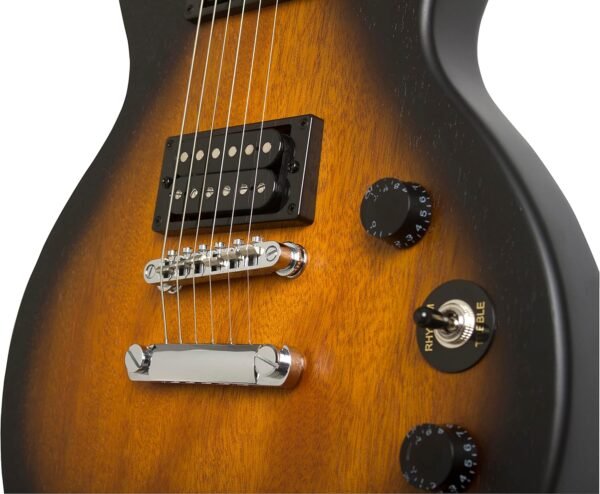
- A Tune-O-Matic bridge is specified. This design allows individual string intonation to be set at each saddle, which is what keeps chords in tune up the neck. Fixed one piece bridges do not offer that.
- A satin finish hides handling marks. Vintage Worn satin finishes do not show fingerprints and swirl marks the way a gloss finish does.
Cons
- The spec table records seven strings. The Les Paul Special E1 is a six string guitar, and nothing in the description, the title or the pickup configuration supports a seven string build. This is a clear data error and buyers should not order seven string sets on the strength of it.
- The stated weight of 2.2 pounds is not credible. A solid poplar single cutaway body with two humbuckers and a Tune-O-Matic bridge weighs several times that. The figure appears to be a data entry error, which means the listing gives no usable indication of how heavy the guitar is on a strap.
- No scale length or fret count is published. Both are basic specifications on an electric guitar and both are missing, so string ordering and fret access cannot be judged from the listing.
- No neck material appears in the spec table. The description names a mahogany neck, but the structured data leaves the field blank entirely, so nothing corroborates it.
- Nothing is included beyond the guitar. No gig bag, no cable, no strap, no amplifier and no tuner are named anywhere in the listing.
- A poplar body is a departure from the traditional specification. Poplar is lighter and cheaper than the mahogany used higher in the range, and it produces a slightly different midrange character, which is worth knowing for anyone buying on the strength of the Les Paul name.
Detailed Product Description
The body is solid poplar, a light and even grained wood sitting between basswood and alder in density. Poplar is tonally fairly neutral with a slight midrange emphasis, and it keeps the weight of a single cutaway body manageable, which matters because the traditional mahogany version of this shape is notoriously heavy on a strap.
The neck is mahogany with a 1960s SlimTaper D profile, bolted on rather than glued. The description also notes there is no binding on the neck or the body, which removes the white edging associated with the more expensive models. Binding is cosmetic rather than structural, though on some guitars it also covers the fret ends.
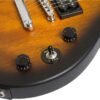
The electronics are the part of the specification that most defines the sound. A 650R humbucker sits at the neck and a hotter 700T sits at the bridge, both open coil, meaning the coils are visible rather than covered by a metal cap. The open coil arrangement is often described as slightly brighter than a covered pickup. The guide on Epiphone versus Gibson explained covers where this instrument sits relative to the parent brand.
The bridge is a Tune-O-Matic, a two part design with individually adjustable saddles that allow each string’s intonation to be set precisely. That is the feature that keeps barre chords in tune at the twelfth fret rather than only in open position.
What Comes with the Product
The listing names the guitar alone. No gig bag, hard case, cable, strap, tuner, picks, amplifier or lesson material is mentioned anywhere in the product data.
That makes several purchases necessary before the guitar can be played: an amplifier, an instrument cable, a tuner and some form of case or bag at minimum. A strap is needed if the guitar will be played standing, and the listing does not confirm whether strap buttons are fitted, though they are standard on this body style.
Who It Suits
This fits a player who already has an amplifier and wants a humbucker equipped guitar for rock, blues or heavier styles, or a beginner who prefers to buy the guitar and amplifier separately rather than as a bundle. The SlimTaper neck makes it a reasonable choice for smaller hands, which is not true of every guitar in this shape.
It does not suit anyone wanting a complete package, since nothing is included. It does not suit a player after bright, glassy clean tones, which single coils deliver better than humbuckers. Comparable Epiphone options include the Les Paul Special-II with a mahogany body, the Les Paul Melody Maker and the Les Paul 100. The guide on guitar body shapes explained covers how the single cutaway compares with other outlines.
How to Maintain
Wipe the strings after each session, since skin oils rather than playing wear are what dull electric strings.
Keep the guitar in a bag or case away from radiators and direct sun once one has been bought. A satin finish is more forgiving of handling than gloss but it does polish to a shine at the points of most contact, particularly the back of the neck, which is normal wear rather than damage.
Check the Tune-O-Matic bridge saddles if chords sound in tune in open position but sharp or flat higher up the neck, which is the sign that intonation needs setting. Check that the bridge posts have not worked loose, since a Tune-O-Matic sits on two adjustable posts and string tension pulls it forward over time. Keep the rosewood fingerboard clean and condition it sparingly rather than often.
Tips and Recommendations
Budget for an amplifier, a cable and a tuner alongside the guitar, since none is included and the instrument makes almost no usable sound unplugged.
Use the neck pickup with the tone rolled back for clean playing and switch to the bridge for overdriven parts, since the deliberate output difference between the 650R and the 700T is the main tonal tool on this guitar. Measure from the nut to the twelfth fret and double it before ordering replacement strings, because the listing does not publish a scale length. Ignore the seven string entry in the spec table when buying strings.
Product FAQ
Is this a six or seven string guitar?
Six. The spec table records seven strings, but the Les Paul Special E1 is a six string instrument and nothing else in the listing supports a seven string build.
Does it really weigh 2.2 pounds?
No. A solid poplar body with two humbuckers and a Tune-O-Matic bridge weighs considerably more. The stated figure is a data error, and the listing gives no reliable weight.
What pickups does it use?
Two Epiphone open coil humbuckers: a warmer 650R at the neck and a hotter 700T at the bridge.
Is an amplifier or case included?
No. The listing names the guitar only, with no bag, case, cable, strap, tuner or amplifier.