
Description
Review of the Epiphone Les Paul Special-II E1 Electric Guitar, Ebony
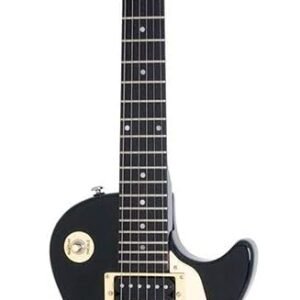
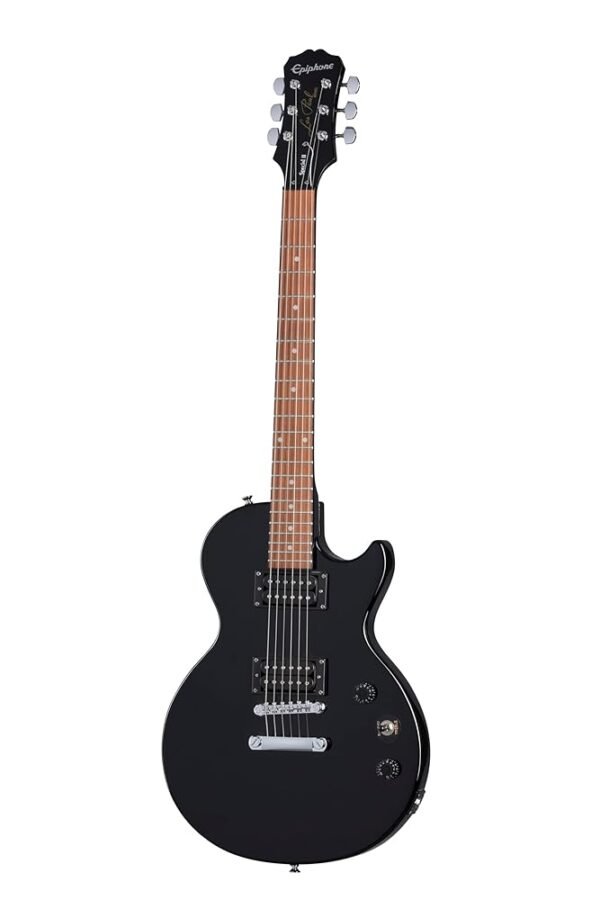
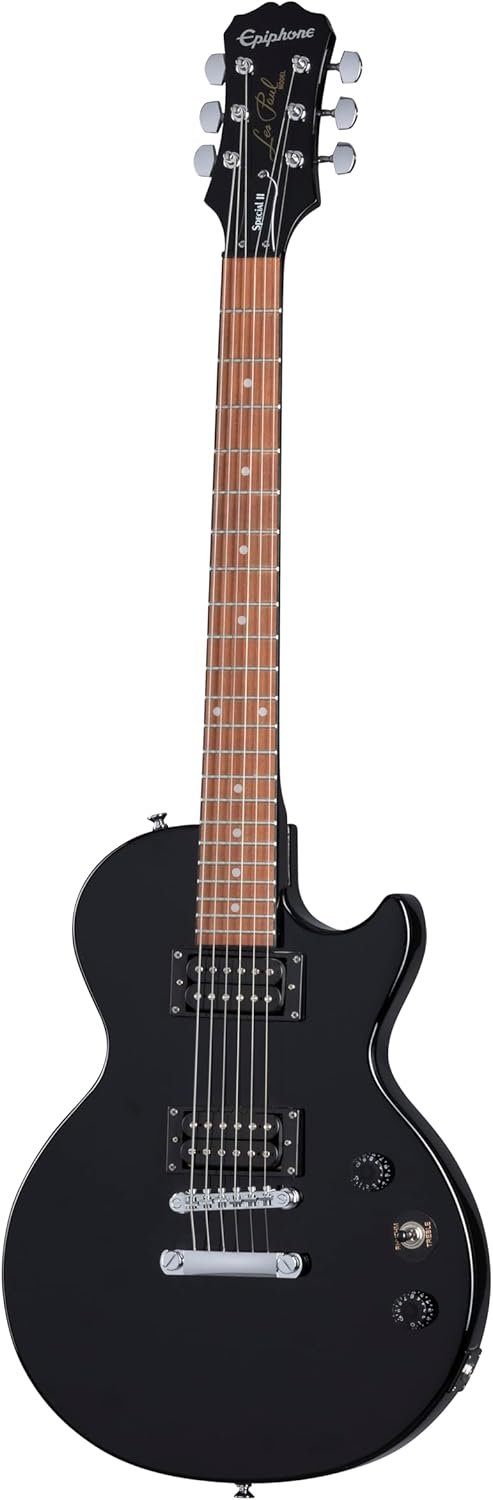
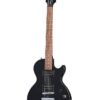
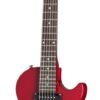
The Epiphone Les Paul Special-II E1 is the entry point to the Les Paul family, built around a mahogany body with a bolt-on mahogany neck and a pair of open-coil humbuckers. It uses the shorter 24.75 inch scale associated with the design and 22 frets, finished here in ebony. This has been a standard first electric for players who want the Les Paul shape and voice without the weight of the full model.
Pros & Cons
Pros
- The 24.75 inch scale is easier on new hands. Shorter scale means lower string tension and narrower fret spacing than the 25.5 inch standard, so bends take less effort and chord shapes require less stretch. That is a genuine advantage for beginners and players with smaller hands.
- Mahogany body and neck give the expected voice. Mahogany is dense and warm, producing the thick midrange and long sustain the Les Paul design is known for. Using it for the neck as well as the body keeps that character consistent.
- Humbuckers reject mains hum. Two coils wound out of phase cancel the buzz that single coils pick up near screens and dimmers, which is worth more in a modern home than it was when the design was new.
- The design has been produced for two decades. The listing dates first availability to 2004, so parts, setup knowledge and replacement components are widely understood rather than obscure.
Cons
- The spec table claims three humbuckers. It gives the pickup configuration as H-H-H, while the description and the manufacturer copy both specify a 700T and 650R pair. This guitar has two pickups, not three, and the table is wrong.
- The fretboard is described two different ways. The description says rosewood while the spec table says laurel wood. These are different timbers with different feel and density, and the listing gives no way to tell which arrives.
- One spec field is nonsense. A field labelled number of keyboard keys reads 22, which is clearly the fret count entered into the wrong field. It confirms the structured data here needs checking rather than trusting.
- The bridge description does not match. The on-page bullets refer to a LockTone Tune-O-Matic bridge with a stopbar tailpiece, while the specification table records only a generic fixed bridge. The source data does not confirm the LockTone hardware.
- Nothing is included. No amplifier, cable, gig bag, strap, tuner or picks are described, so the real starting cost is higher than the guitar alone.
Detailed Product Description
The body is mahogany in the single-cutaway Les Paul outline, finished in ebony. Mahogany is noticeably denser than the poplar and basswood used on most budget electrics, which is why Les Paul style guitars feel heavy on a strap. The listed 10 pound figure is a shipping weight measured against a 45 by 17 by 7 inch carton rather than the instrument itself, but this design is genuinely heavier than a Stratocaster-style guitar.
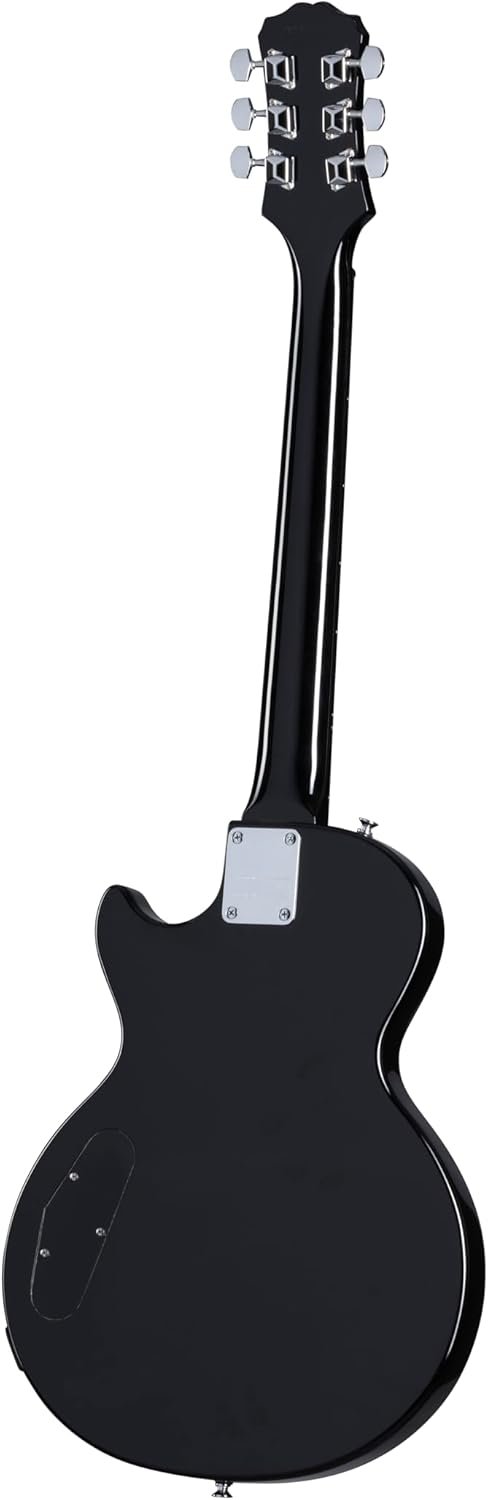
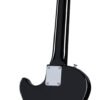
The neck is mahogany and bolted on rather than glued, which is the main structural difference between this model and the more expensive Les Pauls. A bolt-on joint is easier and cheaper to service, and it slightly reduces sustain compared with a set neck, though the difference is smaller than usually claimed. The fretboard carries 22 frets over the 24.75 inch scale.
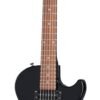
Electronics are a pair of open-coil humbuckers, described in the manufacturer copy as a 700T at the bridge and a 650R at the neck. Open coil means the covers are removed, showing the bobbins, which is cosmetic rather than tonal. Strings are nickel, the standard for electric guitars. There is no coil-split described, so the humbuckers cannot be thinned to single-coil tone.
What Comes with the Product
The listing describes the guitar alone. No amplifier, instrument cable, gig bag, case, strap, picks, clip-on tuner or spare strings are included.
That is a meaningful gap for an electric guitar, since an amplifier and a cable are required before it makes a usable sound, with a tuner and strap following closely. Anyone buying a first electric with no other gear should compare against a complete bundle instead. The guide to beginner guitar accessories sets out what to buy first and roughly in what order.
Who It Suits
This suits a player who wants the Les Paul shape and humbucker voice specifically, and who already owns an amplifier. The shorter scale makes it a sensible choice for smaller hands, and the classic rock and blues territory it covers is exactly what most beginners want to play.
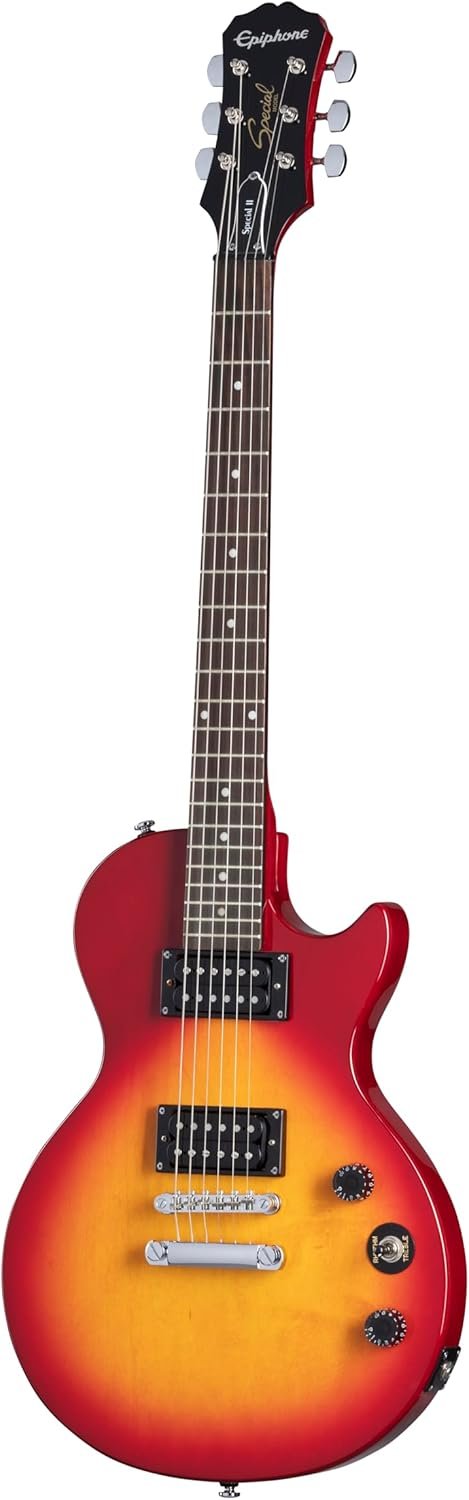
It does not suit someone who needs bright, glassy single-coil tones, or a player sensitive to weight, since mahogany makes this a heavy instrument to wear standing. Players wanting a lighter body should look at a poplar or basswood design. Comparable options in the same family include the Epiphone Les Paul Special Satin E1, the Epiphone Les Paul 100 and the Epiphone Les Paul Special-II in heritage sunburst.
How to Maintain
Wipe the strings and the ebony finish after each session, since a gloss black body shows every fingerprint and skin oils are the main cause of dull strings. Condition the fretboard when the strings are off, roughly twice a year, whether it turns out to be rosewood or laurel, since both are open-pored.
Check the neck bolts and tuner nuts occasionally with the correct tool. Support the headstock when the guitar is on a stand, because the angled headstock on Les Paul style designs is the most commonly broken part on this shape of guitar. Never lean it against a wall.
Tips and Recommendations
Have the guitar set up once after purchase. The bridge and tailpiece on this design allow string height and intonation to be adjusted properly, and a competent setup will improve playability more than any component upgrade at this level.
Pair it with a small practice amplifier of ten to fifteen watts, since humbuckers drive an amp harder than single coils and reach a usable tone at lower volume. If the relationship between the Epiphone and Gibson names is unclear, the Epiphone versus Gibson comparison explains it, and the guitar body shapes guide covers why this outline sounds different from a Stratocaster. More instruments sit under electric guitars.
Product FAQ
How many pickups does it have?
Two. The spec table says H-H-H, but the description and manufacturer copy both specify a 700T bridge and 650R neck humbucker pair.
Is the fretboard rosewood or laurel?
The listing states both. The description says rosewood and the specification table says laurel wood, so confirm with the seller if it matters.
Is the neck glued or bolted on?
Bolted on. The manufacturer copy specifies a bolt-on mahogany neck, which is the main structural difference from more expensive Les Paul models.
Does anything come with it?
No. The listing describes the guitar only, with no amplifier, cable, case, strap or tuner included.