Description
Review of the GROTE Jazz Electric Guitar Hollow Body with Chrome Hardware and P90 Pickup, Red
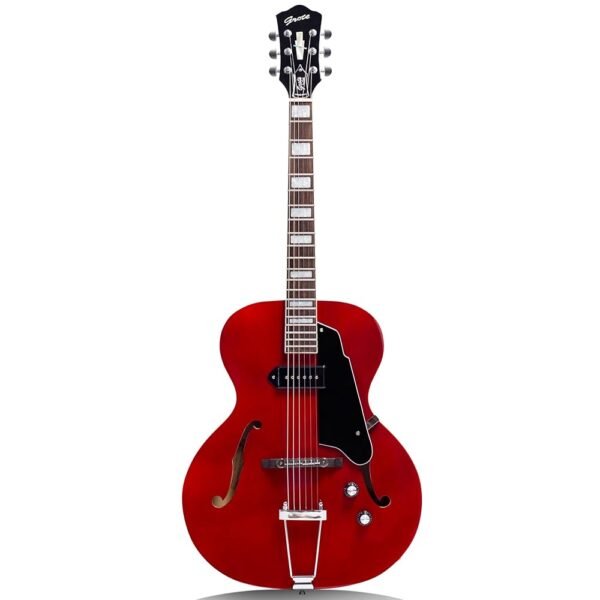
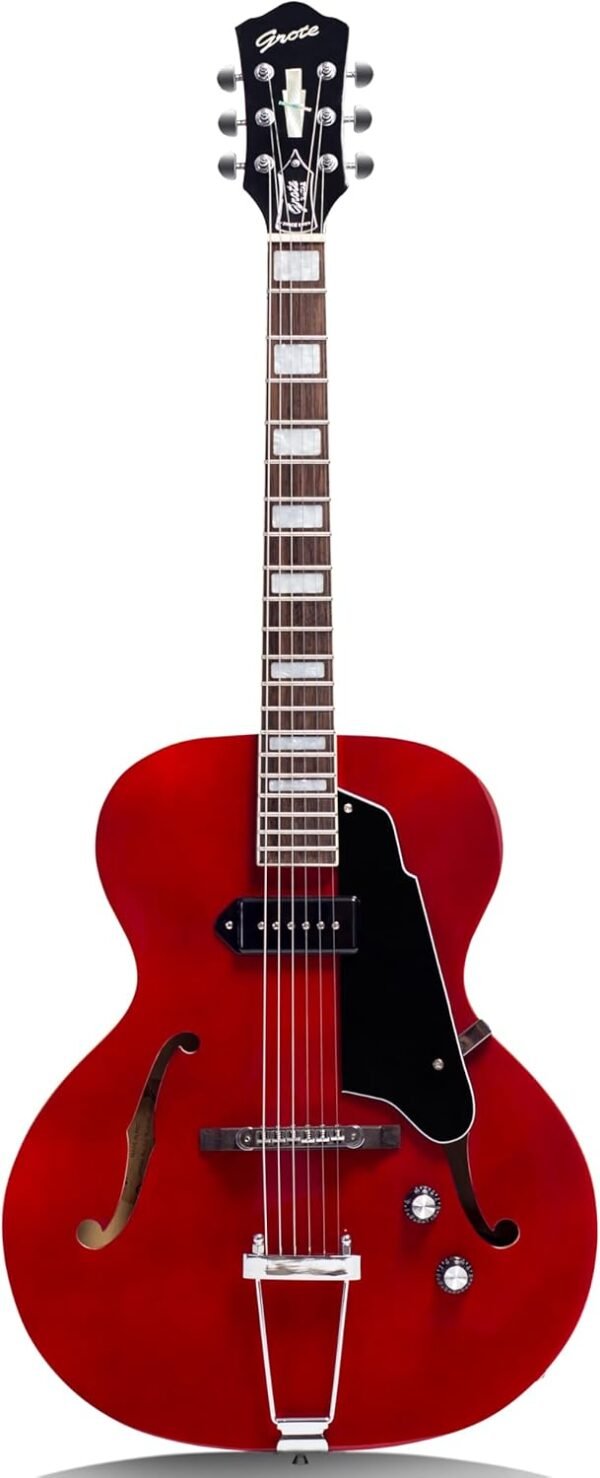
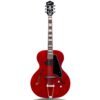
This Grote is a hollow body electric in the jazz box tradition, fitted with P-90 pickups, chrome hardware and a trapeze tailpiece. It uses maple for the neck and body with a dark fingerboard the listing calls black wood, over a 25.5 inch scale. Hollow body guitars with P-90s occupy a specific tonal space between a clean jazz archtop and a raw rock and roll voice.
Pros & Cons
Pros
- P-90 pickups are a genuinely distinctive choice. They are single coils with a wider, flatter coil than a Stratocaster pickup, giving more output and midrange thickness while keeping single-coil clarity. In a hollow body they produce a warm, woody tone that neither humbuckers nor standard single coils replicate.
- A hollow body responds differently under the fingers. The air inside the body adds resonance and a slight natural compression, so notes bloom rather than starting hard. It also means the guitar is quietly audible unplugged, which suits late-night practice.
- The trapeze tailpiece reduces stress on the top. Anchoring the strings at the tail rather than through the body is the correct engineering for a thin hollow top, and it makes string changes straightforward.
- The 25.5 inch scale is the industry standard. Fret spacing and tension match most other electrics, so nothing has to be relearned coming from a solid body instrument.
Cons
- The fret count contradicts itself. The listing states the guitar has 20 frets, then in the next sentence refers to it being tuned at the 22nd fret. A guitar with 20 frets does not have a 22nd, so one of the two figures is wrong.
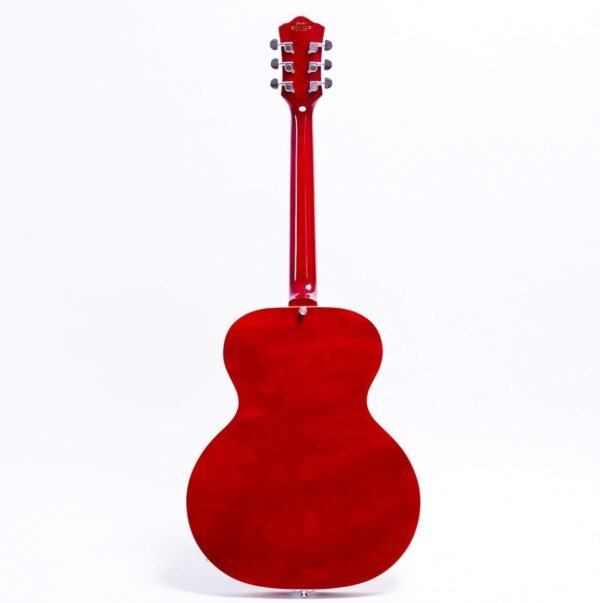
- The body wood is given two answers. The spec table lists the body and top as maple but the back as basswood, while the description says Canadian maple for both neck and body. Those cannot both be right.
- The fingerboard is described only as black wood. That is a trade term rather than a species. It could be dyed hardwood or a composite, and the listing gives no way to tell.
- The listed depth is impossible. Dimensions of 42.13 by 16.54 by 1.69 inches describe something under two inches deep, which cannot be a hollow body guitar. Hollow bodies are typically two to three and a half inches deep, and that depth is the whole point of the design.
- Nothing is included. No amplifier, cable, case, strap, tuner or picks are described, and hollow bodies are more fragile than solid bodies, so a case matters more here.
Detailed Product Description
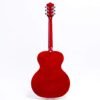
The body is a hollow archtop shape finished in red, with the wood specification disputed as noted above. Maple is the traditional choice for archtop backs and sides because it is bright and reflective, which counteracts the natural warmth of a hollow chamber. The listing also offers the same design in sunburst and natural. The nut width is given as 42mm, which is close to standard for an electric guitar and slightly narrower than many jazz boxes.
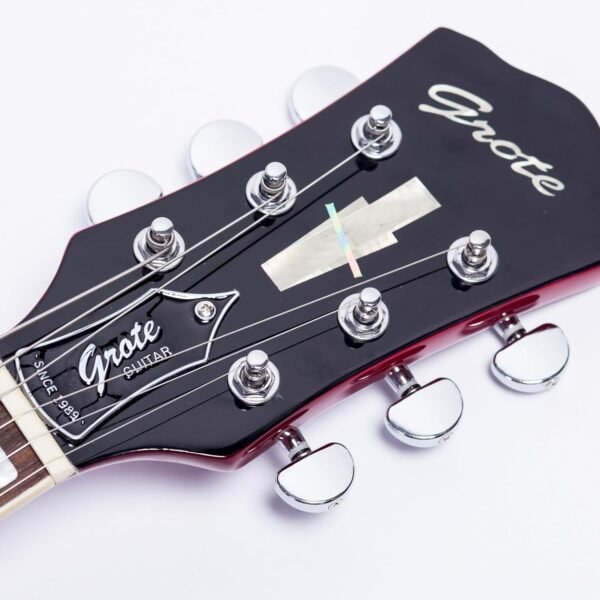
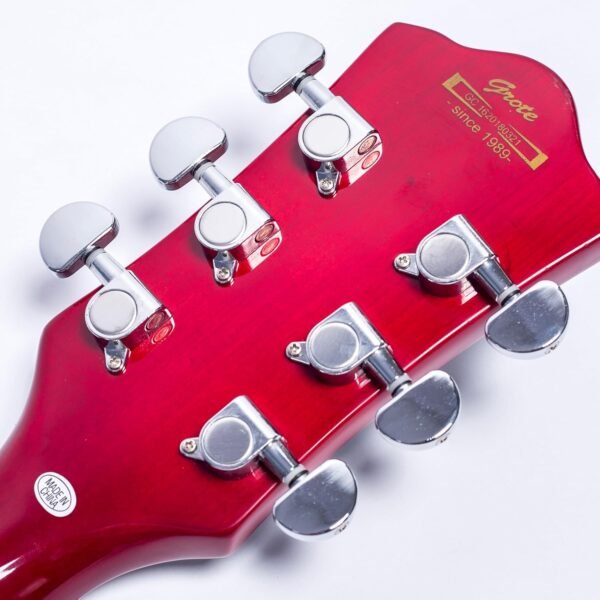
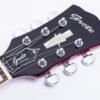
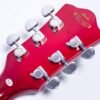
The neck is maple, described as Canadian maple, which is a stiff and stable choice. The fingerboard is the unspecified dark wood discussed above. Hardware is chrome throughout, including the tuners and the trapeze tailpiece. A trapeze anchors the strings to a metal frame at the tail of the body rather than passing them through the top, which is necessary because a hollow top cannot carry the downward load a solid body can.
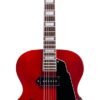
Electronics are P-90 pickups with volume and tone controls. P-90s are single coils, so they will pick up mains hum near screens and dimmer switches, and in a hollow body they are also more prone to feedback at high gain than a solid body would be. That is characteristic of the design rather than a fault, and it is why hollow bodies are usually played clean or with moderate overdrive rather than heavy distortion.
What Comes with the Product
The listing describes the guitar alone. No amplifier, instrument cable, gig bag, hard case, strap, picks, clip-on tuner or spare strings are included.
The listing does note that the strings are shipped slack to reduce transit damage, which means the guitar will need tuning up and settling before it plays properly. A case is worth prioritising here more than on a solid body, because a hollow top is thin and takes impact damage far more easily. The comparison of cases and gig bags covers which is appropriate.
Who It Suits
This suits a player drawn to jazz, blues, rockabilly or vintage rock and roll, who wants a hollow body voice without the outlay a name-brand archtop requires. It also suits a recording hobbyist who wants a texture distinct from the solid body guitars already in the collection.
It does not suit a metal or high gain player, since hollow bodies feed back at volume and P-90s add to that. It is also not a first guitar, because the larger body and specific voice make it a less flexible starting point than a solid body. Comparable options include the Grote GRS-001 semi-hollow, the Grote MG-404 and the IYV IJZ-300 hollow body.
How to Maintain
Hollow bodies react to humidity more than solid bodies, because the top is thin and unsupported across most of its area. Keep the guitar away from radiators and out of direct sun, and store it in a case rather than on an open stand where it will collect dust inside the f-holes.
Wipe the strings after each session. When changing strings on a trapeze tailpiece, change them one at a time rather than removing all six, because the floating bridge on many archtop designs is held in place only by string pressure and will fall out of position if the tension is fully released.
Tips and Recommendations
Mark the bridge position before the first string change. A pencil line on the top either side of the bridge feet means intonation can be restored exactly if the bridge shifts, which saves a great deal of trial and error later.
Play it clean or with light overdrive to start. Pushing a hollow body into heavy gain produces feedback long before it produces the tone most players are chasing, and P-90s reach a satisfying edge at modest settings. The guitar body shapes guide explains why hollow, semi-hollow and solid bodies behave so differently. More instruments sit under electric guitars.
Product FAQ
How many frets does it have?
The listing contradicts itself, stating 20 frets in one sentence and referring to the 22nd fret in the next. Treat the fret count as unconfirmed.
What is the fingerboard made of?
The listing says only black wood, which is a trade description rather than a named species. No further detail is given.
What are P-90 pickups?
Wide single-coil pickups with more output and midrange than a standard single coil, but without the noise rejection of a humbucker.
Does it come with a case?
No. The listing describes the guitar alone, with no case, gig bag, amplifier, cable, strap or tuner included.