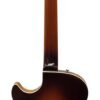
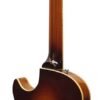
Description
Review of the IYV IJZ-300 TSB Jazz Hollow Body Electric Guitar
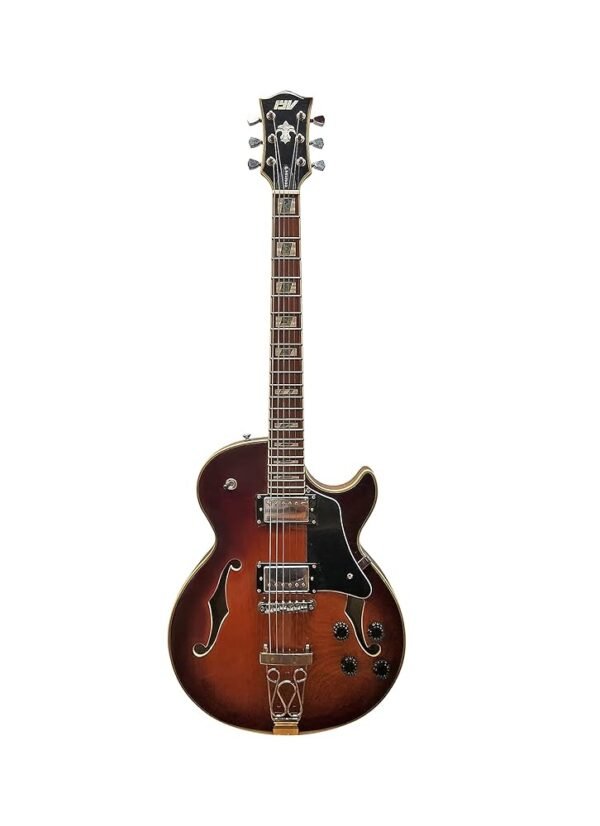
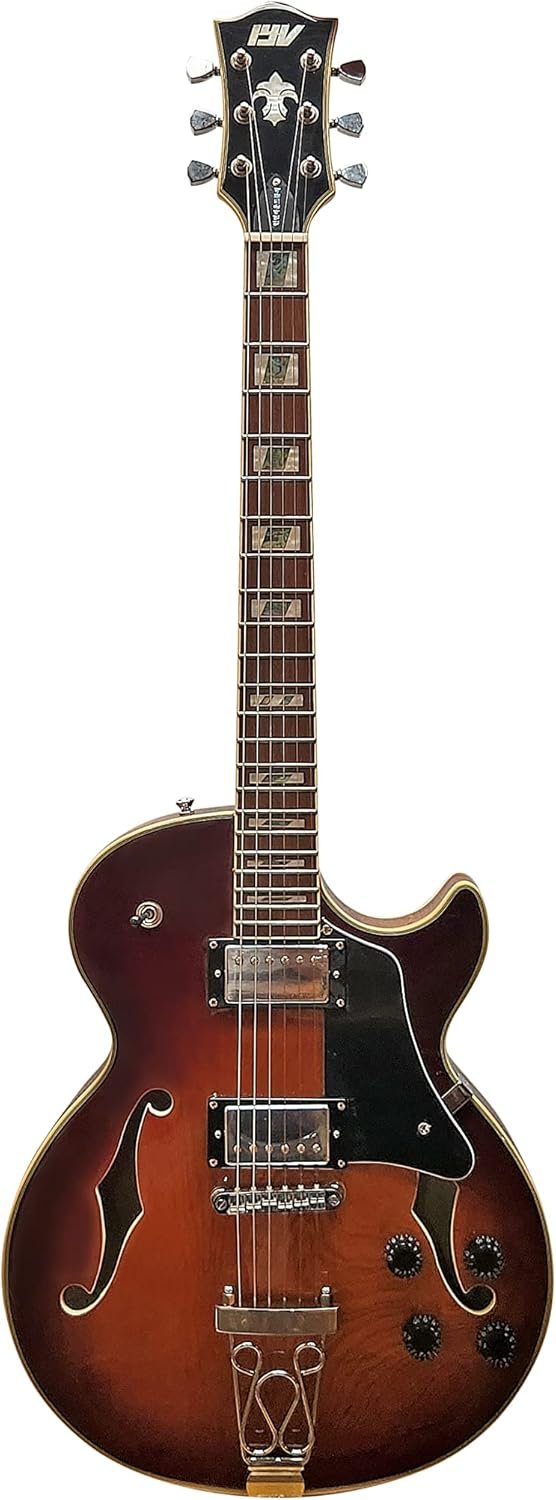
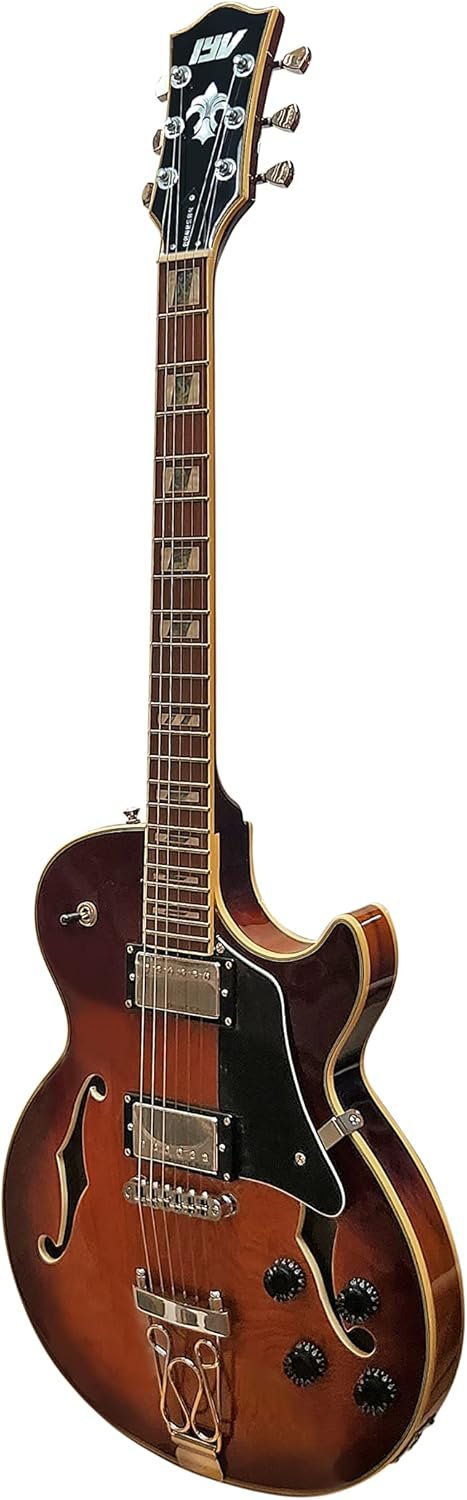
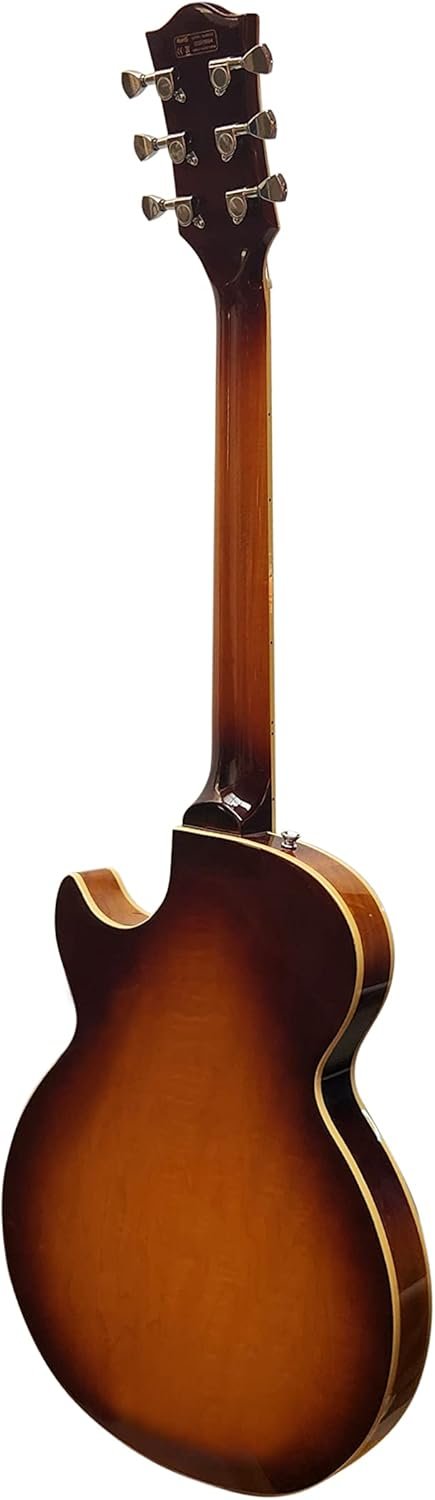
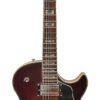
This is a tobacco sunburst archtop-style electric guitar with two humbucking pickups and a Tune-O-Matic bridge, built in Vietnam and machined by CNC. It is aimed at players who want the semi-hollow jazz and blues voice associated with double-cutaway archtops without the outlay those instruments normally carry.
Pros & Cons
- Two humbucking pickups suit this body style. Humbuckers cancel the mains hum that plagues single coils, which matters far more on a hollow or semi-hollow guitar where the body itself can pick up noise and feed back.
- A Tune-O-Matic bridge allows proper intonation. Each string sits on its own adjustable saddle, so intonation can be set individually rather than compromised across shared saddles.
- The 24.75 inch scale is published and is the right choice. The shorter of the two common electric scales gives lower string tension at pitch, which makes bending easier and produces the warmer, rounder attack this style of guitar is bought for.
- Jatoba is a sensible fingerboard timber. Dense, hard-wearing and close in feel to rosewood, it takes fingerboard oil and holds fret slots well.
- CNC machining gives consistency. Computer-cut neck pockets and body routes mean the tolerances are repeatable between units, which is the main variable that makes cheap guitars unpredictable.
- The listing calls it a “solid hollow-body”. Those two terms describe opposite constructions. A guitar is solid, semi-hollow with a centre block, or fully hollow, and the listing does not say which this is. That single fact determines feedback behaviour, weight and sound more than anything else on the specification.
- The timber specification contradicts itself. The body is listed as basswood, the back as mahogany and the top as spruce. On a semi-hollow instrument these are normally laminated maple. Three different timbers for body, back and top do not describe a coherent construction, and no laminate is mentioned.
- A spruce top on an electric archtop is unusual. Spruce is an acoustic soundboard timber. On an electric archtop it would behave very differently from the laminated maple used on almost every guitar of this type, and the listing offers no explanation.
- The description says almost nothing. Three short lines about CNC machining and neck quality is the entire product description. No fret count, no control layout, no pickup output, no nut width and no accessories are stated anywhere.
- Nothing is included with the guitar. No case, gig bag, cable, strap or lead is mentioned in the listing.
Detailed Product Description
What can be established from the published data is a guitar of roughly archtop proportions, 44 inches long overall and 20.47 inches across at its widest, weighing a listed 8.73 pounds. That width is consistent with a large-bodied archtop rather than a solid-body electric, and the depth of 3.94 inches also points to a hollow or semi-hollow construction.
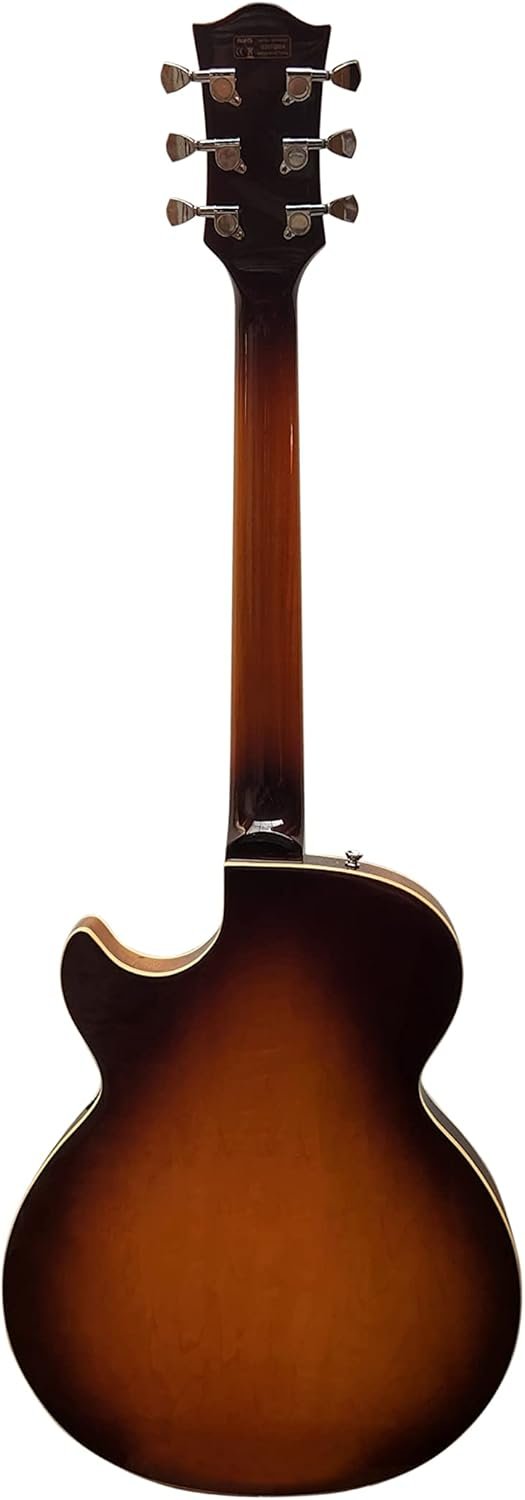
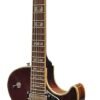
The neck is nyatoh, a Southeast Asian hardwood widely used as a mahogany substitute. It is moderately dense, stable and takes a satin or gloss finish well. The fingerboard is jatoba, a hard, close-grained timber that wears slowly under steel strings. The scale is 24.75 inches, the shorter standard, which suits the warm and forgiving character this style of instrument aims at.
Hardware is a Tune-O-Matic bridge with two humbuckers. Tune-O-Matic bridges normally pair with a separate stop tailpiece or a trapeze tailpiece on archtops, though the listing does not state which is fitted. Two humbuckers with independent volume and tone controls is the conventional arrangement, but again the control layout is not published.
Strings are nickel, the standard electric guitar string material, warmer and slightly less bright than stainless steel. Understanding string gauge matters more than usual on a short-scale archtop, since heavier sets are traditional for jazz voicing and change both tension and tone considerably; the string gauge guide covers the trade-offs.
What Comes with the Product
The listing does not state that anything is included beyond the guitar itself. No case, gig bag, cable, strap, picks, tools or documentation are mentioned anywhere in the description or the specification.
That means a buyer needs at minimum a cable, an amplifier and something to store the guitar in. A large-bodied archtop is awkward to keep safely without a proper case, since the body is wide and the top is arched, so a fitted case or a large gig bag should be budgeted for separately.
Who It Suits
This suits a player who wants the archtop voice for jazz, blues or rockabilly and already has an amplifier, or an experienced guitarist adding a different tonal colour to a collection without a large outlay. It also suits someone comfortable doing their own setup work, since a guitar with this little published detail will need assessing on arrival.
It suits less well an absolute beginner, both because nothing is included and because the construction cannot be confirmed from the listing. It also suits less well anyone playing at high gain, where hollow bodies feed back readily. Other options sit in electric guitars, and how outlines relate to sound is covered in the body shapes guide.
How to Maintain
Wipe the strings after every session. Keep the guitar out of direct sun and away from radiators, since a large thin-walled body reacts to heat and humidity more than a solid slab does.
Oil the jatoba fingerboard once or twice a year if it looks grey and dry, which is common on a new instrument that has spent months in transit. Check the neck relief a few weeks after arrival once the strings have been pulling on it. Check the output jack nut periodically. If the guitar has f-holes, keep dust and small objects out of them, since anything that gets inside a hollow body is difficult to retrieve.
Tips and Recommendations
Expect to set the intonation on arrival. Tune-O-Matic saddles are quick to adjust and this is the first job worth doing, since a guitar shipped from a factory will rarely be intonated for the strings a player actually wants.
Position matters more than usual with a hollow body. Standing directly in front of a loud amplifier will produce feedback, and turning at an angle or moving back usually solves it without touching the tone controls. Roll the volume control back slightly with the amplifier set louder for the classic warm archtop sound. If the fret ends feel sharp, a light dressing with fine abrasive paper is a straightforward fix.
Product FAQ
Is it hollow, semi-hollow or solid? Not resolved. The listing title calls it a “solid hollow-body”, which is contradictory, and the description never clarifies. The body dimensions suggest a hollow or semi-hollow build.
What is the body made of? The specification lists a basswood body, a mahogany back and a spruce top. Those three entries do not describe a coherent construction and no laminate is mentioned.
Does it come with a case? No. The listing does not state that anything is included beyond the guitar.
What comparable archtops are there? Similar options include the Grote GRS-001 semi-hollow, the Grote hollow body with P90 pickups and the IYV IP-350 TBK single cut.