
Description
Review of the Ashthorpe Full-Size Cutaway Thinline Acoustic-Electric Guitar Package
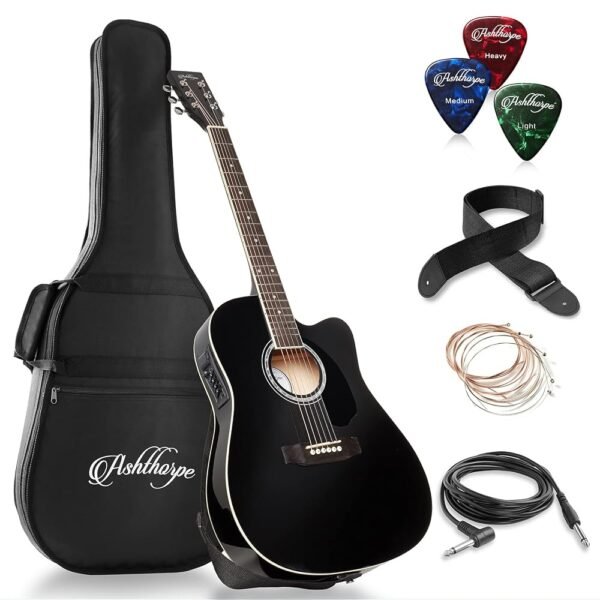
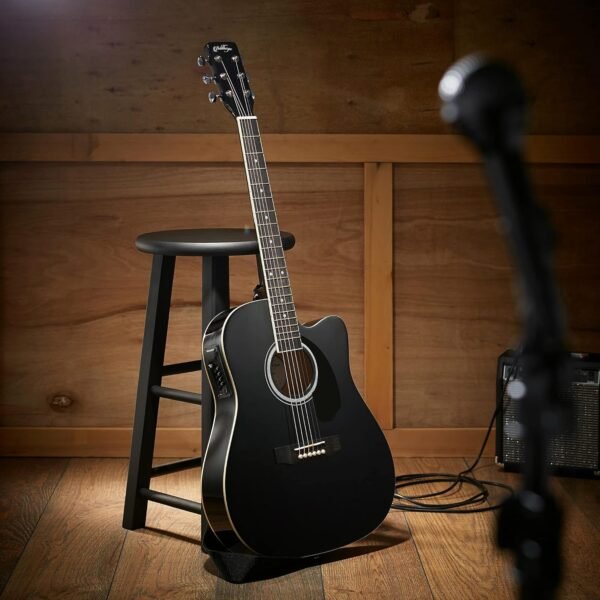
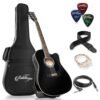
This is a full-size 41 inch thinline cutaway acoustic-electric in black, built around an X-braced spruce top with a four-band onboard preamp, and sold as a package with a gig bag, picks, a cable, a strap and a spare string set. It targets a beginner or improving player who wants one guitar that can be played quietly at home and plugged in when needed.
Pros & Cons
- A 3 inch thinline body is far easier to hold. A standard dreadnought is nearer 4.5 inches deep, and the reduction here makes a real difference to how the picking arm sits, particularly for smaller players and long seated sessions.
- X bracing under the top is the correct structural choice. Crossed braces spread string tension across the soundboard, which is what allows a steel-string top to stay flat for years while still moving freely enough to make sound.
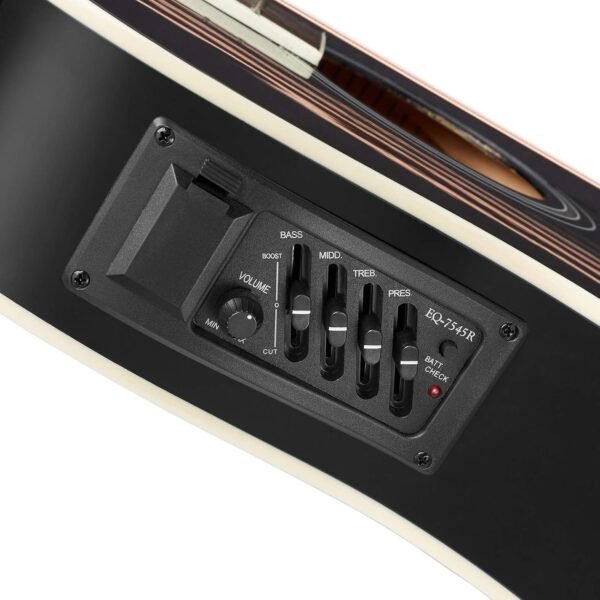
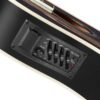
- Four-band EQ gives useful control. Separate bass, mid-range, treble and presence bands mean the harshness that undersaddle pickups are known for can be reduced at the guitar rather than fought at the amplifier.
- Two full sets of phosphor bronze strings are supplied. Phosphor bronze is a step above the plain brass strings usually fitted at this level, and having a spare set means the first restring costs nothing.
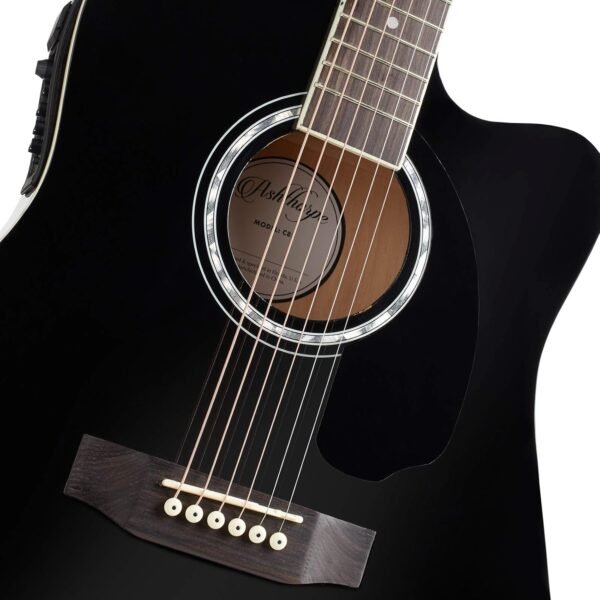
- The cutaway opens up the upper frets. The scooped shoulder lets the fretting hand reach past the twelfth fret, which a full-depth body blocks.
- The specification table says the body material is metal. The description is unambiguous that this is a wooden guitar with a spruce top and basswood body. A metal body entry is a straightforward data error, but it is sitting in the published specification and contradicts the description directly.
- The fretboard is listed as basswood. Basswood is far too soft to serve as a fingerboard and no manufacturer uses it that way. The description never states the fretboard material at all, so what is actually fitted cannot be confirmed.
- The published dimensions are impossible. The table gives 3.5 by 3.5 by 41 inches. A guitar body around 3.5 inches wide does not exist. The 41 inch length is credible, the rest is not.
- The 9 volt battery is required but not supplied. Without it the preamp does nothing, so the guitar cannot be plugged in on arrival unless a battery is already to hand.
- Scale length is never published. That is the number that decides string tension and chord reach, and it is absent.
Detailed Product Description
The top is A-grade spruce, X braced. Spruce is the standard soundboard timber because it is stiff for its weight and therefore converts string energy into air movement efficiently. Grading refers to grain tightness and evenness rather than any measured performance figure, so it should be read as a description of appearance as much as sound. Whether the top is a single solid sheet or a laminate is not stated, and that distinction matters more than almost anything else on an acoustic; the solid top and laminate comparison explains why.
The back and sides are basswood, described in the listing as chosen for warmth. Basswood is light, soft and tonally neutral, which suits a thinline build where the body contributes less to the sound than the top does. The neck is listed as okoume, a light open-pored hardwood used widely as a mahogany substitute.
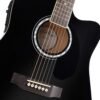
The finish is a high-gloss coating with chrome tuning pegs. Gloss looks good and seals the timber, though it shows fingerprints and buffing swirls readily. Chrome sealed tuners keep dust out of the gears and need no maintenance beyond an occasional check that the mounting nuts are tight.
The electronics are a four-band preamp and pickup system. On acoustic-electrics of this type the pickup sits under the saddle and reads string pressure rather than magnetism, which is why the plugged-in sound differs from the room sound. The presence band, the fourth control, works above the treble range and is the one that removes the glassy edge. What to plug into is a separate decision, covered in the guide to amplifying an acoustic-electric.
What Comes with the Product
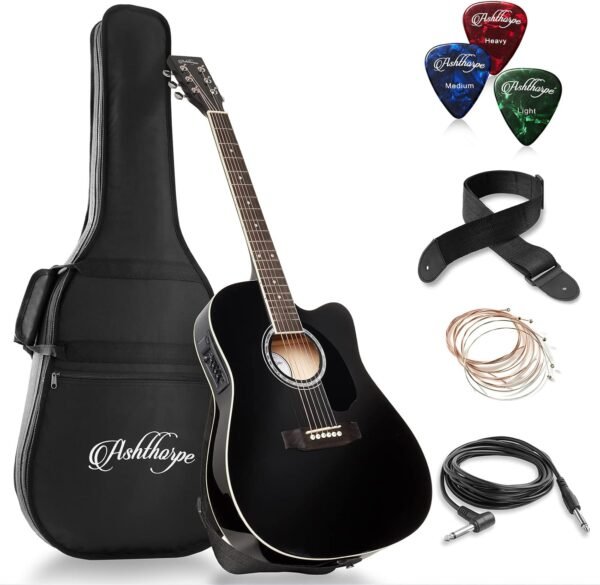
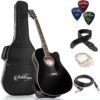
The listing states the bundle includes the guitar, a soft nylon gig bag, thin, medium and heavy celluloid picks, the onboard four-band pickup and EQ, a guitar cable, a shoulder strap, an extra set of strings and an owner’s manual.
Not included: the 9 volt battery the preamp needs, an amplifier, a tuner, a capo or a stand. Supplying three pick gauges is a small but genuinely thoughtful touch, since pick thickness changes strumming feel more than most beginners expect. The battery is the item to buy alongside the guitar.
Who It Suits
This suits a beginner who expects to plug in at some point, a singer who needs to be heard alongside other instruments, or anyone who finds a full-depth dreadnought awkward to hold for long.
It suits less well a player chasing maximum unplugged volume and low end, where a deeper solid-top dreadnought does more, or a buyer who wants the tonewood specification confirmed before purchase, since several fields in this listing cannot be trusted. Alternatives sit in acoustic-electric guitars and in beginner starter kits.
How to Maintain
Keep it in a stable room away from radiators and out of direct sun. A spruce top reacts to humidity swings, and a dry room in winter is what causes shrinking, sharp fret ends and in bad cases a cracked soundboard.
Wipe the strings after playing to keep the phosphor bronze bright. Remove the battery if the guitar will go unplayed for months, since most acoustic preamps drain the cell whenever a cable is left in the jack. Clean the gloss with a dry soft cloth only. Store it in its bag rather than leaning it against furniture.
Tips and Recommendations
Unplug the cable whenever the guitar is not in use. The jack is the power switch on almost every acoustic preamp, and a lead left in overnight is the usual reason a battery dies within days.
Work through the three supplied pick gauges before deciding. Thin picks strum lightly and forgivingly, heavy picks give more attack and control for single notes. On the EQ, start flat and cut rather than boost, since undersaddle systems are usually too bright rather than too dull. If a fresh setup is needed, lowering the action at the saddle is the single change that makes the biggest difference to playability.
Product FAQ
Is the body really metal? No. The description states a spruce top with basswood back and sides. The specification field listing a metal body contradicts that and is a data error.
Does the guitar need a battery? Yes, one 9 volt alkaline battery for the preamp, and it is not included.
What is the scale length? Not published. The listing describes the guitar as full size at 41 inches overall but gives no scale measurement.
What comparable models are there? Similar options include the Jameson thinline acoustic-electric, the Ashthorpe full-size dreadnought acoustic-electric and the Ashthorpe left-handed dreadnought acoustic-electric.