
A solid top acoustic has a top made from a single piece of wood, split and joined down the centre. A laminate top is several thin layers glued together with the good looking one on the outside. The top is the part of an acoustic guitar that actually produces the sound, which is why this one distinction changes the tone more than anything else on a spec sheet.
Solid tops sound fuller, resonate more freely and open up over years of playing. Laminate tops sound flatter but are tougher, shrug off humidity swings, and cost less to build. Neither is automatically the right answer, and which one suits you depends on where the guitar will live and what you want from it.
Key takeaways
- The top does most of the work in producing an acoustic guitar’s sound. Back and sides matter far less.
- Solid tops are louder, richer in overtones, and they improve with age and playing.
- Laminate tops are more durable and much less bothered by dry or humid conditions.
- “Solid top” almost always means the top only. Back and sides on affordable guitars are still laminate.
- Listings that say only “spruce top” without the word solid usually mean laminate.
How to tell which one a guitar has
Start with the wording. Makers advertise a solid top because it costs more to build, so if a listing says “solid spruce top” it means it. If it says “spruce top” or “select spruce” with no mention of solid, assume laminate.
Then look inside the soundhole at the edge of the wood. On a solid top the grain lines on the outside face continue over the edge and down the inside. On a laminate you can often see the sandwich, a thin decorative outer layer sitting on a differently coloured core.
Grain pattern is a weaker clue but still useful. A solid top usually shows a symmetrical grain pattern either side of the centre seam, because the two halves came from the same piece of wood opened like a book. Laminate tops often have grain that runs uniformly across the whole face with no centre join.
What the difference actually sounds like
A solid top vibrates as one piece. Nothing damps it, so it moves more freely, produces more volume for the same effort, and generates a richer set of overtones. That is what people mean when they call a guitar warm, complex or alive.
A laminate top is stiffened by the glue between its layers. It still works, but it moves less, so the sound is quieter, more compressed and thinner in the low end. Strummed hard, a laminate guitar tends to hit a ceiling where the sound stops getting bigger.
Solid tops also change over time. As the wood ages and is played, the fibres loosen slightly and the guitar becomes more responsive. This happens over years rather than weeks, and it is one reason a good solid top guitar is worth keeping. A laminate top stays roughly as it started.
Where laminate is the better choice
Laminate is not simply the cheap option. It is genuinely more stable, because the cross grain layers resist the shrinking and swelling that solid wood does when humidity changes. A solid top in a dry heated room can develop a crack. A laminate top usually will not.
That makes laminate the sensible pick for a guitar that will be knocked about, taken camping, left in a car boot, handed to a child, or kept somewhere with no humidity control. Anyone with a solid top guitar should read how to store a guitar, because storage is where solid tops are most often ruined.
Laminate is also common on the back and sides of otherwise good guitars, and that is much less of a compromise. The back and sides mostly reflect sound rather than generate it, so an all solid guitar is a refinement rather than a requirement.
Is a solid top worth it for a beginner?
Usually yes, if the budget stretches. The step from laminate to solid top is the largest audible improvement available at the entry level, and it costs less than most people expect because the change is only to one part of the guitar.
The practical benefit is motivation. A guitar that sounds good rewards practice, and a beginner who likes the sound of their own strumming practises more. A guitar with a solid top also stays worth playing after the player improves, which means it does not need replacing in year two. That reasoning is covered further in how much to spend on a first guitar.
The exception is a guitar for a young child or for rough travel, where durability wins outright, and where the player is not yet listening for tonal nuance anyway.
Four acoustics that show the difference
These are drawn from the review library and cover both sides of the choice.
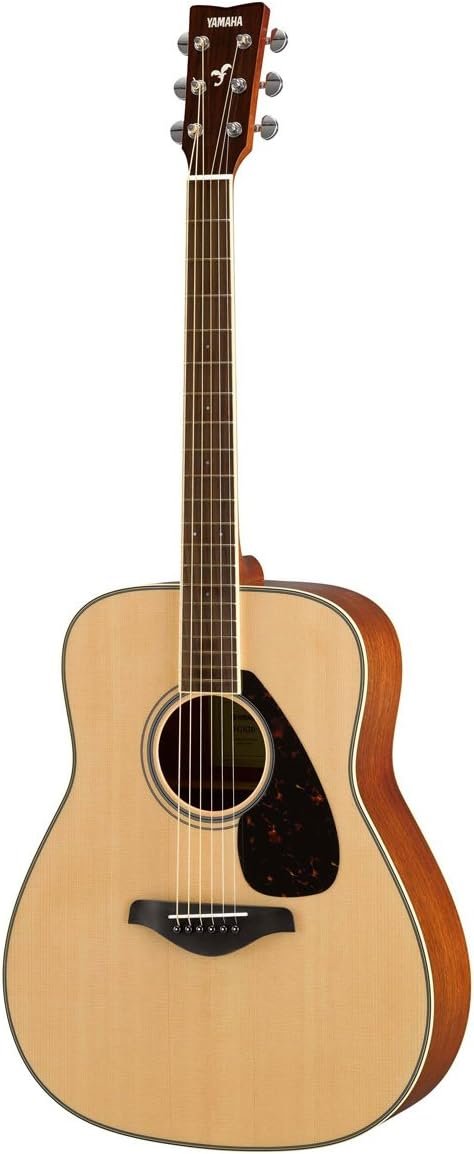
- Yamaha FG800J suits the beginner who wants a solid top without complications. It pairs a solid spruce top with mahogany and nato back and sides and uses scalloped bracing to get more out of that top.
- Yamaha FG820 suits someone who wants the same solid spruce approach with a brighter, more sustained voice and a matte finish neck that stays comfortable through long sessions.
- Fender CD-60S suits players who find spruce too bright. The solid mahogany top gives a warmer, rounder tone, and the rolled fingerboard edges make the neck easy going for new hands.
- Fender Dreadnought bundle shows the laminate case done sensibly. Its all laminate construction is chosen for durability under everyday use, and it arrives with a gig bag, tuner and spare strings, which suits a guitar that will travel.
Browse the full acoustic guitars section for more.
Frequently asked questions
Does an all solid guitar sound much better than a solid top one?
The difference is real but far smaller than the step from laminate top to solid top. Solid back and sides add a little more resonance and complexity. Most players notice the first change immediately and the second only in direct comparison.
How long does a solid top take to open up?
Years rather than months, and only with regular playing. A guitar left in its case does not develop. Treat any improvement as a slow bonus rather than a reason to buy, because a good solid top guitar should sound good on the day it arrives.
Do solid top guitars need a humidifier?
In a dry climate or a heated home in winter, yes. Solid wood loses moisture and shrinks, which can lower the action, cause fret ends to protrude, and in bad cases crack the top. A case humidifier is inexpensive protection.
Does the same distinction apply to nylon string guitars?
Yes. Classical guitars are built with solid or laminate tops in exactly the same way, and solid cedar or spruce tops are the usual step up. The wider comparison between the two string types is in nylon vs steel string guitars.