
Choose nylon if you want a soft, warm sound and the gentlest possible start for your fingertips. Choose steel if you want the bright, loud, familiar sound of pop, folk, rock and country records. The strings are only the visible part of the difference, because nylon string and steel string guitars are built differently from the inside out and are not interchangeable.
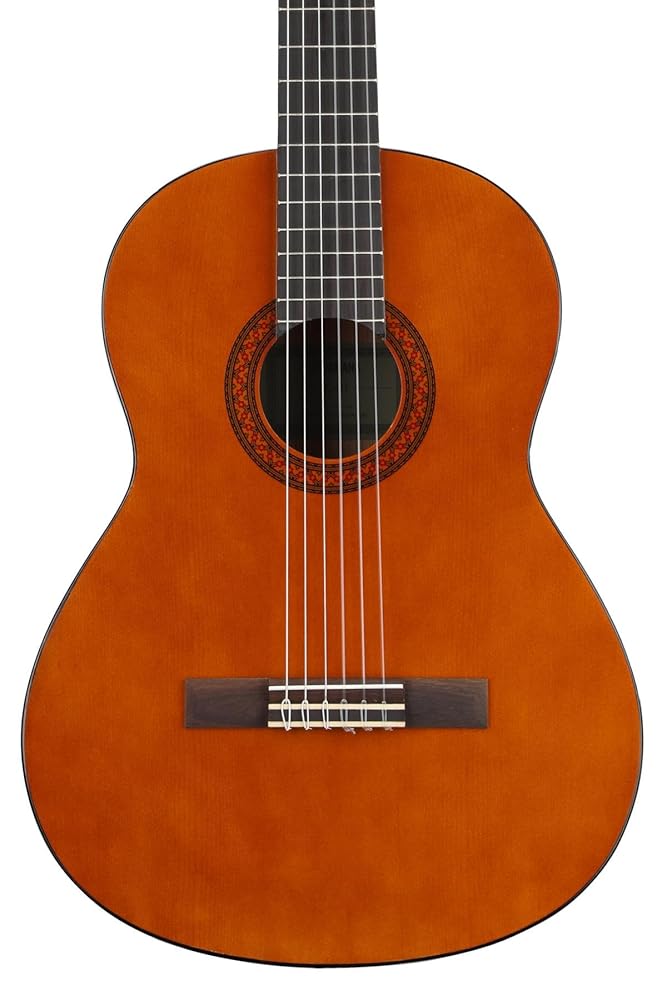
Nylon string guitars, usually called classical guitars, have wider flat necks, no fret markers on some models, and lighter internal bracing. Steel string acoustics have narrower necks, heavier bracing to cope with far greater string tension, and a truss rod in the neck. Fitting the wrong strings to either one is a genuine way to damage a guitar.
Key takeaways
- Nylon strings are under much lower tension, so they are far easier on untrained fingertips.
- Steel strings are brighter and louder and match the sound of most popular music.
- Classical necks are wider and flatter, which helps fingerstyle and hinders barre chords for small hands.
- Never fit steel strings to a classical guitar. The tension can pull the bridge off or twist the neck.
- Nylon suits young children, classical and Latin repertoire, and anyone with sensitive fingertips.
How the two instruments differ physically
String tension drives everything. A set of steel strings pulls on the body with several times the force of a nylon set. Steel string guitars therefore need heavier internal bracing, a stronger neck joint and an adjustable truss rod to resist the pull.
Classical guitars, built for lower tension, use lighter fan bracing and often have no truss rod at all. The neck is wider at the nut, typically around two inches, with a flat fingerboard and no radius. That width exists so the fingers of the right hand can pluck individual strings cleanly without catching neighbours.
Attachment differs too. Steel strings anchor with ball ends held by bridge pins. Nylon strings are tied at the bridge, which takes practice the first few times and is a small but real learning curve at string change. Anyone new to changing strings should read how often to change guitar strings.
How each one sounds
Nylon is warm, round and mellow, with a soft attack and a quick decay. Notes bloom rather than snap. That quality suits classical repertoire, flamenco, bossa nova, Latin styles and quiet accompaniment behind a voice.
Steel is bright, cutting and sustaining, with a defined attack and far more volume. Strummed chords ring out with the metallic shimmer that sits underneath most acoustic pop and folk recordings. Played fingerstyle it stays clear and articulate rather than soft.
Neither is more advanced than the other. They are different instruments in the same family, and plenty of players own both.
Comfort and the first month of playing
Nylon wins clearly here. Lower tension means less finger pressure to hold a note down, and the smooth surface of the string is kinder than the wound metal of a steel set. Beginners on nylon can usually practise for longer before their fingertips give up.
Steel strings build calluses faster because they have to. Most people find the discomfort fades within two to four weeks of consistent practice, and lighter string gauges make that period easier. String choice matters more than people realise, and guitar string gauge explained covers how to pick a set.
The wide classical neck cuts both ways. It gives each finger more room, which helps fingerstyle enormously, but it makes a barre chord a longer stretch. Players with small hands often find a narrower steel string neck easier despite the higher tension, and guitars for small hands goes into which shapes work.
Which one suits which player
Choose nylon if you want to play classical or Latin music, if you are buying for a young child, if you have sensitive fingertips or a job that depends on them, or if you want the quietest acoustic option in a shared home.
Choose steel if the songs you want to play are pop, folk, country, blues or rock, if you want to strum and be heard, or if you expect to sing over the guitar. Most people asking the question want steel and are only considering nylon because someone warned them about sore fingers.
For children the comfort argument carries more weight, since young players give up faster when something hurts. Sizing is the other half of that decision and is covered in what size guitar a child needs.
Four guitars covering both sides
These are drawn from the review library and span the range from small nylon to full steel string.
- Yamaha C40II suits the standard nylon starting point. It is a full size classical with a spruce top and a rosewood fingerboard and bridge, and it is the guitar most beginner classical lessons assume.
- Yamaha CG122MCH suits a player who wants a step up in the nylon direction. The solid cedar top gives a warmer, richer voice, and the low string action keeps it comfortable for learners.
- Cordoba Mini II M suits travel and smaller players. It is a compact layered mahogany nylon string guitar with a shorter scale and standard tuning, so nothing has to be relearned when moving to a full size instrument.
- Fender CD-60S suits the steel string side of the choice for someone who still wants warmth. The solid mahogany top is rounder sounding than spruce, and the rolled fingerboard edges reduce hand fatigue early on.
More of both types are listed under acoustic guitars.
Frequently asked questions
Can nylon strings be fitted to a steel string guitar?
It will not damage the guitar, but it does not work well. The lower tension leaves the top underdriven so the guitar sounds weak, and the narrow neck is not spaced for classical technique. Ball end nylon sets exist for this, and they are best treated as a novelty rather than a solution.
Do classical guitars stay in tune as well as steel string ones?
New nylon strings stretch a great deal and can take several days to settle, which surprises people changing strings for the first time. Once stretched they are stable, though nylon is more sensitive to temperature change than steel.
Is it harder to switch from nylon to steel later?
The music theory, chord shapes and reading skills all transfer. What has to be rebuilt is fingertip toughness and the adjustment to a narrower neck, which takes a couple of weeks. Going the other way, from steel to nylon, feels easy on the fingers and awkward on the wider fretboard.
Should a complete beginner start on nylon regardless?
Only if the music they want to play suits it. Starting on an instrument that cannot make the sound you are aiming for is a common reason beginners lose interest. The same logic applies to the wider choice in acoustic vs electric guitar for beginners.