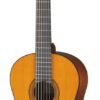
Description
Review of the Yamaha CG122MCH Solid Cedar Top Classical Guitar
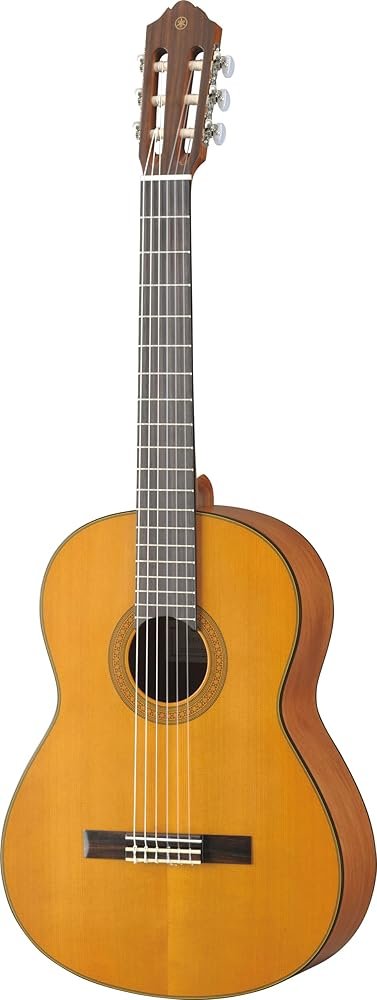
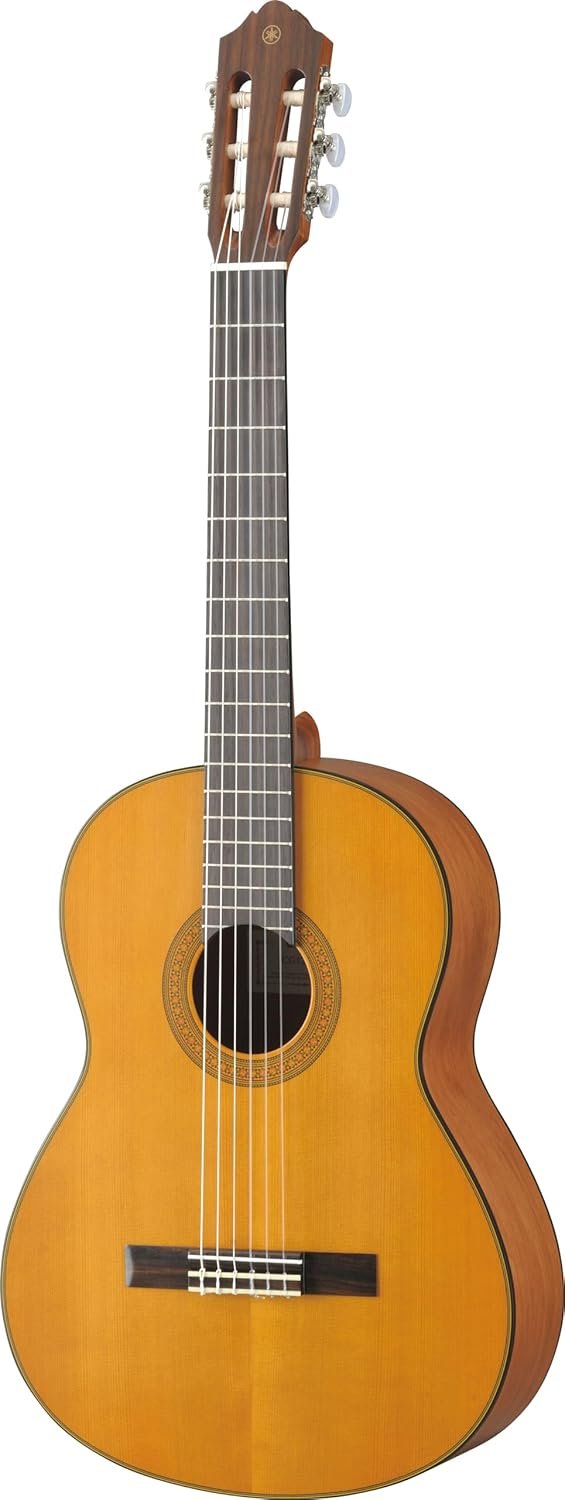
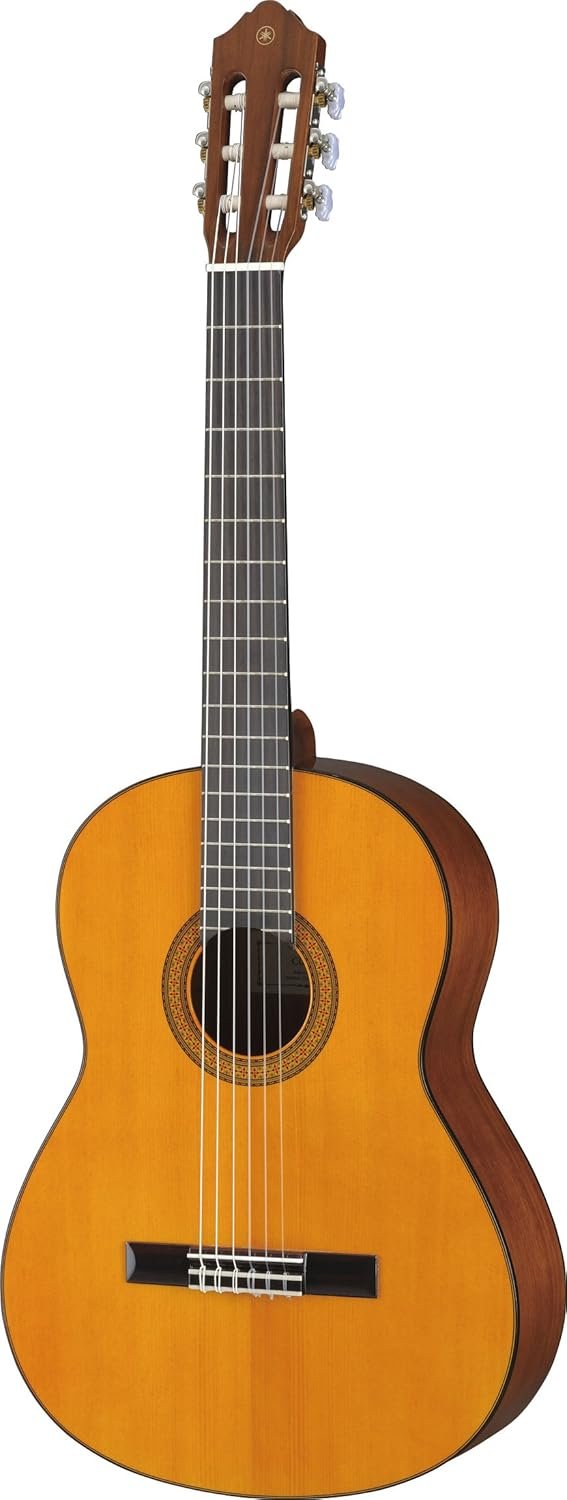
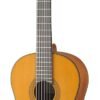
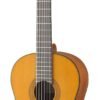
The Yamaha CG122MCH is a full size nylon strung classical guitar with a solid cedar top, a three ply neck and a natural matte finish. It sits above the entry level Yamaha classical models because of that solid top, and it is aimed at students moving beyond a first instrument and at adult players who want a warm, responsive nylon guitar without stepping into handmade territory. It appears in the classical and nylon string guitars section.
Pros & Cons
Pros
- The top is solid cedar, not laminate. This is the specification that separates a student guitar from a starter guitar. A solid top is a single piece of wood that flexes freely with the strings, and it continues to open up over years of playing. Cedar in particular responds quickly to a light touch, which suits fingerstyle and classical repertoire.
- Three ply neck construction. Laminating the neck from three sections with alternating grain resists the twisting and warping that a one piece neck can develop over years. It is a durability feature more often seen higher up the range.
- Low string action from the factory. Classical guitars often arrive with high action because the wide flat fingerboard and low string tension tolerate it, and low action makes the instrument considerably easier for a student to fret cleanly.
- Rosewood fingerboard and bridge. Rosewood is dense and oily enough to take fretting pressure without a finish coat, and on the bridge it holds the tie block for nylon strings securely.
Cons
- The body material field says spruce. The specification table gives spruce as the body material, while the same table lists cedar as the top and nato as the back, and Yamaha’s description says solid cedar top. Spruce appears nowhere in the description. The field is inconsistent with everything else published.
- The neck material is not listed at all. The specification table has no neck field, and the description says only that the neck is three ply without naming the woods. On a guitar sold partly on its neck construction, that is a gap.
- An instrument key of “C” is listed. Guitars are not keyed instruments. The field is meaningless here and suggests the data was populated from a template built for other instruments.
- No nut width is published. On a classical guitar the nut is much wider than on a steel string acoustic, and the exact width is the most useful comfort measurement for anyone with smaller hands. It is absent.
- Cedar is softer than spruce. A cedar top dents and marks more easily under a fingernail or a belt buckle, and it reaches its tonal ceiling sooner when played hard.
Detailed Product Description
The guitar is a full size six string with a 25.6 inch scale and 19 frets, weighing 4.79 pounds. A 25.6 inch scale is the classical standard, so every method book, every string set and every piece of repertoire will assume the same fret spacing. Nineteen frets is also standard for the type, since the classical body joins the neck at the twelfth fret and the remaining frets sit over the top.
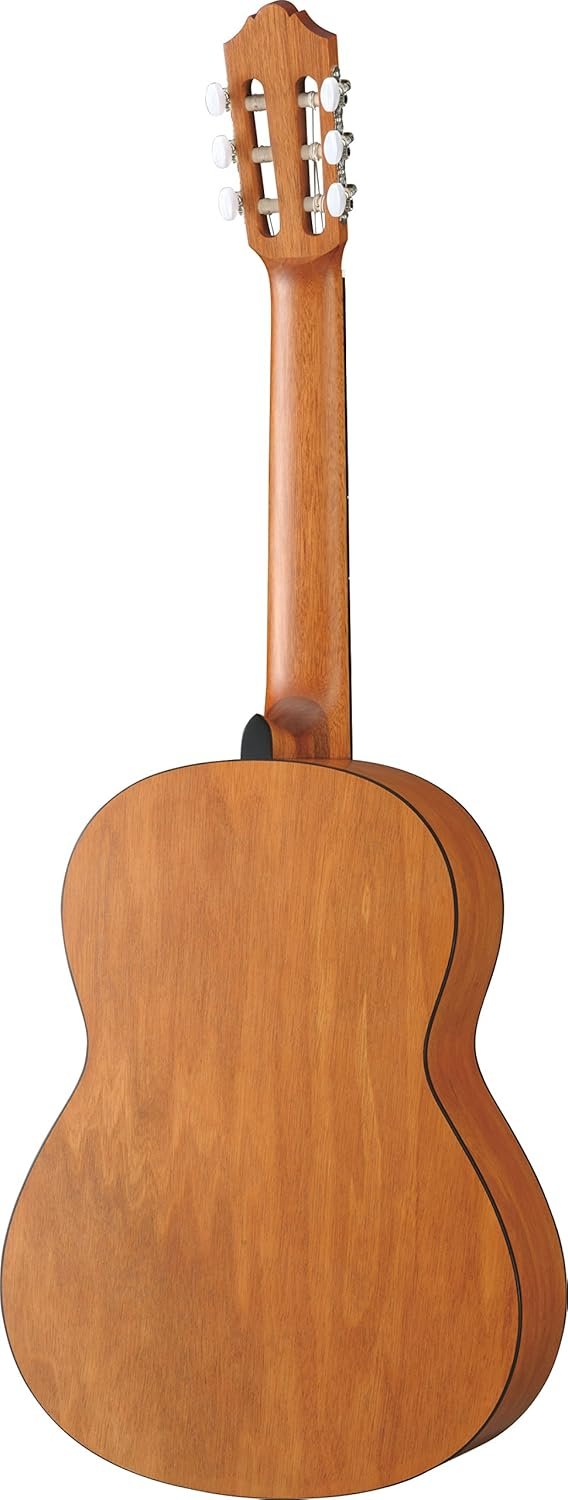
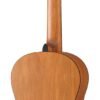
The top is solid cedar. Cedar and spruce are the two classical top woods, and they behave differently. Cedar is softer and less stiff, so it responds to a lighter touch and sounds warm and full straight away rather than needing years to loosen up. Spruce is brighter and has more headroom, rewarding a heavier attack and improving more dramatically with age. For a student or an amateur playing at moderate volume, cedar is the more immediately satisfying choice. The back is nato, a mahogany substitute similar in weight and stability, and the fingerboard and bridge are rosewood.
What Comes with the Product
The listing describes the guitar alone, assembled and strung with nylon strings, in a natural matte finish.
Not included: a gig bag or case, a tuner, a footstool, a capo, spare strings, a stand, a polishing cloth or any lesson material. A padded case matters more here than on a laminate instrument, because a solid cedar top is both softer and more sensitive to humidity than a laminate top would be. A footstool is worth adding for anyone learning classical technique, since it sets the playing posture that everything else builds on.
Who It Suits
This suits a student progressing past a first nylon guitar, an adult beginner who would rather buy once than twice, and anyone playing classical, flamenco influenced or fingerstyle repertoire where a responsive top matters. The solid cedar top and low action together make it noticeably easier to get a full sound out of than a laminate student guitar.
Look elsewhere if the goal is strummed pop and folk, where a steel string acoustic projects better and matches recordings, or if a small bodied instrument is needed for a child. Anyone with small hands should check the nut width before ordering, since classical necks are wide. Comparable Yamaha nylon guitars include the Yamaha C40II at the entry level and the Yamaha CGS103AII three quarter student model, while the Cordoba Mini II covers the small bodied nylon option. Players with a shorter reach should also read guitars for small hands.
How to Maintain
A solid top needs more care than a laminate one. Keep the guitar away from radiators and out of direct sun, and consider a case humidifier if the room drops below about forty percent relative humidity in winter, because a dry solid top can crack. Wipe the strings and the fingerboard after playing, since nylon holds skin oil and dulls quickly. Condition the rosewood fingerboard lightly twice a year. Be careful with a matte finish: gloss polish will fill the texture and leave permanently shiny patches, so use a dry or barely damp cloth only. Store it in a case rather than leaning against furniture, and see how to store a guitar for longer term advice.
Tips and Recommendations
Buy a case, a clip on tuner and a footstool with the guitar, since none are included and all three get used from the first session. Learn to tie a nylon string properly at the bridge before the first string change, because a badly tied knot slips and the guitar will not hold pitch. Expect new nylon strings to stretch for several days; retune before every session during that period and the settling will pass. Use the fingernails or the fingertips rather than a pick, since a pick on a cedar top will mark it quickly. If the tone starts sounding dull rather than warm, a fresh set of strings restores more than most players expect, and how often guitar strings should be changed covers the timing.
Product FAQ
Is the top solid? Yes. Yamaha’s description states a solid cedar top, which is the main reason to choose this model over the laminate topped models below it.
What wood is the body? The specification table says spruce, which conflicts with everything else published: the top is cedar and the back is nato, and spruce is not mentioned in the description at all.
What is the scale length? 25.6 inches with 19 frets, which is standard for a full size classical guitar.