




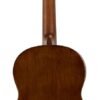
Description
Review of the Yamaha C40II Full Size Classical Guitar (Natural Finish)
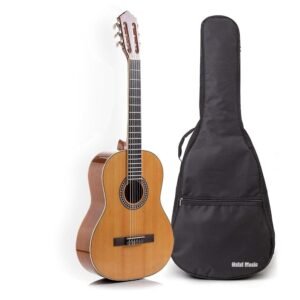
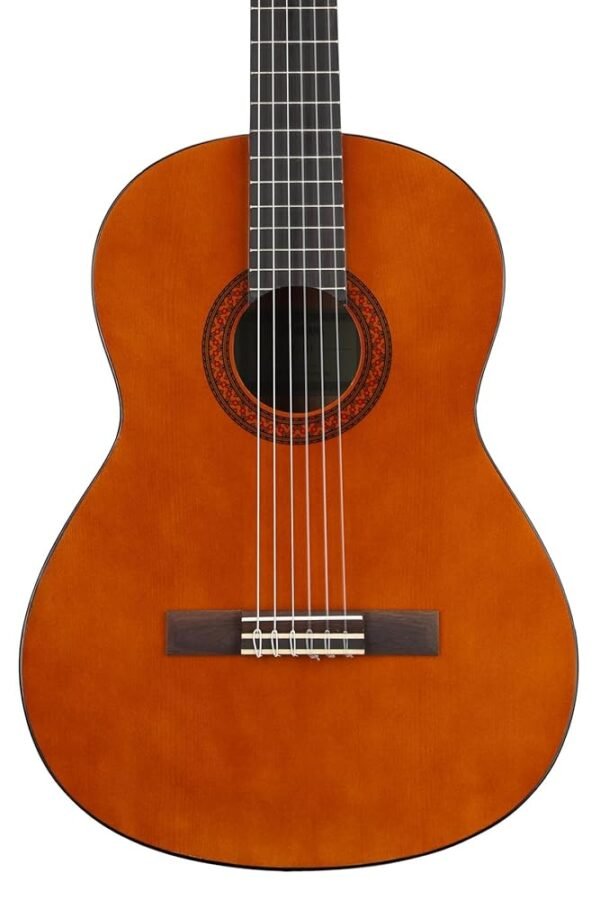
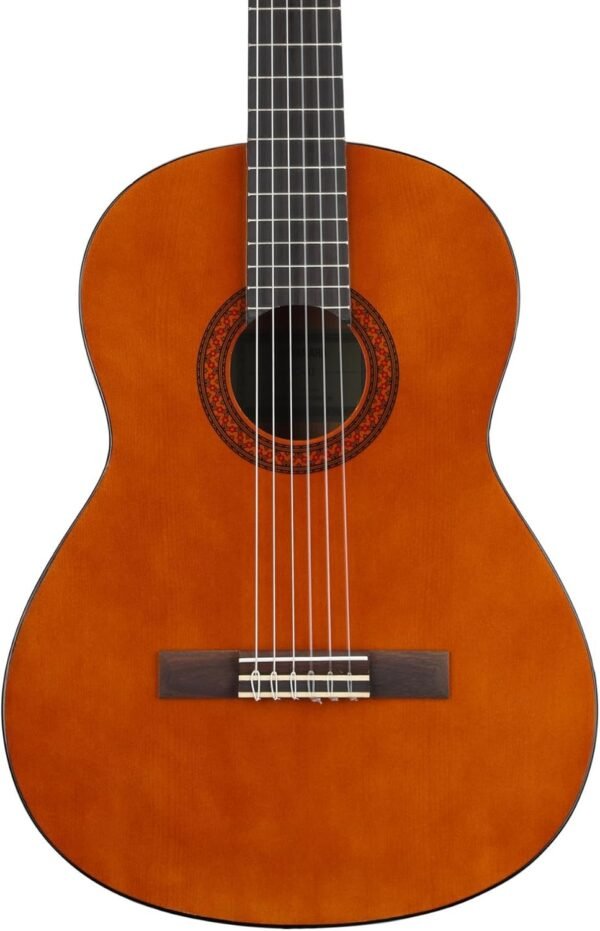
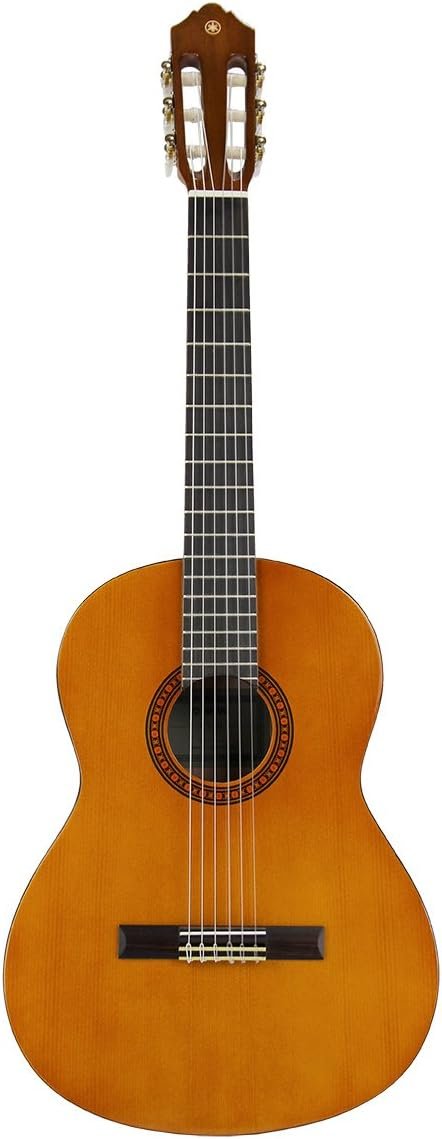
This is a full-size nylon string classical guitar with a spruce top, meranti back and sides, a nato neck and a rosewood fingerboard and bridge, finished in natural gloss. It is aimed at beginners and students taking classical or fingerstyle lessons, and at anyone who wants nylon strings for their gentler feel on the fingertips.
The model code is C40II, the successor to Yamaha’s long-running C40, and the listing dates it to July 2011.
Pros & Cons
Pros
- A spruce top is the classical standard. Spruce has a high stiffness-to-weight ratio, so it moves readily under the low tension of nylon strings while staying rigid enough not to deform. It gives the bright, clear attack most classical repertoire is written around.
- Rosewood fingerboard and bridge. Rosewood is dense and stable, which matters at the bridge because a soft bridge absorbs string energy instead of passing it into the top. It is also hard enough to resist string grooves for years.
- Nato neck. Nato is a mahogany-family hardwood with similar stiffness and weight. On a nylon-string instrument, where string pull is roughly half that of a steel-string, it is more than adequate.
- Nylon strings are much easier on new fingers. Lower tension and a wider, smoother surface mean the first weeks of practice do not end in sore fingertips, which is the most common reason beginners stop.
Cons
- The string gauge field says Extra Light. Steel-string gauge terminology does not transfer to nylon, where sets are sold as low, normal or high tension instead. The entry is meaningless here and could mislead someone buying replacement strings.
- The string material field says plastic. Technically nylon is a plastic, but the field tells a buyer nothing useful. Classical sets differ enormously between clear nylon, rectified nylon and composite trebles, and none of that is indicated.
- The scale length reads 25.0 with no unit. A full-size classical is normally around 25.6 inches, or 650mm. A bare number with no unit cannot be relied on for choosing strings or a capo.
- Nothing is included with the guitar. No bag, no tuner, no strap, no spare strings, no footstool. For a student instrument that is a meaningful gap, since a classical guitar is normally played with a footstool or support.
- A full-size classical has a wide neck. Classical necks are typically around two inches at the nut, considerably wider than a steel-string acoustic. That is deliberate, so the right hand can pick individual strings cleanly, but it is a genuine reach for a small hand.
Detailed Product Description
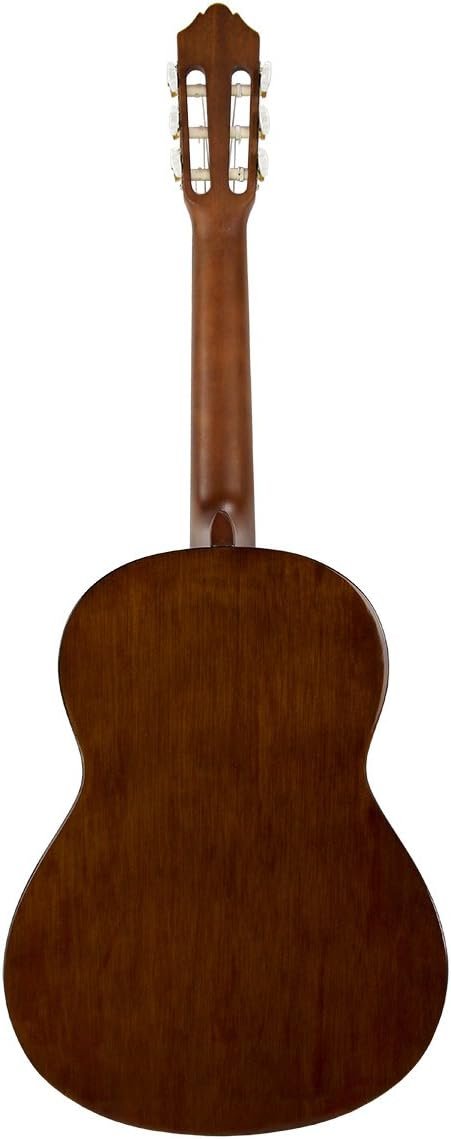
The body is a full-size classical shape with a spruce top and meranti back and sides, finished in gloss. Meranti is a Southeast Asian hardwood used widely as an affordable substitute for mahogany; it is reasonably dense with a warm, slightly damped character, which balances the brightness of the spruce top.
The neck is nato with a rosewood fingerboard. A classical neck is flat rather than radiused, with no fret markers on the face in the traditional style, and it joins the body at the twelfth fret rather than the fourteenth. That last point limits upper-fret access and is why classical guitars have no cutaway.
The bridge is a fixed classical type in rosewood, meaning the strings tie to a block rather than anchoring with pins. That is important at the first string change: standard classical sets have plain ends that must be knotted, not ball ends.
Strings are nylon. Nylon behaves very differently from steel. It sits at roughly half the tension, has a warmer and rounder tone with shorter sustain, and stretches a great deal when new, so a fresh set takes several days of retuning before it holds pitch. Listed dimensions are 40.28 by 18.3 by 4.96 inches.
What Comes with the Product
The listing describes the instrument only. No gig bag, no case, no tuner, no strap, no spare strings, no picks, no footstool and no lesson material are mentioned anywhere in the product data.
That means a bag and a clip-on tuner should be ordered at the same time as a minimum, and a footstool or guitar support if the player is following classical technique. Anyone new to the instrument will find the full list in the beginner accessories guide.
Who It Suits
This suits a student starting formal classical or fingerstyle lessons, and an adult beginner who wants nylon strings for comfort. It is a conventional, widely taught specification, which means teachers and method books will assume exactly this kind of instrument.
It suits less well a player who wants to strum pop and folk songs, because nylon strings do not produce the bright, cutting sound that style depends on. It also suits less well a small-handed player or a child, since the neck is wide and the body full size; a three-quarter classical is the better route. Anyone choosing between the two string types should read nylon versus steel strings, and Yamaha guitars for beginners covers where this model sits in the range.
How to Maintain
Expect a new set of strings to stretch for several days. Retune before every session in that period and stretch each string gently by hand after fitting to speed the process along.
Keep the guitar in a bag or case away from radiators and windows. A thin spruce top moves with humidity more than any other part of the instrument, and a dry room is what cracks tops.
Oil the rosewood fingerboard once or twice a year when it looks grey and dry, using a dedicated fretboard conditioner. Wipe the strings after playing; nylon rarely breaks but the wound bass strings corrode and go dull. Storage guidance covers the humidity question in more detail.
Tips and Recommendations
Buy tie-end classical strings, not ball-end. The bridge on a classical guitar uses a tie block, and ball-end sets are a workaround rather than the intended fit.
Choose normal tension for a first replacement set. High tension gives more volume and projection but needs a firmer fretting hand; low tension is easier but can buzz.
Product FAQ
What is the scale length? The listing gives 25.0 with no unit stated. A full-size classical is normally around 25.6 inches, so treat the figure as unverified.
What strings does it take? Nylon classical strings. Ignore the Extra Light entry in the string gauge field; nylon sets are sold by tension, not by steel-string gauge names.
Does it come with a case or tuner? No. The listing describes the guitar alone with no accessories.
Can it be plugged in? No. There is no pickup or preamp listed.
Similar instruments sit under classical and nylon string guitars. Comparable models include the Yamaha C40, the three-quarter size Yamaha CGS103AII and the solid cedar top Yamaha CG122MCH.