




Description
Review of the Hola! Music HG-39GLS Full Size Classical Guitar with Soft Nylon Strings and Free Gig Bag
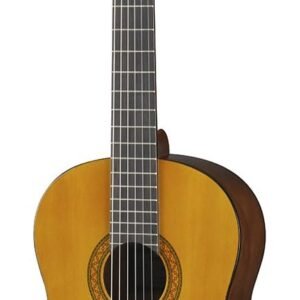
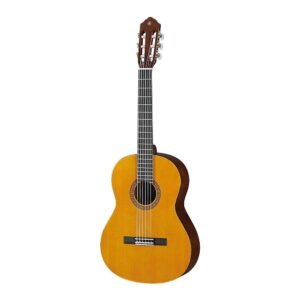
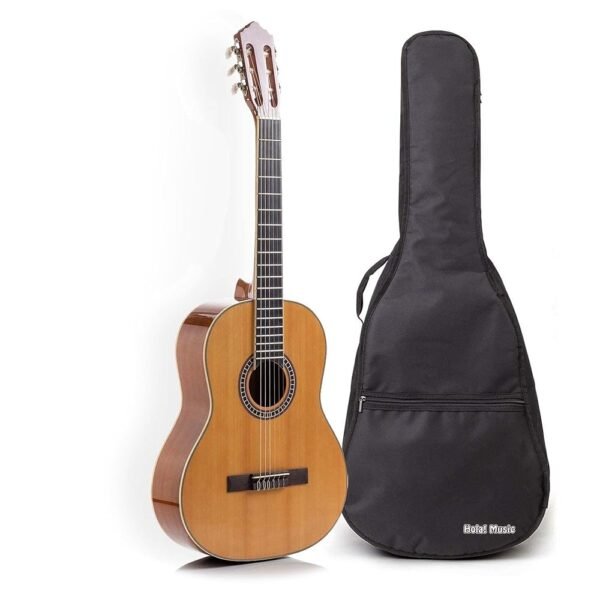
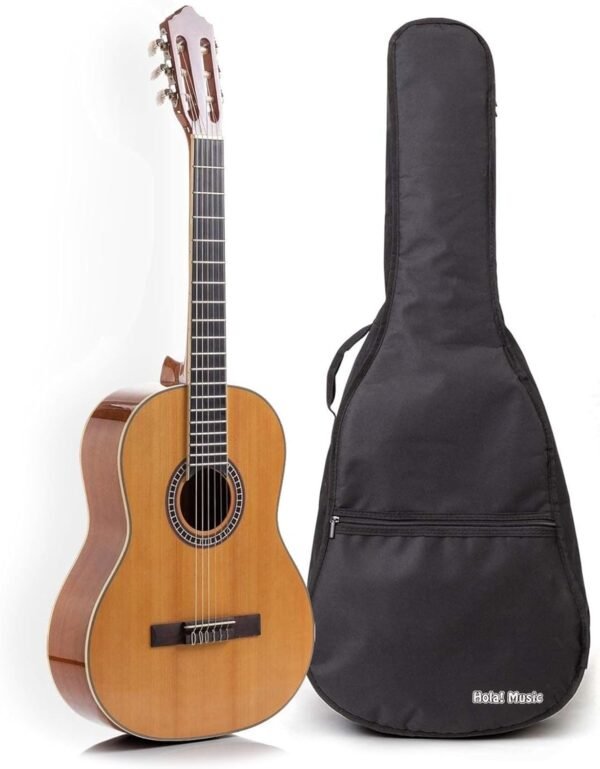
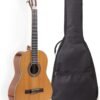
The Hola! Music HG-39GLS is a full size 39 inch classical guitar built with a spruce top and mahogany back, sides and neck, finished in natural gloss and supplied with a padded gig bag. It carries soft nylon strings and no pickup, which places it in the traditional classical camp rather than the amplified one. It is aimed at beginners, at students taking classical or fingerstyle lessons, and at anyone who finds steel strings uncomfortable on the fingertips.
Pros & Cons
Pros
- Nylon strings sit at much lower tension than steel, so they are gentler on beginner fingertips and easier to press down.
- Spruce top over mahogany back and sides, the same wood pairing used across the classical guitar tradition, with mahogany adding warmth under a responsive top.
- 52mm nut width, the wide spacing classical technique is built around, which gives each finger room in complex chord shapes.
- Padded gig bag included, so the guitar can be carried to lessons without an extra purchase.
Cons
- The listing does not state whether the spruce top is solid or laminated, and that distinction has a large effect on how a guitar sounds and on how it matures over the years.
- The body material is listed generically as engineered wood, which sits awkwardly alongside the mahogany claim and leaves the actual construction unclear.
- The published weight of 1 pound and the product dimensions of 19 by 5 by 2 inches cannot describe a full size guitar, so those two figures in the specification table are unreliable.
- No pickup, so amplification requires an external microphone or a retrofitted pickup.
- Nylon strings need several days of stretching before they hold pitch, which frustrates beginners who expect stable tuning from day one.
Detailed Product Description
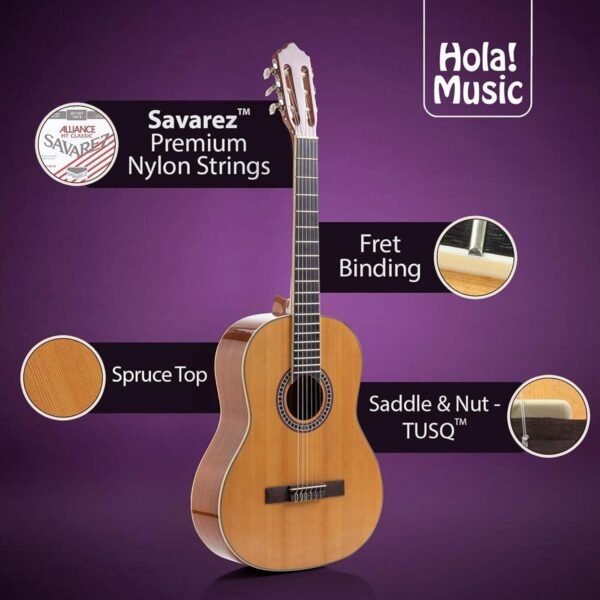
The top is spruce. Spruce is the standard soundboard timber for classical guitars because it is stiff for its weight, which lets a thin top move freely and project. It tends toward a clear, direct voice with strong note separation, which is what classical repertoire asks for.
Back, sides and neck are mahogany. Mahogany is a mid density hardwood that emphasises the middle of the frequency range and softens the extremes, so a spruce top over mahogany typically reads as warm and rounded rather than bright and glassy. The fingerboard is walnut, a hard, close grained wood with a similar feel to rosewood.
The nut width is 52mm, which is close to two inches. This is the single most important number on a classical guitar and the main reason a classical feels so different from a steel string. On a typical steel string acoustic the nut is around 43mm. The extra nine millimetres give the fretting hand room to place fingers cleanly between strings, which is what fingerstyle and classical technique require. It also means a player with small hands may struggle to reach across the neck, a topic covered in the guide to guitars for small hands.
The bridge is a fixed classical type and the strings are nylon. Nylon strings on a classical guitar are usually tied at the bridge rather than anchored with pins, which is a skill in itself and worth watching a demonstration of before the first string change. There is no pickup fitted, so the instrument is acoustic only.
What Comes with the Product
- The HG-39GLS full size 39 inch classical guitar in natural gloss
- Soft nylon strings fitted
- A padded gig bag
No tuner, strap, spare strings or instructional material is listed as part of the package.
Who It Suits
This suits a beginner starting on nylon strings, a student taking formal classical lessons where a wide neck is expected, and an adult who wants to play fingerstyle without steel strings cutting into the fingertips. It also suits anyone who wants a quieter instrument, since nylon strings are softer in volume than steel.
It suits less well a player who wants to strum pop and rock songs, where steel strings give the brightness and volume the style expects. The difference is set out in the guide to nylon versus steel string guitars. It also suits a child less well, because the wide neck and full size body are a lot to reach around. A younger player would be better served by something smaller such as the Hola! Music 36 inch acoustic. Anyone comparing full size nylon options should also look at the Yamaha C40II and the Yamaha C40, both long standing student classicals. The rest of the range sits in the classical and nylon string guitars section and the wider full guitar review index.
How to Maintain
Nylon strings do not rust, but they do go dead as oils from the fingers soak into them. Wipe them down after playing and expect to replace them roughly every three to four months with regular use, sooner if the tone goes dull or the wound bass strings start to look grooved.
Keep the guitar in its gig bag when it is not being played, and keep it away from radiators, sunny windowsills and cold garages. A thin spruce top is the part most vulnerable to swings in humidity, and the usual sign of trouble is a top that sinks or bellies, or hairline cracks along the grain.
Tips and Recommendations
Allow a full week of daily retuning after fitting new nylon strings. They stretch far more than steel and will not hold pitch until that stretch has worked itself out. Tuning several times per practice session during that period is normal.
Learn the classical bridge tie properly before the first string change. A poorly tied knot slips under tension and can slap the soundboard, and the marks that leaves are permanent.
Add a clip on tuner as the first accessory. Nothing improves beginner progress faster than always playing an instrument that is genuinely in tune, and the guide to how to tune a guitar covers the process.
Product FAQ
What size is this guitar?
It is described as a full size model measuring 39 inches overall.
What strings does it use?
Soft nylon strings. Steel strings should never be fitted to a classical guitar, because the higher tension can damage the neck and the bridge.
How wide is the neck at the nut?
52mm, which is approximately two inches, the standard classical width.
Can it be plugged into an amplifier?
Not as supplied. The specification lists no pickup, so amplification would need a microphone or an aftermarket pickup.