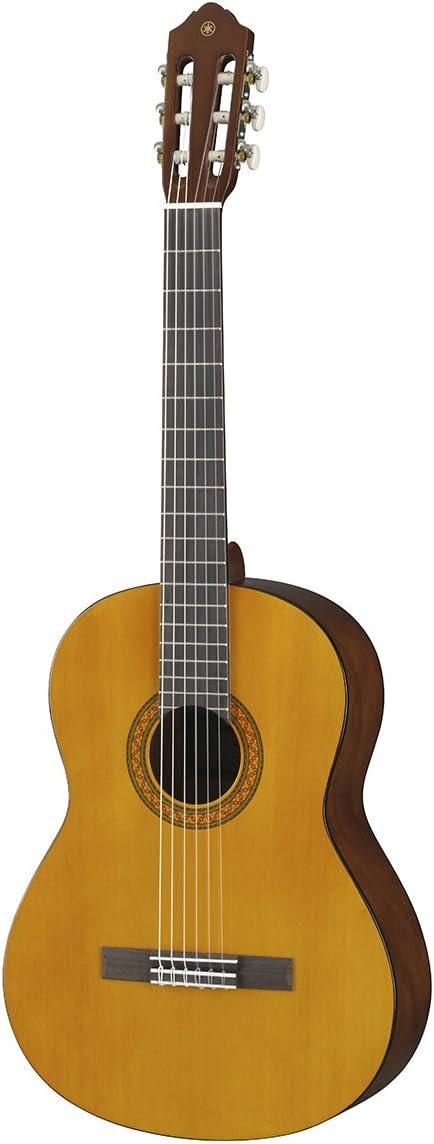
Description
Review of the Yamaha C40 Full Size Nylon String Classical Guitar in Tan
The Yamaha C40 is a full size nylon string classical guitar with a spruce top, Indonesian mahogany back and sides, a nato neck and a Javanese rosewood fingerboard, finished in melamine gloss. It is sold as an instrument on its own rather than as a bundle, and Yamaha positions it squarely at the beginning classical player. It sits in the classical guitars range.
Pros & Cons
Pros
- Nylon strings are far gentler on untrained fingertips. Nylon is under lower tension than steel and has a wider, softer contact surface, so the first weeks of practice hurt less and last longer before the fingers give out.
- The tonewood combination is named specifically. Spruce top, mahogany back and sides, nato neck and rosewood fingerboard is a conventional and sensible classical specification, and naming the species at all puts this listing ahead of most budget alternatives.
- A wide classical neck suits fingerstyle playing. Classical guitars use a wider nut than steel string acoustics, which gives more space between strings for the picking hand fingers to work independently.
- Melamine gloss is a hard wearing finish. It resists scuffs and handling marks better than a thin lacquer, which matters on a guitar that will be handled by a learner.
- Yamaha states a comprehensive quality check process. Consistency between individual units is the practical weakness of budget guitars, and a manufacturer with an established production process is more likely to deliver two instruments that play alike.
Cons
- The listing contradicts itself on the neck wood. Yamaha’s own product description says the instrument is assembled from spruce, mahogany and rosewood, while the bullet list states a nato neck. Nato is frequently marketed as eastern mahogany but is a different species with different working properties. The two statements do not agree.
- Solid or laminated construction is never stated. This is the specification that most determines how a classical guitar sounds and whether it improves with years of playing, and it appears nowhere in the listing.
- No scale length or nut width is published. These are the two measurements that matter most on a classical guitar, because the wide nut is precisely what distinguishes it from a steel string, and neither number is given.
- The spec table for this listing is empty. Every specification quoted comes from the manufacturer’s description with no structured product data behind it, so there is no weight, no dimensions and no fret count.
- Nothing is included beyond the guitar. No bag, no tuner, no strap and no spare strings, which means additional purchases before the first practice session.
Detailed Product Description
The top is spruce, the standard choice for a guitar soundboard because it is stiff for its weight and therefore responds readily to the low energy input of nylon strings plucked by fingers. On a classical guitar the top does nearly all the tonal work, so this is the most consequential specification in the listing.
The back and sides are Indonesian mahogany. Mahogany is denser than spruce and reflects rather than absorbs, giving a warm midrange emphasis and a slightly compressed response. Paired with a spruce top it produces the balanced, unexaggerated voice that suits classical repertoire and singer accompaniment alike.
The neck is nato according to the bullet list. Nato is stable when properly dried and is the standard substitute used at this price. The fingerboard is Javanese rosewood, which is dense and oily, holds frets securely and needs no finish coat.
Nylon strings are the defining feature. They tie at the bridge rather than seating on pins, they take considerably longer to settle after a change, and they produce a rounder, softer attack with less sustain than steel. They also mean the guitar cannot take steel strings later, since a classical body and neck are not braced for that tension. The guide on nylon versus steel string guitars covers which repertoire each suits.
What Comes with the Product
The listing names the guitar and nothing else. There is no gig bag, no case, no tuner, no strap, no capo, no picks and no spare strings mentioned anywhere in the product data.
That makes a bag and a tuner effectively mandatory additional purchases. A clip on tuner matters more on a nylon string guitar than on a steel string, because nylon stretches for far longer after a string change and needs retuning repeatedly over the first week or two. A strap is optional on a classical guitar, since the traditional seated playing position uses a footstool or a support rather than a strap, and many classical guitars have no strap buttons fitted at all.
Who It Suits
This fits a beginner starting classical or fingerstyle guitar, an adult learner who wants softer strings on the fingers, and anyone taking graded classical lessons, where a nylon string instrument is usually required rather than optional. The full size body means it suits players from roughly twelve upwards.
It does not suit a young child, for whom a full size classical is too large, and Yamaha’s own smaller models exist for that reason. It does not suit anyone who wants to play steel string styles such as strummed folk or country, because nylon strings and a wide flat neck are a poor fit for those and the guitar cannot be converted. It also does not suit anyone who needs to plug in, since no electronics are documented. Comparable Yamaha classical options include the Yamaha C40II, the Yamaha CG122MCH with a solid cedar top and the Yamaha CGS103AII in three quarter size. The guide on Yamaha guitars for beginners sets out how the ranges relate.
How to Maintain
Expect a long settling period after any string change. Nylon stretches for days rather than hours, so a new set will need retuning several times a day for the first week before it holds pitch.
Wipe the strings and the rosewood fingerboard after each session. Nylon strings do not corrode like steel, but the wound bass strings collect skin oils and lose brightness in exactly the same way.
Keep the guitar away from radiators and direct sunlight and store it in a bag once one has been bought. A spruce top responds to humidity changes by expanding and contracting, which is what shifts the action over the seasons. Never fit steel strings to this instrument. A classical body is braced for the much lower tension of nylon, and steel strings can pull the bridge away from the top.
Tips and Recommendations
Buy a clip on tuner and a bag before the guitar arrives. Both are needed immediately and neither is included.
Learn the classical bridge knot before the first string change, because nylon strings tie rather than pin and an incorrectly tied knot slips under tension. Practise seated with a footstool or a support cushion rather than slouching, since classical technique depends on the neck being raised, and the absence of strap buttons on many classical guitars makes standing awkward anyway. Trim the picking hand nails deliberately rather than accidentally, because nail shape is a significant part of nylon string tone.
Product FAQ
Is the neck mahogany or nato?
The listing gives both. The bullet list states a nato neck while the longer description says the guitar is assembled from spruce, mahogany and rosewood. Nato is often marketed as eastern mahogany but is a different species.
Is the spruce top solid or laminated?
The listing does not say. It names spruce as the top wood without distinguishing solid from laminated construction.
Can steel strings be fitted?
No. A classical guitar is braced for the much lower tension of nylon, and fitting steel strings risks damaging the top and bridge.
Does it come with a case or tuner?
No. The listing names the guitar only, with no bag, case, tuner, strap or spare strings included.