
Yamaha keeps getting recommended to beginners for one unglamorous reason: consistency. The guitar that arrives at your door is very likely to be the same guitar the reviewer described, set up to a similar standard, with the same action and the same finish quality.
At the bottom of the guitar market, that predictability is worth more than any tonal advantage. A beginner cannot tell whether a buzzing string is bad technique or a badly cut nut, and a guitar that fights back is the most common reason people quit. Yamaha’s entry range removes most of that guesswork.
Key takeaways
- The advantage is manufacturing consistency, not a secret in the tone.
- Yamaha is a large manufacturer with its own factories, so quality control is handled in house rather than farmed out.
- Solid tops appear surprisingly low in the acoustic range, which is unusual at that price level.
- The lines to know are FG and FS for steel string, C and CG for nylon string, Pacifica for electric, and JR for juniors.
- Where Yamaha is weaker is character and image, not build.
The short answer is consistency
Cheap guitars are not usually bad because of the design. They are bad because of variance. Two units off the same line can differ in fret height, nut slot depth, neck relief and bridge saddle height, and any one of those makes a guitar harder to play than it should be.
Yamaha’s reputation comes from keeping that variance narrow. A beginner buying without the ability to inspect the instrument first is effectively buying a probability, and Yamaha’s odds are better than most at the same price. That is the whole recommendation in a sentence.
Yamaha is a manufacturing company first
Yamaha makes pianos, drums, wind instruments, audio equipment and motorcycle engines. Guitars are one product line inside a very large engineering business, and they benefit from the same process discipline that applies to everything else the company builds.
Practically, that means Yamaha owns and runs its own plants rather than relying entirely on contract manufacturers who also build for competitors. Specifications stay stable across production runs, and models stay in the catalogue for years instead of being replaced every season. When a review of an FG or a Pacifica is a few years old, it usually still describes the current instrument.
The lines you will actually run into
FG and FS. The steel string acoustics. FG is the dreadnought, louder and bassier. FS is the smaller concert body, easier to hold and better suited to fingerpicking or to a smaller player. Both use the same numbering, so an FG800 and an FS800 sit at the same level in different body sizes.
C and CG. The nylon string classical guitars. Wide flat necks, no truss rod adjustment on the cheapest models, and much lower string tension. If a child is starting or an adult has sore fingertips, this is the gentler route. The difference is covered in more depth in our piece on nylon versus steel strings.
Pacifica. The beginner and intermediate electric line, built around a Stratocaster style double cutaway with a versatile pickup layout. Widely used as a school and teaching instrument.
JR and CGS. The reduced scale instruments, in both steel string and nylon string form, for children and travel.
APX and SLG. Acoustic electric and silent guitars, aimed at players who need to plug in or practise quietly.
Solid tops low in the range
Most acoustics at the entry level use laminate tops, which are layers of wood pressed together. A solid top is a single piece of timber, and it responds and opens up in a way laminate does not. Yamaha puts solid spruce tops on FG models well below the price where that normally starts happening.
Yamaha also uses scalloped bracing on the FG range, which is a shaping of the internal struts that lets the top move more freely. The pairing of a solid top with tuned bracing is the main reason these guitars sound bigger than their position in the market suggests. If the distinction is new to you, read solid top versus laminate before you shop.
Where Yamaha is not the answer
Character. Yamaha builds excellent neutral instruments, and neutral is exactly what some players do not want. If you want the specific bark of a Telecaster or the thickness of a Les Paul, buy the guitar that does that thing.
Image also matters more than people admit. A teenager who wants to look like the guitarist in their favourite band may practise more on a guitar they think looks right, and practising more beats every specification on the sheet. That is a legitimate reason to buy something else.
Resale is fair rather than strong. Yamaha instruments hold value reasonably, but there is not the collector demand that keeps certain other brands buoyant on the second hand market.
Yamahas from the review library worth a look
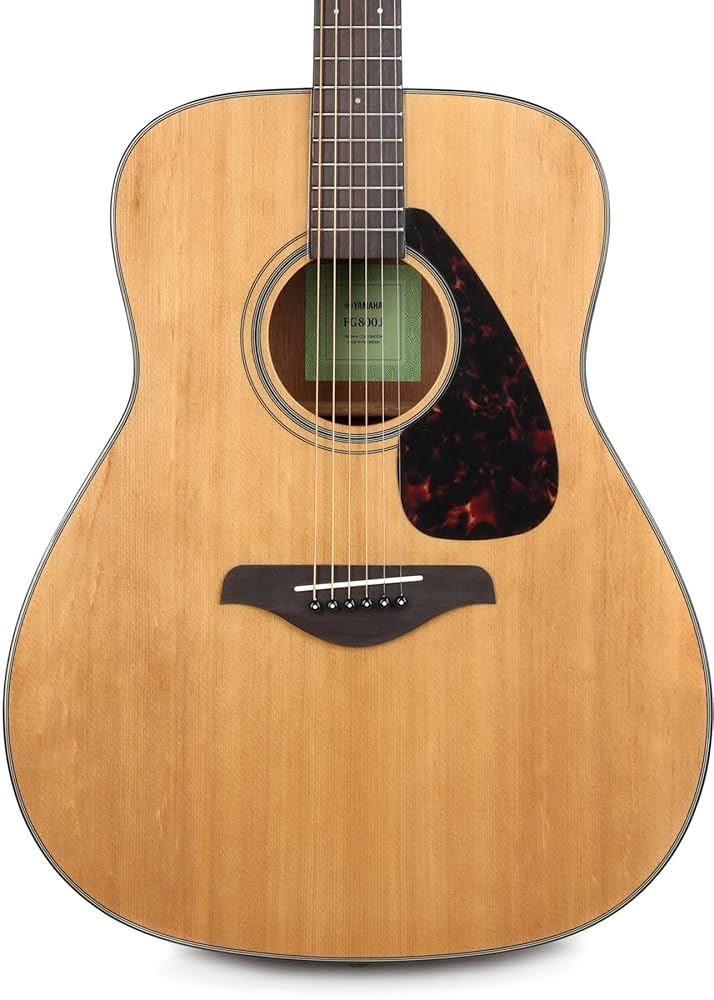
Yamaha FG800J. A solid spruce top with mahogany and nato back and sides, scalloped bracing and a fixed bridge. The standard recommendation for an adult beginner who wants one acoustic that will still be worth playing in five years.
Yamaha C40II. A full size nylon string classical with a spruce top and a rosewood fingerboard. The right choice for classical and fingerstyle study, and the kinder option if steel strings are hurting your fingertips in the first few weeks.
Yamaha Pacifica PAC012. The beginner electric, with a versatile pickup layout, an Indian rosewood fretboard and a tremolo bridge. Suited to somebody who wants one electric that can cover several styles rather than commit to a single sound.
Yamaha JR1. A compact junior steel string with a spruce top, low action and a gig bag included. Built for children, and it also works as a travel guitar for an adult. Pair it with our note on what size guitar for a child.
If the smaller concert body appeals, the Yamaha FS800 is the same level as the FG800 in a shape that suits smaller players. The full range sits in the acoustic guitars section.
Common questions
FG or FS for a first acoustic?
FG if you want volume and a strong low end for strumming, and if you are an average sized adult. FS if you are smaller, if you want to fingerpick, or if the depth of a dreadnought makes it awkward to hold. Neither is better built than the other. They sit at the same level in different bodies.
Is a Pacifica better than a Squier for a first electric?
They are close, and the answer usually comes down to layout. The Pacifica typically offers a humbucker plus single coils, which covers heavier styles more comfortably. A Squier Stratocaster gives you the classic three single coil arrangement. Compare them alongside Fender vs Squier.
Do Yamaha guitars still need a setup?
They arrive closer to correct than most, but every guitar benefits from one. Strings, humidity and shipping all move things. A setup adjusts relief, action and intonation, and it is the cheapest improvement you can make to any guitar at any price.
Will a beginner outgrow a Yamaha?
Not the acoustics. A solid top FG stays useful indefinitely, and many players keep one as a knockabout guitar long after they have bought something fancier. The entry electrics are more likely to be traded up, usually because the player has worked out which specific sound they want rather than because the guitar failed.