
A short scale bass has a vibrating string length of roughly 30 to 32 inches. A full scale bass, often called long scale, measures about 34 inches. That difference of a few inches changes how far your fingers have to stretch, how tight the strings feel under them, and how the low notes sit in a band mix.
Short scale is not a beginner version of a real bass. It is a different instrument with its own character, and it has been used on a long list of well known recordings. The useful question is not which one is better. It is which one fits your hands, your music, and how long you want to play before your fretting hand gets tired.
Key takeaways
- Short scale basses run about 30 to 32 inches. Full scale is about 34 inches, and it is the industry default.
- Shorter scale means narrower fret spacing, which helps small hands, younger players, and guitarists switching over.
- Lower string tension makes a short scale feel looser and easier to bend, but the low end is rounder and less tightly defined.
- Full scale gives you the widest choice of strings, parts, and setup advice, plus tighter note definition on the bottom strings.
- Body size and weight affect comfort as much as scale length does, so consider both rather than scale alone.
What scale length actually measures
Scale length is the distance a string vibrates, measured from the nut at the top of the fingerboard to the saddle at the bridge. On a bass it controls two things at the same time. It sets how far apart the frets sit, and it sets how much tension a string needs to reach its correct pitch.
The common categories look like this:
- Short scale: roughly 30 to 32 inches, sometimes described as 3/4 size.
- Full or long scale: about 34 inches, the standard on most Precision and Jazz style basses.
- Extra long scale: 35 inches and up, usually found on five and six string models where the low B needs extra tension.
The gap between the first and second fret is where you notice the difference most. On a 34 inch bass that first position stretch is wide, and it is the single most common reason a new player says a bass feels awkward.
How the two feel under your hands
A short scale bass shortens every reach on the neck. Chord shapes and walking lines that require a four fret spread in first position become far more manageable. Players coming from six string guitar usually adapt faster on a short scale because the spacing is closer to what they already know.
String tension is the other half of the story. At standard pitch, a shorter string does not need to be pulled as tight, so the strings feel softer under the fingers. Fretting takes less effort and bends come easily. Some players love that. Others find it slack and prefer the firmer push back of a 34 inch neck, which gives a more precise sense of where the note starts.
Do not assume short scale automatically means light. Body shape, wood, and hardware all add up, and it is a compact body paired with a short scale that makes the real difference for younger players. If hand size is your main concern, it is worth reading about guitars for small hands too, since the same principles apply to six string instruments.
How they sound different
Lower tension changes the way a string moves, and that changes the tone. Short scale basses tend to sound warmer and rounder, with a fuller fundamental and a softer attack. The low notes bloom rather than snap. For soul, pop, indie, and anything where you want the bass to sit under the track like a cushion, that is a real advantage.
Full scale delivers tighter lows and clearer separation between notes. If you play fast lines, slap, metal, or anything that needs the bass to cut through a dense mix, the extra tension helps each note stay distinct. It is also why five string basses often use a longer scale, since a low B on a short string can sound loose and indistinct.
Practical points before you decide
- Strings. Short scale strings are a separate category and stock is thinner in local shops. Check the winding length matches your bass before ordering, because a long scale set may not seat correctly. Our guide to guitar string gauge covers the basics of how gauge affects feel.
- Setup. Lower tension can mean a little more string rattle, so short scale instruments often benefit from slightly higher action or a heavier gauge set. See guitar action and setup explained for what a good setup involves.
- Amplification. Bass needs a bass amp, not a guitar amp, because guitar speakers are not built to handle low frequencies at volume. If you are practising at home, our notes on amp wattage for home practice explain how little power you actually need.
- Parts. Full scale is the default, so replacement pickups, bridges, and cases are easier to find.
Four basses worth a closer look
These four cover both ends of the scale question, and each one is reviewed in full on this site.
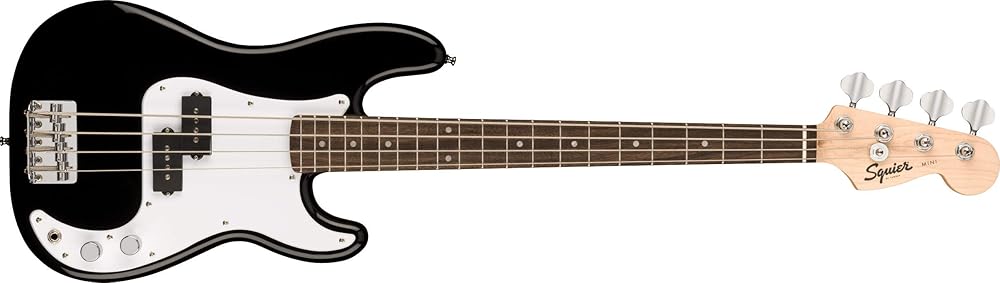
- Squier Mini Precision Bass. A 3/4 size Precision with a slim C shaped neck, a lightweight basswood body, and a split single coil pickup. This is the straightforward pick for a younger player, a small handed player, or a guitarist who wants to add bass without relearning the reach.
- Squier Debut Series Precision Bass. The full scale counterpart, with the same comfortable C profile neck, a light body, and vintage style open gear tuners. A sensible first full scale bass for someone who intends to play with other people.
- Ibanez GSR200JB. A full scale bass with an active EQ and Phat II bass boost, plus split coil and single coil pickups for a wider tonal range. Suits players who want tone shaping on the instrument rather than only at the amp.
- Davison Full Size Electric Bass kit. A full scale bass sold as a package with a 15 watt bass amp, gig bag, strap, cable, and picks. Worth considering if you do not own an amp yet and want one purchase to cover it.
You can browse the wider range in our electric guitars section, or work through the full review library.
Common questions
Is a short scale bass easier to learn on?
For most people, yes, at least at the start. The frets are closer together and the strings take less pressure, so first position lines feel less like a stretch. That said, plenty of beginners get on fine with a 34 inch bass, especially adults with average or larger hands.
Will I have to switch to full scale later?
No. Short scale basses are used professionally across many genres. Some players move to full scale because they want tighter low end or a five string, but there is nothing about short scale that caps your progress.
Can I use normal bass strings on a short scale bass?
Not reliably. Bass strings are sold by winding length, and a long scale set may put the unwound taper in the wrong place at the nut or the tuning post. Look for sets labelled short scale and check the stated length against your instrument.
Does scale length change how the bass is tuned?
No. Both are tuned E, A, D, G in standard tuning. The strings on the short scale simply reach that pitch at lower tension, which is what produces the softer feel and rounder tone.