Description
Review of the Ibanez Gio GSR200JB Electric Bass Guitar, Jewel Blue
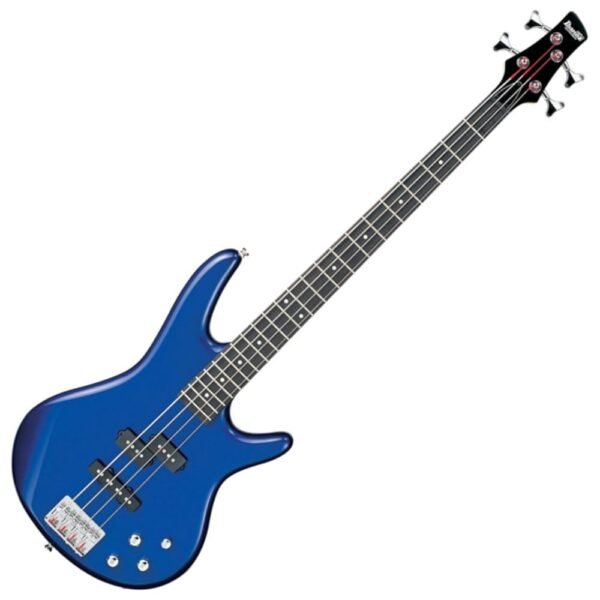
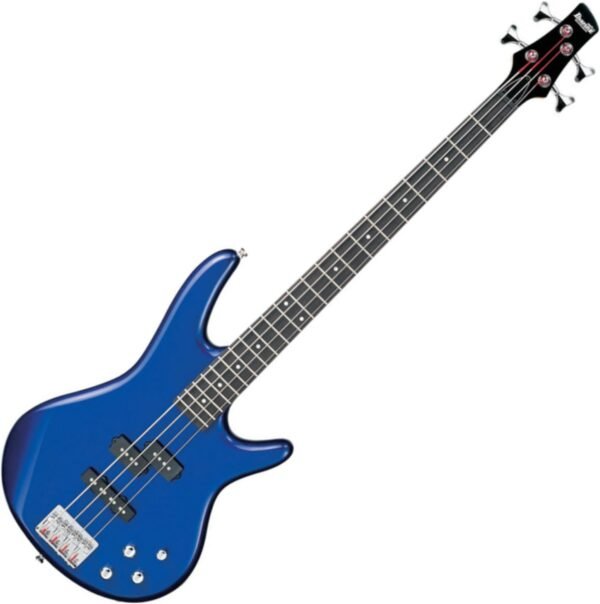
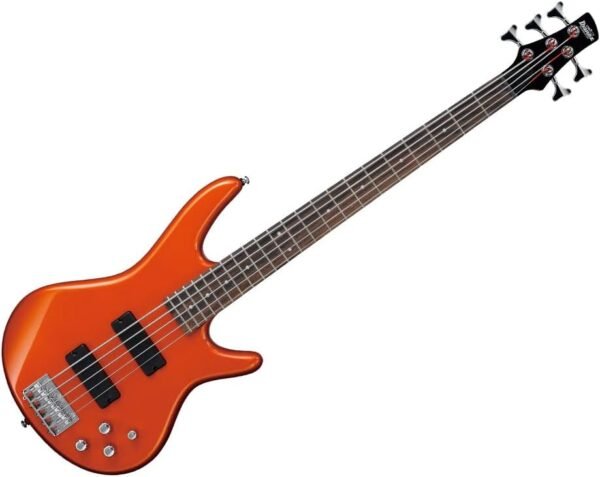
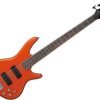
The Ibanez Gio GSR200 is a four string long scale electric bass with two pickups, a maple neck and an active bass boost circuit, offered here in Jewel Blue. It is one of the longest running instruments in the beginner bass market, aimed at players who want an active tone control at a level where most competitors are entirely passive. It sits in the bass guitars section, and the published data disagrees with itself about the body wood, the fingerboard and the pickups.
Pros & Cons
Pros
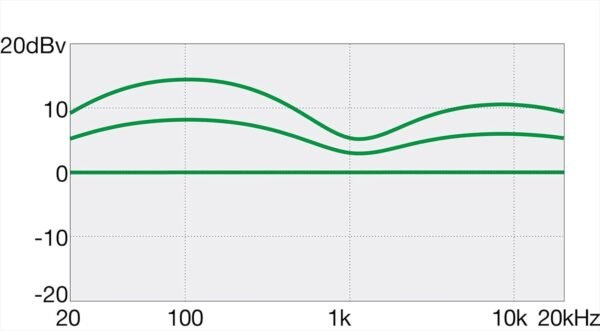
- Active bass boost is rare at this level. A powered circuit can add low frequency content rather than only cutting it, which means a thin sounding rig can be fattened at the instrument instead of at the amplifier. Almost every competing beginner bass is fully passive.
- Full 34 inch scale, and it is actually published. This is the standard long scale, so every string set, every method book and every setup guide will match, and the string tension will feel the way recordings sound.
- Maple neck. Maple is stiff and dimensionally stable, which matters more on a bass than on a guitar because four bass strings pull far harder on the neck than six guitar strings do.
- Two pickups rather than one. Blending a neck and a bridge pickup gives access to both a round, full tone and a bright, articulate one, and everything in between, without changing the amplifier.
Cons
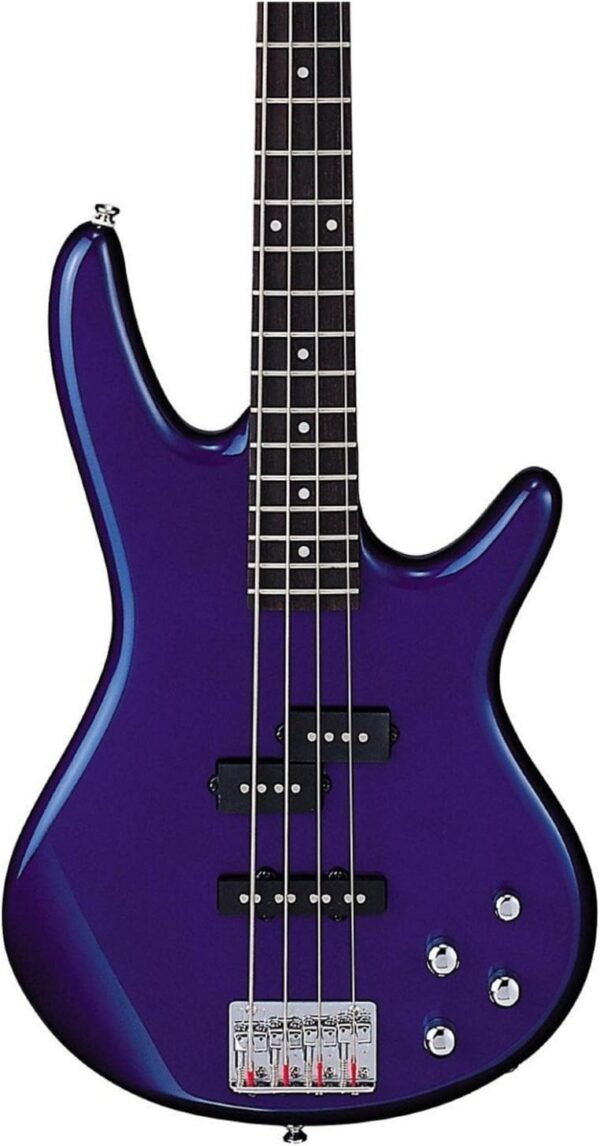
- The body wood is listed three different ways. The description says agathis. The specification table says the body is basswood, with a poplar top and a rosewood back. A solid body bass has one body wood, so at least two of these three are wrong, and the listing gives no way to tell which.
- The fingerboard is listed two ways. The description says jatoba, the specification table says rosewood. Both are dark, dense hardwoods that do the same job, but they are different species and a buyer comparing on paper cannot resolve it.
- The pickup configuration is described three ways. The description says two single coil pickups. The feature list on the page says a split coil and a single coil. The specification table says only “combination”. A split coil paired with a single coil is a very different instrument from two matched single coils, because the split coil cancels hum and produces a much thicker fundamental.
- The battery information is contradictory. The table states that five lithium metal batteries are required and included, and separately gives the battery type as manganese. An active bass circuit of this kind normally runs on a single nine volt battery, and lithium and manganese are different chemistries.
- Nothing is included. No amplifier, cable, bag, strap or tuner, which on a bass is a larger gap than on a guitar because bass amplification costs more.
Detailed Product Description
The bass is a four string solid body with a 34 inch scale and a maple neck. Long scale is the standard for bass, and it is what produces the tight, defined low end that most recorded bass tone relies on. A shorter scale would feel easier under the left hand but would sound looser and less focused, a trade off explained in short scale versus full scale bass. The fingerboard is a dark dense hardwood, listed as either jatoba or rosewood depending on which part of the listing is read, and either handles the heavy string pressure a bass generates.
The electronics are the reason this model has stayed in production so long. Two pickups feed an active bass boost circuit, described in the page features as a Phat II style bass boost. An active circuit takes power from a battery and can lift frequencies rather than only attenuating them, so a bass that sounds thin through a small amplifier can be thickened at the instrument. That is genuinely useful for a beginner playing through whatever amp is available. The trade off is that the circuit stops working when the battery dies, so a spare belongs in the case.
What Comes with the Product
The listing describes the bass alone, assembled and strung, with batteries stated as included for the active circuit.
Not included: an amplifier, a cable, a gig bag or case, a strap, a tuner, spare strings, and any lesson material. Bass amplification is the significant cost here, because a bass needs a larger speaker and more power to reproduce low frequencies cleanly than a guitar amp of the same wattage would manage. Headphone practice through a small bass modelling unit is a cheaper starting point, and options are covered in quiet guitar practice options.
Who It Suits
This suits a first time bassist who wants a full scale instrument that will not need replacing, a guitarist adding bass for home recording, and any player who wants an active tone circuit without moving up a tier. The slimmer Ibanez neck also makes it a practical option for someone who has found other long scale basses too wide.
Look elsewhere if the player is small framed or young, where a short scale bass would be far more comfortable, or if a complete package including an amplifier is needed in one purchase. Comparable instruments include the Squier Debut Series Precision Bass, the Squier Mini Precision Bass for a shorter scale, and the Best Choice Products SKY426 acoustic electric bass for an unplugged alternative.
How to Maintain
Bass strings die slowly rather than suddenly, losing definition over months, so wipe them after every session to slow the process. Remove the battery if the bass will sit unused for months, since a leaking cell inside the control cavity will damage the wiring. Condition a dark hardwood fingerboard lightly twice a year to stop it drying and shrinking away from the fret ends. Unplug the cable when the instrument is put away, because on many basses the jack shares mounting with the strap pin. Keep the bass on a stand or in a case rather than leaning on a wall, since a heavy instrument falls hard. Storage advice is in how to store a guitar.
Tips and Recommendations
Keep a spare nine volt battery in the case and check what the instrument actually takes on arrival, since the listing’s battery information is inconsistent. Unplug the cable whenever the bass is not being played, because on most active instruments the jack is the power switch and leaving it connected drains the battery. Set the active bass boost to neutral at first and learn the passive tone before adding low end, as it is easy to make a bass sound muddy. Use a wide strap, since a long scale bass is heavy and a narrow strap digs in. Have the neck relief checked after the first month, because four bass strings put substantial and continuous pull on the neck.
Product FAQ
What is the body made from? The listing gives three answers: agathis in the description, basswood in the body material field, and poplar as the top material. A solid body bass has one body wood, so the listing cannot be relied on here.
What pickups does it have? The description says two single coils, the page features say a split coil and a single coil, and the specification table says only “combination”.
Does it need a battery? Yes. The active bass boost circuit is powered. The listing’s battery details are contradictory, so check the cavity on arrival.