

Description
Review of the Fender CD-60S All Mahogany Dreadnought Acoustic Guitar
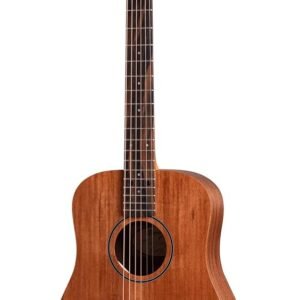
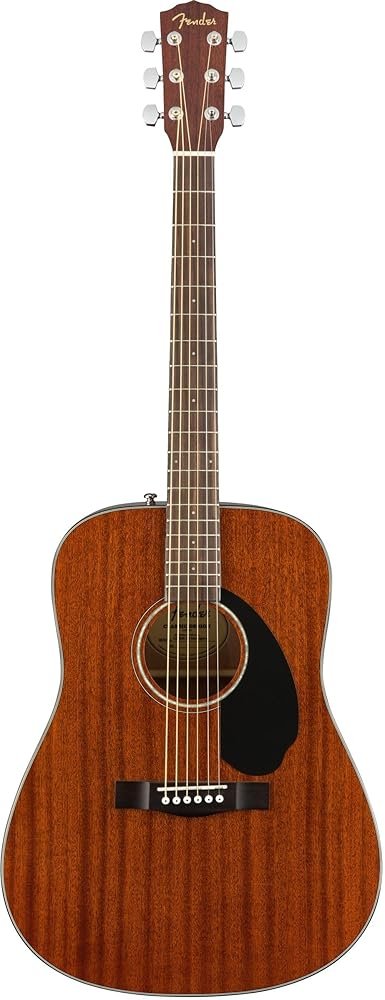
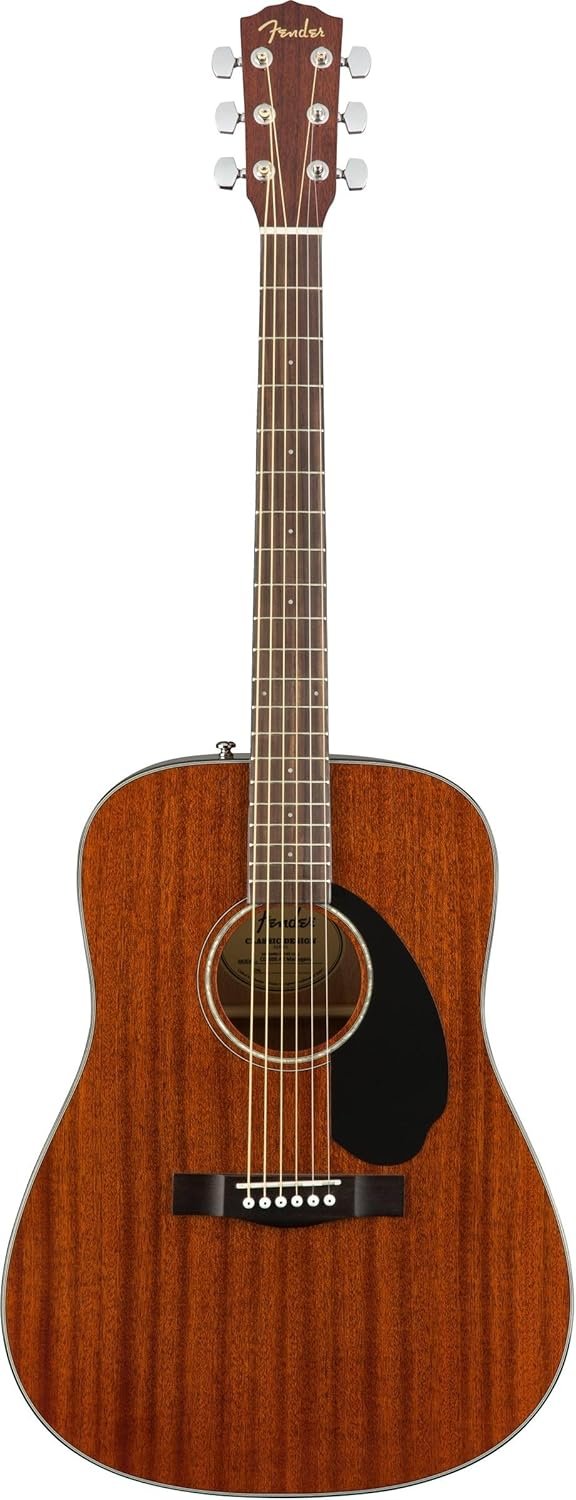
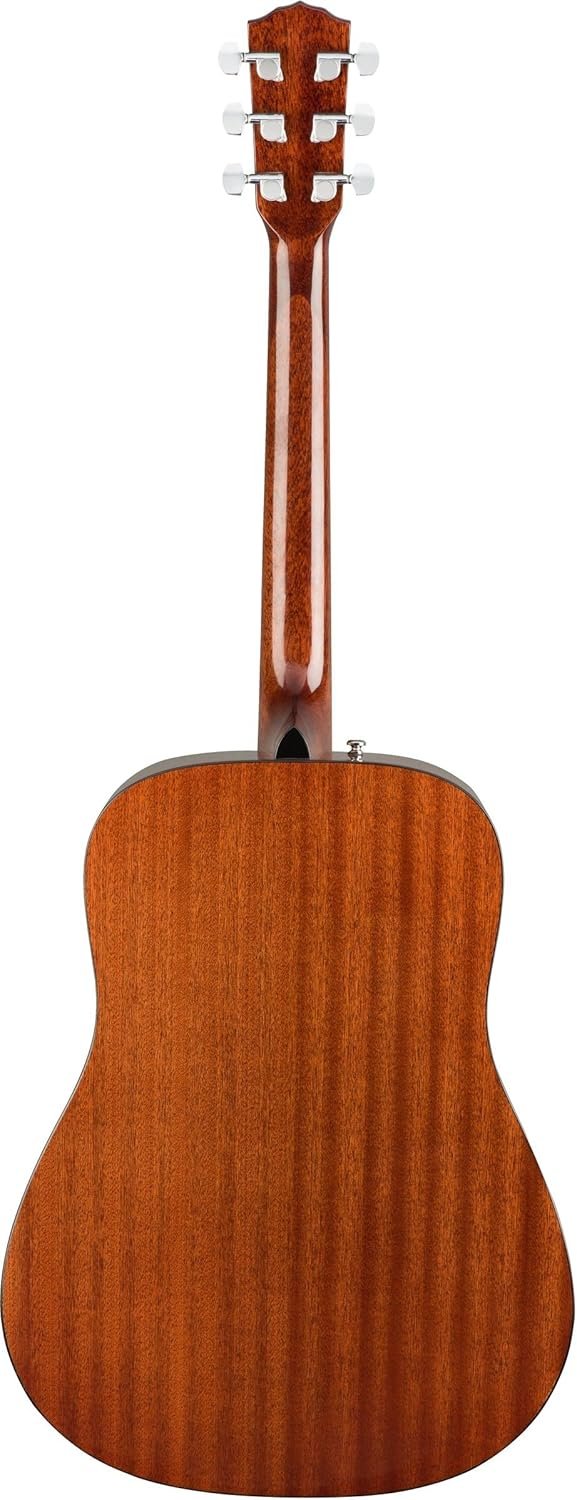
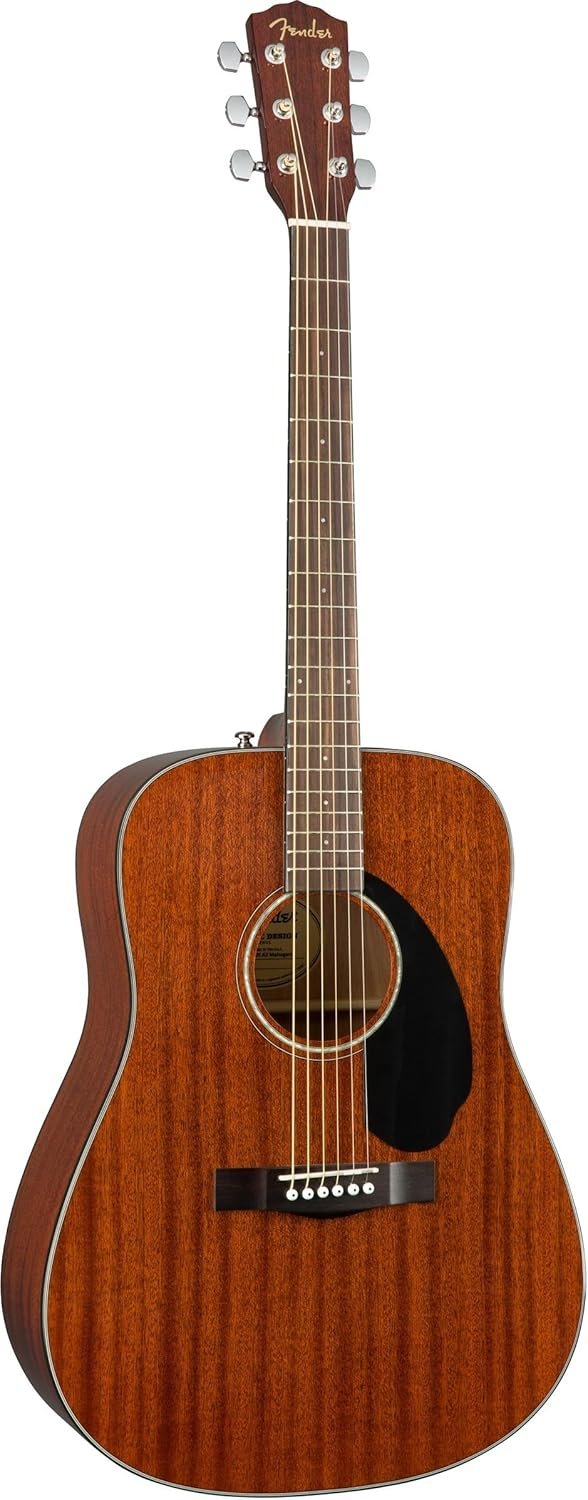
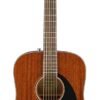
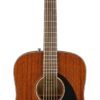
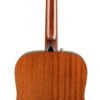
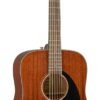
The Fender CD-60S in the all mahogany specification is a full size dreadnought with a solid mahogany top, mahogany back and sides, and a neck shaped with rolled fingerboard edges. It is aimed at beginners and intermediate players who want a solid top instrument, which is the specification that separates a guitar that improves with age from one that does not. It sits in the acoustic guitars section, and the published specification data around it contains several fields that are plainly wrong.
Pros & Cons
Pros
- The top is solid mahogany, not laminate. This is the single most important line on the listing. A solid top is one piece of wood that flexes freely with the strings, and it continues to loosen and open up over years of playing. A laminate top is bonded plies that never move the same way and never change.
- Scalloped X bracing. Scalloping removes wood from the bracing struts under the top, leaving them strong where the load is and light everywhere else. The result is a top that moves more freely, giving more volume and more bass response than an unscalloped equivalent.
- Rolled fingerboard edges. The corners of the fingerboard are eased rather than left square, so the hand slides along the neck without catching. It is a small piece of finishing work that most guitars at this level skip, and it is immediately noticeable.
- All mahogany construction gives a distinct voice. A mahogany top is denser and less flexible than spruce, producing a drier, more midrange focused tone with a fast attack and less overtone shimmer. That suits fingerpicking, blues and recorded work where a spruce top can sound cluttered.
Cons
- The listed weight is impossible. The specification table gives 0.16 ounces. A dreadnought acoustic weighs roughly four to five pounds. The figure appears to be a data error rather than a measurement, and the guitar’s real weight is not published anywhere.
- A pickup configuration is listed on an acoustic guitar. The table gives “Combination” for the guitar pickup configuration. Fender’s description covers the body, top, bracing, back, sides and neck and never mentions a pickup, a preamp, controls or an output jack.
- The bridge is described in electric guitar terms. The table lists a “Hard Tail” bridge system. Hard tail is the term used for a non tremolo bridge on a solid body electric. Acoustic guitars use pin bridges or through bridges, and the listing never says which is fitted.
- No scale length is published. This is standard information on a dreadnought and it is missing, which makes comparing string tension against other models harder than it should be.
- Nothing is included. No bag, strap, tuner or picks, so the real cost of starting is higher than the guitar alone.
Detailed Product Description
The guitar is a full size six string dreadnought in a mahogany finish. The top is solid mahogany with scalloped X bracing beneath it, and the back and sides are mahogany as well. The neck is mahogany with a walnut fingerboard. Mahogany throughout is an old and respected specification: it produces a compressed, punchy voice with a strong fundamental and comparatively few overtones, which is why it has always been popular for blues and for recording, where a spruce topped guitar can occupy too much space in a mix.
The X bracing pattern is the standard for steel string acoustics, with two main struts crossing under the sound hole to resist the pull of the strings while leaving the top free to vibrate. Scalloping those struts, as Fender specifies here, is a step normally associated with guitars a tier or two above this level. It removes mass without removing strength and lets the top move more, which shows up as more volume and a fuller bass response. The value of a solid top over a laminate is set out in solid top versus laminate acoustic guitars.
What Comes with the Product
The listing describes the guitar alone, assembled and strung, in a right handed configuration.
Not included: a gig bag or case, a strap, a tuner, picks, spare strings, a capo, a stand or a humidifier. A padded case is worth adding straight away, since a solid top guitar is more vulnerable to knocks and to humidity than a laminate one, and a solid top instrument left in a dry room through a winter can crack.
Who It Suits
This suits a beginner who wants to buy once rather than twice, an intermediate player looking for a second acoustic with a drier voice than a spruce topped guitar, and anyone playing blues, fingerstyle or recorded material where a focused midrange is an advantage. The solid top means the instrument will reward years of playing rather than staying static.
Look elsewhere if the goal is the biggest, brightest strumming sound, where a solid spruce top will do more, or if a complete bundle with accessories is wanted in one purchase. Comparable guitars include the Fender CD-60S all mahogany dreadnought in its other listing, the Fender CD-60 dreadnought, and the Martin D-15M all mahogany dreadnought further up the range.
How to Maintain
A solid top guitar needs more care than a laminate one. Keep it away from radiators and out of direct sun, and consider a case humidifier if the room drops below about forty percent relative humidity in winter, because a dry solid top can develop a crack that a laminate top would not. Wipe the strings after every session, since phosphor bronze dulls from skin acid. Condition the walnut fingerboard lightly twice a year. Store the guitar in a case rather than on a wall in an unheated room, and loosen the strings slightly for storage lasting months. Detail is in how to store a guitar, and string replacement timing is in how often guitar strings should be changed.
Tips and Recommendations
Buy a hard or semi rigid case rather than a thin sleeve, since the instrument is worth protecting properly. Keep light gauge strings on it rather than moving to medium, because scalloped bracing is designed around a lighter load and medium strings put more tension through the top over time. Have the action checked after the first month and again after the first winter, since a solid top settles more than a laminate one. If the guitar sounds boxy when new, that is normal for a fresh solid top; the tone opens up over the first year of regular playing. Register the purchase and keep the receipt so the warranty is claimable.
Warranty & Support Information
The listing states that a one year warranty is included with the guitar. No claim procedure, coverage detail or contact route is published in the listing data, so retain the proof of purchase.
Product FAQ
Is the top solid? Yes. Fender’s description states a solid mahogany top with scalloped X bracing, which is unusual at this level and is the strongest reason to consider the guitar.
How much does it weigh? The listing gives 0.16 ounces, which is not a real figure. A dreadnought acoustic typically weighs around four to five pounds, and the true weight is not published.
Can it be plugged in? Nothing in Fender’s description suggests so. A pickup configuration appears in the specification table, but no preamp, controls or output jack is described.