
A guitar pick is defined by three things: how thick it is, what it is made of, and how well it stays in your hand. Thickness is the one that changes your sound most, and beginners are usually best served by something in the 0.60mm to 0.73mm range.
Picks cost almost nothing and every one of them feels different, which makes them the cheapest experiment in guitar. Buy a mixed pack, work through it, and pay attention to which one you stop noticing. That is your pick.
Key takeaways
- Thin picks flex and suit strumming. Thick picks transfer more energy and suit single note playing.
- The usual bands are thin at 0.44mm to 0.60mm, medium at 0.60mm to 0.80mm, heavy at 0.80mm to 1.20mm and extra heavy above 1.20mm.
- Material sets the attack. Nylon is warm and grippy, Delrin is bright and slick, celluloid sits in between, and acrylic or Ultem is hard and sharp.
- Grip texture matters more than most beginners expect. Sweaty hands and a polished celluloid pick do not mix.
- Bass players generally use thicker picks, commonly 1.0mm and up, because heavier strings need more force.
Thickness, and what it does to your tone
Thickness is measured in millimetres and printed on most picks. A thin pick bends as it crosses the strings, which softens the attack and evens out the volume between strings. That flex is why thin picks feel forgiving for strumming: they smooth over an uneven strumming hand.
A thick pick barely bends. All the force from your hand goes into the string, which produces a louder, fuller note with a more defined attack. That precision is what lead players want, and it is also less forgiving, because every inconsistency in your picking hand comes through clearly.
- 0.44mm to 0.60mm. Thin. Bright, clicky, light on the strings. Good for acoustic strumming and open chord songs.
- 0.60mm to 0.80mm. Medium. The all rounder, and the sensible default for a beginner covering both chords and simple riffs.
- 0.80mm to 1.20mm. Heavy. More volume and control, favoured for electric rhythm and lead work.
- 1.20mm and above. Extra heavy. Rigid and precise, common in metal, jazz and bass playing.
String gauge interacts with all of this. Heavier strings resist more, so they pair naturally with a stiffer pick. There is more on that relationship in guitar string gauge explained.
Materials and how they sound
Celluloid is the traditional material, often in tortoiseshell or pearloid patterns. It has a warm, slightly soft attack and a classic feel, but it is smooth and wears down relatively quickly.
Nylon is flexible and naturally grippy, and most nylon picks add a raised or textured grip surface. The tone is warmer and rounder than plastics of the same thickness, which suits acoustic strumming.
Delrin and acetal, sold under names like Tortex, have a matte, chalky surface and a bright snap. They are hard wearing and consistent, and the colour usually indicates thickness in a given range.
Ultem, acrylic and stone are the hardest options. They produce a sharp, glassy attack with maximum note definition and almost no give. Wood and felt sit at the opposite end: felt picks are used for ukulele and bass because they mute the attack almost completely.
Shape, size and where your fingers go
The standard shape, often called the 351, is the rounded triangle nearly everyone starts with. It gives you a medium point and enough surface area to hold comfortably. A teardrop is slightly smaller with a sharper tip. A jazz shape is smaller again and much pointier, which encourages a tighter grip and faster single note lines.
Equilateral triangles give you three usable points and a larger body, which some acoustic players and bassists prefer. Sharkfin shapes combine a normal point with a ridged edge for strumming effects.
Hold the pick between the pad of your thumb and the side of your index finger, with only a few millimetres of tip showing. Too much tip catches and drags. A death grip produces tension all the way up your arm, and a loose grip drops the pick. The middle takes a few weeks to find.
Grip, wear and the picks you keep losing
Grip is the most common reason a pick fails you mid song. Options include raised logos, punched holes, sandblasted matte surfaces, rubberised coatings and cork inlays. If your pick regularly rotates in your fingers, the material is too slick rather than the thickness being wrong.
Picks wear down. Softer materials develop a flat spot or a rough burr on the point, which changes the attack and can start scratching wound strings. Rotate a worn pick to a fresh corner, and replace it when the point no longer feels smooth.
Buy in bulk and put picks everywhere: in the case, on the desk, in a jacket pocket, in a plectrum holder on the headstock. They vanish reliably, and a missing pick at the start of a practice session is a real reason people skip it. The wider list of things worth owning is in guitar accessories a beginner actually needs.
Guitars and bundles that ship with picks
Picks are usually thrown into beginner packages, which is a low effort way to get a first set to compare. These options from the review library all include them.
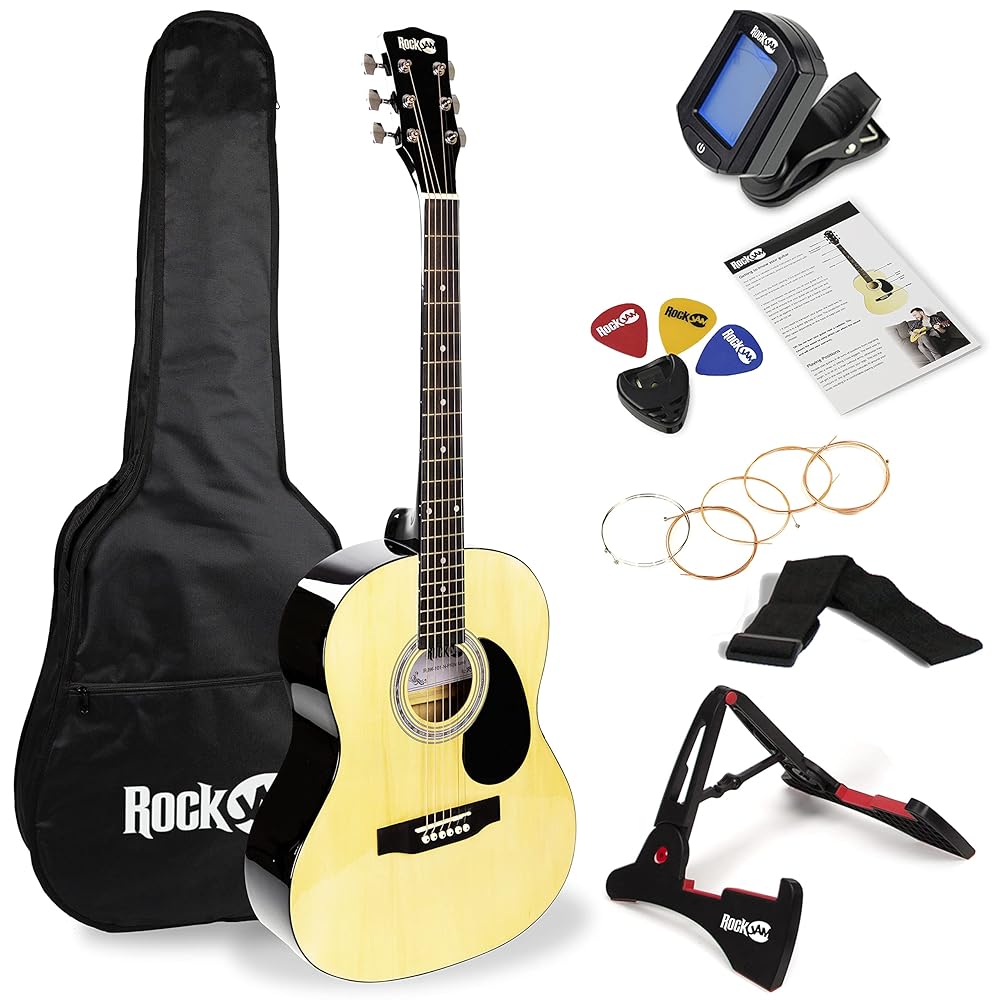
- RockJam Acoustic Superkit. Comes with picks and a plectrum holder alongside a stand, gig bag, tuner and spare strings. The plectrum holder is the practical detail here, since it keeps picks attached to the instrument.
- Yamaha GigMaker Standard acoustic package. Includes picks, a gig bag, a digital tuner and a strap around an F310 dreadnought. Suits an adult beginner who wants a known brand and the basics covered.
- Donner DAG-1C 41 inch acoustic bundle. A full size cutaway supplied with picks, a padded gig bag, tuner, strap, capo and spare strings. A good fit if you want spares of everything from the start.
- EASTROCK 39 inch electric guitar kit. Ships with picks, a 10 watt amplifier, bag, capo, strap, cable and a spare string. The electric equivalent for someone who wants the whole rig in one box.
Browse the acoustic guitars section for more of these packages, or read how often to change guitar strings, since a worn pick and dead strings tend to arrive together.
Frequently asked questions
What pick thickness should a beginner start with?
Start around 0.60mm to 0.73mm. That range is flexible enough to forgive an uneven strumming hand but stiff enough to play single notes cleanly. Once chord changes feel comfortable, try something heavier and see whether you prefer the extra control.
Do I have to use a pick at all?
No. Fingerstyle and thumb playing are complete techniques in their own right, and classical guitar is played entirely with the fingers. Most players learn both. A pick gives volume and attack, fingers give independence between bass and melody lines.
Do picks damage guitar strings?
A smooth pick does not. A worn pick with a rough burr on the tip can scrape the winding on wound strings and shorten their life. Metal picks wear strings noticeably faster than plastic ones, which is one reason they stay a specialist choice.
Is a bass pick different from a guitar pick?
Usually thicker and often larger. Bass strings carry far more tension, so a thin pick simply bends out of the way instead of moving the string. Most pick playing bassists sit at 1.0mm or above, and some use felt picks to soften the attack.