





Description
Review of the Ktaxon 4 String Electric Bass Guitar with Rosewood Fingerboard
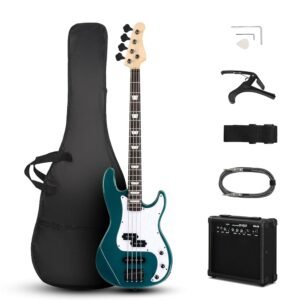
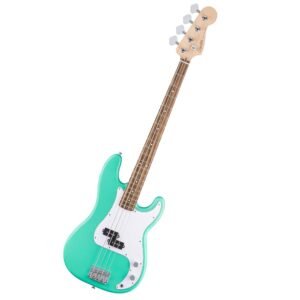
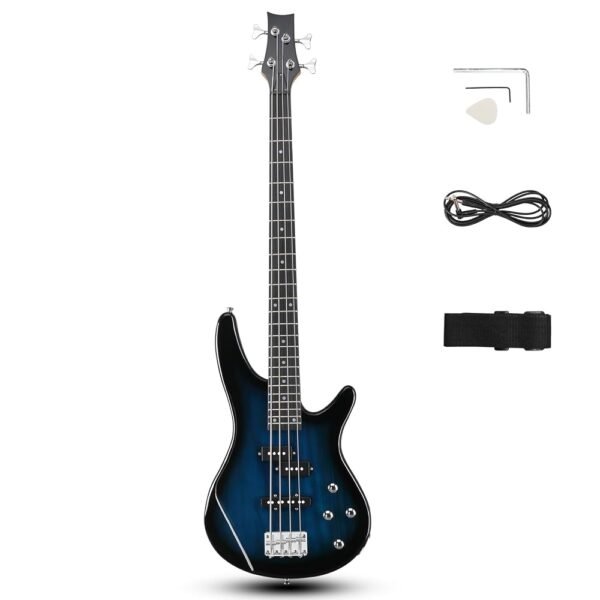
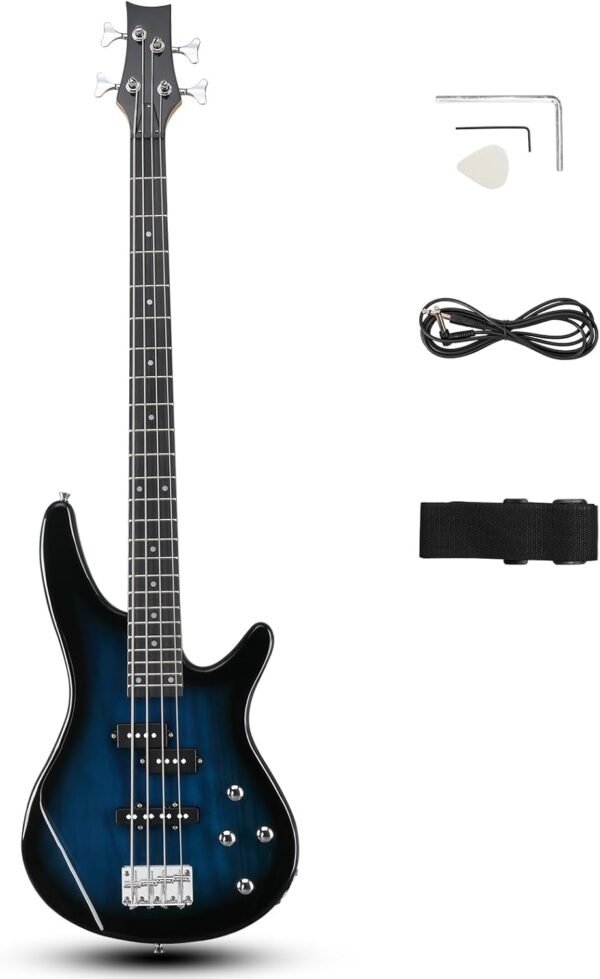
This is a full-size, right-handed four-string electric bass in Lake Blue, sold as a beginner kit with a cable and a wrench tool. It is aimed at a first-time bass player or a guitarist adding a bass to a home recording setup, and it arrives assembled and ready to string up and tune.
Pros & Cons
- Basswood body with a maple neck is a proven budget combination. Basswood is light and even in response, and maple is stiff enough to resist the considerable pull of bass strings without a heavy neck profile.
- A rosewood fingerboard suits bass playing. Rosewood is softer and warmer under the fingers than a lacquered maple board, which matters when fretting hand pressure is high and sessions run long.
- The C shaped neck profile reduces fatigue. Bass necks are long and wide, so a shallow rounded back keeps the thumb from being forced into an awkward angle during scale practice.
- Two pickups with separate controls give real tonal choice. A split pickup near the neck and a second pickup nearer the bridge, each with its own volume, lets a player blend a fat sound with a more articulate one.
- The specification table and the description disagree on the pickups. The description clearly states one split single-coil pickup plus one single pickup, with two volume and two tone knobs. The table records the pickup configuration as a single “S”. These cannot both be right, and the description is the more specific source.
- The listed product dimensions are not credible. A depth of 0.8 inches is recorded for an instrument 44.1 inches long. No solid-body bass is that thin; a real body is closer to 1.5 inches. The figure appears to be a packaging or measurement error.
- Scale length is never published. On a bass this is the most important single number, because it decides string tension and how far the fretting hand must stretch at the first fret. Calling it “full size” is not the same as stating 34 inches.
- The kit is thin for a beginner. A cable and a wrench are supplied, but there is no amplifier, no gig bag, no strap and no tuner. A bass with no amplifier is very quiet to practise on.
- Alloy steel strings dull quickly. They are the cheapest bass string type and lose their brightness within weeks of regular playing.
Detailed Product Description
The body is solid basswood, listed as basswood for the top, back and body, so this is one timber throughout with a polished gloss finish. Basswood is soft, light and tonally neutral. It dents more easily than ash or alder, so a strap with a good lock and care around belt buckles are worth thinking about.
The neck is maple with a rosewood fingerboard and smooth nickel frets. Nickel silver is the standard fret material and wears slowly enough that a beginner will not see fret grooves for years. Tuning is handled by metal machine heads with tuning peg machines, which the seller describes as accurate; on a bass, geared tuners with a high ratio are what make fine tuning possible at all, since a tiny turn moves the pitch a long way.
Electronically the arrangement follows the classic split-plus-single layout. The split pickup, positioned under the strings around the middle of the body, produces the round, thick sound most people picture when they think of electric bass. The second pickup nearer the bridge adds definition and bite. Blending the two volumes is where most of the useful sound lives.
The strings are thicker and under higher tension than guitar strings, which the listing correctly points out. That is why bass technique relies on lighter fretting pressure and a more deliberate right hand than guitar does. Anyone unsure whether a full-scale instrument is the right starting point should read the short scale and full scale bass comparison before ordering.
What Comes with the Product
The listing states the kit includes the bass guitar, a cable and a wrench tool. The wrench is for truss rod and bridge adjustment.
Not included, and not claimed: an amplifier, a gig bag or case, a strap, a tuner, spare strings, or a stand. Without an amplifier the bass is barely audible when played acoustically, so an amp or a headphone practice interface is not optional, it is the next required purchase. A gig bag matters too, because a bass left leaning against furniture is easy to knock over.
Who It Suits
This suits a beginner who already has an amplifier, or a guitarist who needs a bass for recording and will run it into an audio interface. It also suits a player who wants a cheap platform to modify, since pickups and hardware on this style of bass are easy to swap.
It suits less well a young beginner with short arms, where the full scale makes the first three frets a long reach, or someone who wants a genuinely complete package. Buyers wanting an amplifier in the box should look at the beginner starter kits section, and other four-string options sit in bass guitars.
How to Maintain
Wipe the strings down after playing. Bass strings are expensive to replace and hold sweat and grime in the windings, which is what makes them sound dead.
Keep it in a stable room, away from radiators and out of direct sun. The long neck on a bass is more sensitive to humidity change than a guitar neck. Check the neck relief a few weeks after arrival, because a new instrument settles once string tension has been on it for a while. Oil the rosewood board once or twice a year if it looks grey and dry.
Tips and Recommendations
Set the two volume controls to taste rather than leaving both at maximum. Rolling the bridge pickup back gives the traditional round tone; bringing it up adds the growl that cuts through a mix.
Expect to need a setup. Budget basses ship with the action high so nothing rattles in transit, and lowering it makes an enormous difference to how easy the instrument is to play. The action and setup guide explains what is being adjusted and in what order. Fretting with the fingertips rather than the pads, and keeping the thumb behind the neck, will do more for tone than any hardware change.
Product FAQ
How many pickups does it have? The description says two, a split single-coil and a single. The specification table says “S”. The two sources conflict and the description is the more detailed one.
Does it come with an amplifier? No. Only a cable and a wrench are included. A comparable option that does include an amp is the Ktaxon PB-style bass kit with a 20 watt amp.
What is the scale length? Not stated. The listing describes it as full size but publishes no measurement.
What else is comparable? Similar beginner four-strings include the Ktaxon bass with a 20W amp and the Glarry GJazz bass starter kit.