Description
Review of the Ktaxon 4 String Electric Bass Guitar PB-Style Beginner Kit with 20W Amp
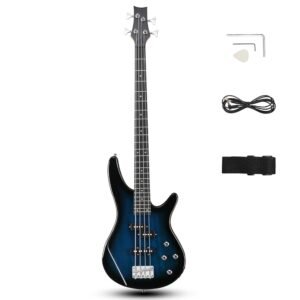
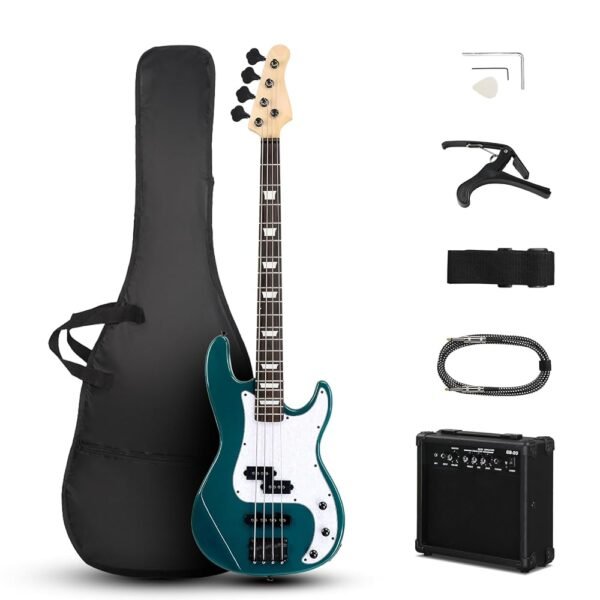
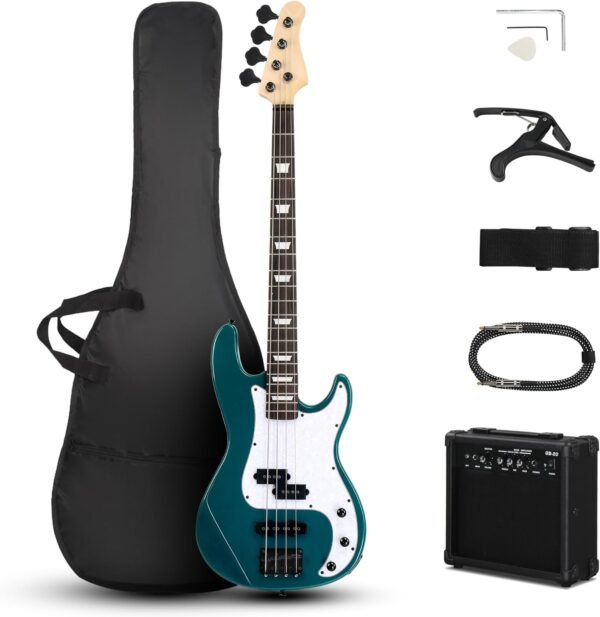
This is a full-size, right-handed four-string electric bass in Lake Blue, sold as a complete beginner package with a 20 watt practice amplifier, a gig bag, a strap, a cable and a capo. It is aimed at a first-time bass player who wants everything needed to make a sound in one purchase rather than sourcing an amplifier separately.
Pros & Cons
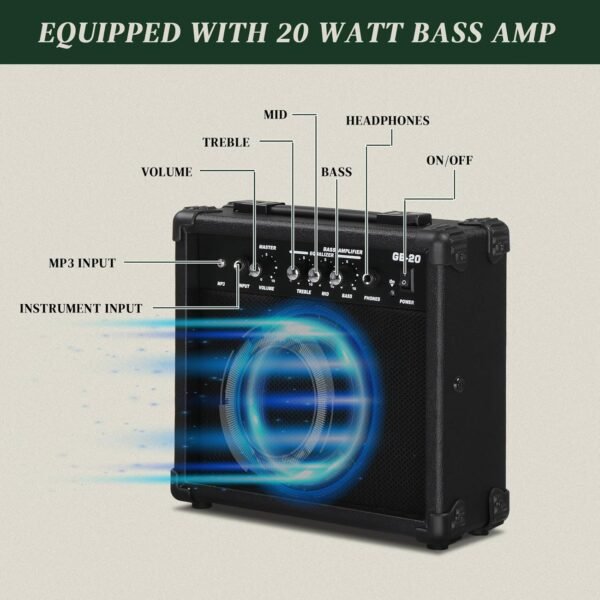
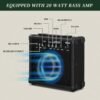
- The 20 watt amplifier is genuinely useful. With volume, treble, mid and bass controls plus a headphone output, it covers home practice properly instead of being a token speaker, and bass needs more amplifier power than guitar to sound right at the same volume.
- The headphone output allows silent practice. Bass carries through walls and floors more than any other instrument, so being able to bypass the speaker matters in shared housing.
- Paulownia body with a maple neck keeps the weight down. Paulownia is exceptionally light, which is worth a lot on an instrument this size when it is worn on a strap for an hour.
- A through-body fixed bridge is the right choice. Strings anchored through the body give a firmer feel and better tuning stability than a top-load bridge, and there is nothing to knock out of adjustment.
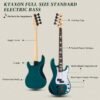
- 20 frets with position markers on the face and the top edge. Side markers are what a player actually reads while playing, and having them on both surfaces speeds up learning the fingerboard.
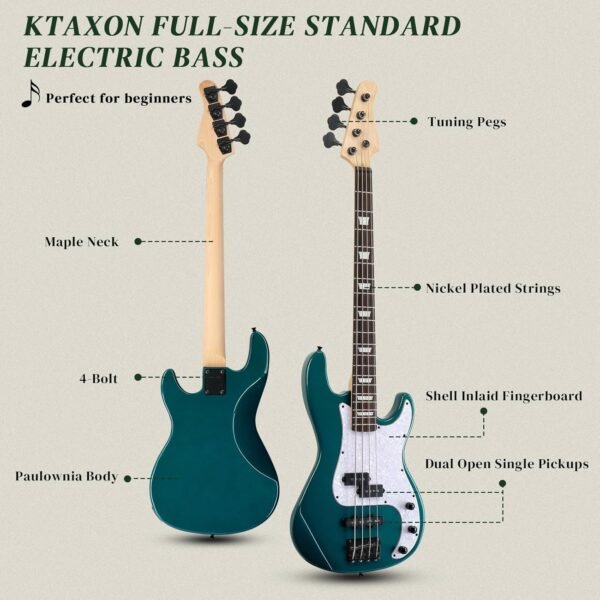
- The pickup description contradicts the PB name. A P-style bass conventionally has one split pickup. The listing calls this a PB-style bass and then describes dual open single pickups with two volume controls and one tone control. The two statements do not sit together, and the exact pickup layout cannot be confirmed from the published data.
- The specification table is empty. Unlike most listings there are no published attributes at all, so scale length, weight, fingerboard radius, neck width and body dimensions are simply unavailable. Nothing about how it will feel can be checked before it arrives.
- The string height instruction in the listing is wrong. It states that string height is adjusted “by tuning the neck on the top of the fingerboard”. String height is set at the bridge saddles and the truss rod, not at the fingerboard, and following the listing as written would confuse a beginner.
- A capo is an odd inclusion on a bass. Capos are rarely used on bass, so it adds little, and the gig bag padding, strap width and cable length are all unstated.
Detailed Product Description
The body is naturally dried solid paulownia with a polished surface. Paulownia is a very light, fast-growing hardwood used widely on budget instruments. Its advantage is weight; its drawback is softness, so it marks and dents more easily than alder or ash and needs a little more care around belt buckles and stands.
The neck is maple with a rosewood fingerboard and a C shaped profile, carrying 20 copper-nickel frets. Maple is stiff enough to hold against the heavy pull of bass strings without being carved thick, and the C profile keeps the thumb in a natural position behind the neck. Copper-nickel is the standard fret alloy and wears slowly.
Tuning uses open-gear machine heads. Open gears are lighter than sealed tuners and easy to inspect and lubricate, though they collect dust. The bridge is through-body and fixed, which means strings are threaded from the back of the instrument and pull down over the saddles at a steeper angle. That steeper break gives a more direct attack.
The strings are thicker and under higher tension than guitar strings, as the listing notes. Because no scale length is published, the tension figure cannot be predicted, and the difference between a 30 inch and a 34 inch instrument is significant. The short scale and full scale bass comparison explains what each choice does to reach and feel.
What Comes with the Product
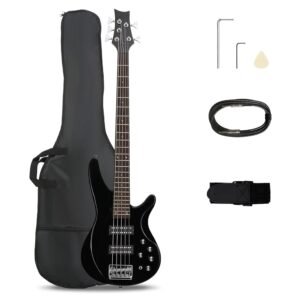
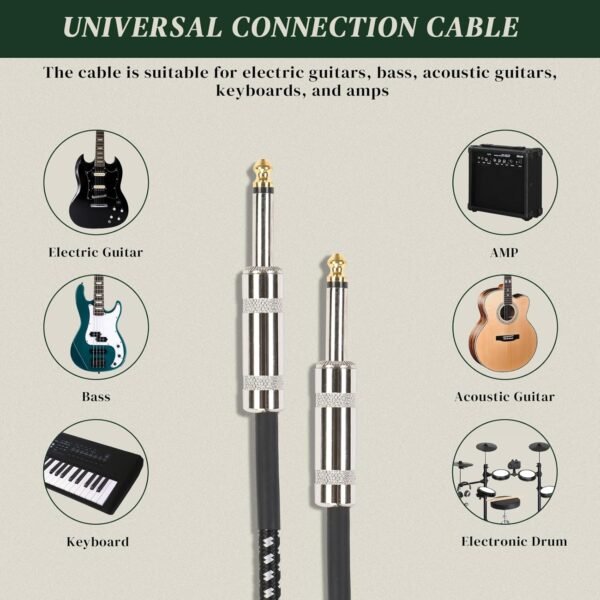
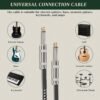
The listing states the kit includes the bass guitar, a 20 watt amplifier with a built-in speaker, headphone output and input jack, a gig bag, a strap, an upgraded cable and a guitar capo.
Not included: a tuner, spare strings, a stand, a setup wrench or hex key, and headphones for the amplifier’s headphone socket. A clip-on tuner is the obvious first addition, since a bass is difficult to tune accurately by ear. Batteries or a power supply for the amplifier are not mentioned either way.
Who It Suits
This suits an absolute beginner who wants one purchase that produces sound the same day, a parent buying for a teenager, or a guitarist who wants a bass and a small amp for home recording without a large outlay.
It suits less well a smaller or younger player, since full-scale reach at the first fret is demanding and no scale length is published to check against. It also suits less well anyone who already owns a bass amplifier, because the money spent on the bundled amp would be better put into the instrument itself. Alternatives sit in bass guitars and beginner starter kits.
How to Maintain
Wipe the strings after every session. Bass strings are costly to replace and it is trapped sweat in the windings that kills their brightness.
Keep the instrument in a stable room, since a long bass neck reacts more to humidity change than a guitar neck does. Check the neck relief a few weeks after arrival once the strings have been pulling on it. Oil the rosewood fingerboard once or twice a year if it looks dry and grey. Keep the amplifier away from damp and coil the cable loosely rather than wrapping it tightly around the handle, which shortens its life.
Tips and Recommendations
Set the amplifier’s tone controls near the middle before adjusting. Bass amps respond very differently in different rooms, and cutting the low control in a small room usually sounds tighter than boosting it.
Use the headphone socket for the first weeks of practice. It removes any worry about volume and makes timing errors much more obvious than a small speaker does. Learn to fret with the fingertips just behind the fret rather than pressing in the middle of the space, which reduces the force needed. Twenty watts is a home figure rather than a band figure, and the amp wattage guide for home practice explains where that limit sits.
Product FAQ
How many pickups does it have? The listing describes dual open single pickups with two volume controls and one tone control, yet also calls it PB-style, which conventionally means one split pickup. The published data does not resolve this.
What is the scale length? Not published. The listing says full size but gives no measurement, and the specification table for this item is empty.
Can it be practised silently? Yes. The amplifier has a headphone output, though headphones are not supplied.
What comparable bass kits are there? Similar packages include the Ktaxon four-string bass with rosewood fingerboard, the Stedman Pro bass kit with a 15 watt amp and the Safeplus full-size bass kit.