
Description
Review of the ChromaCast Electric Guitar Hard Case CC-EHC with Guitar Strap and Pick Sampler in Black
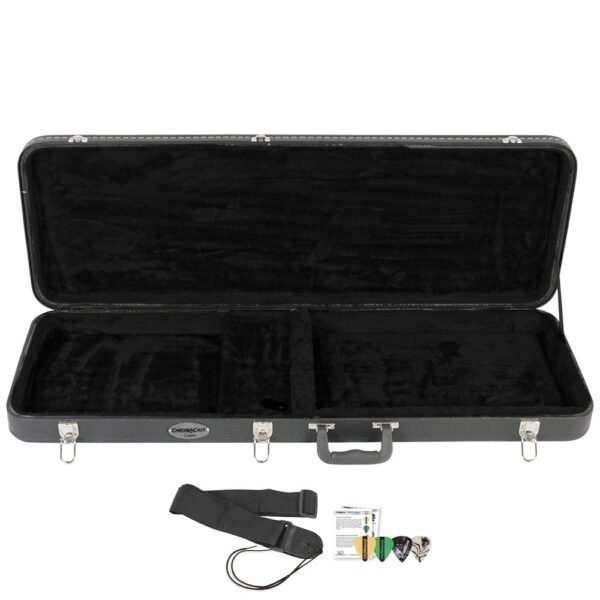
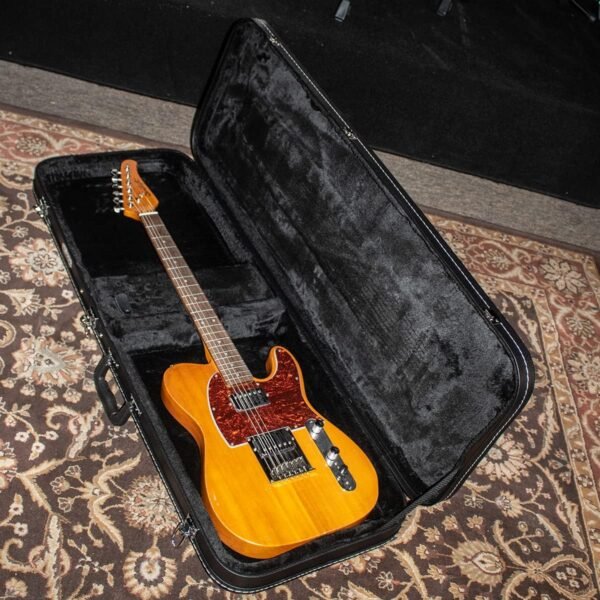
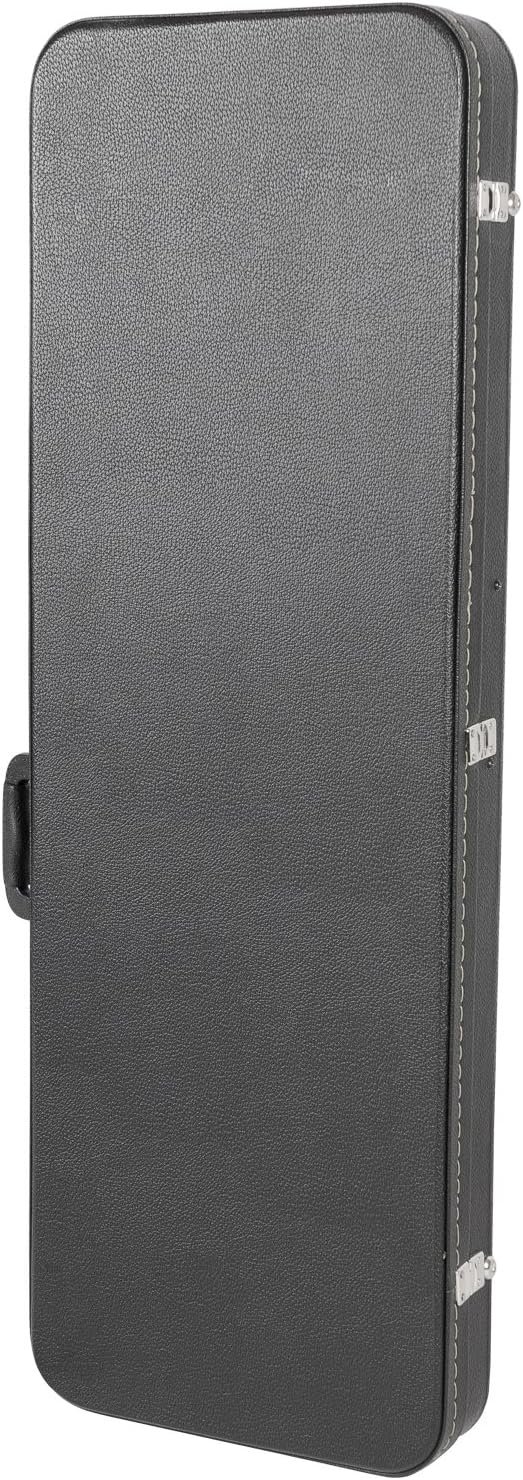
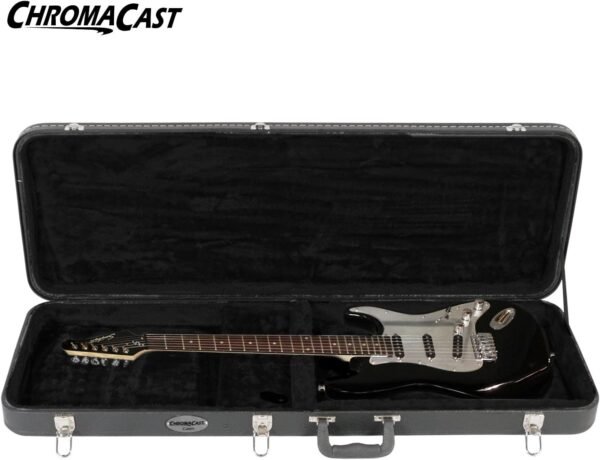
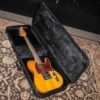
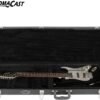
This is a lockable wooden hard case for electric guitars, plush lined with extra padding at the neck and bridge, fitted with chrome latches and protective bumpers, and supplied with a guitar strap and a four pick sampler. It is a protection accessory rather than an instrument, and it belongs in the amps and accessories range. The decisive question with any hard case is whether the interior dimensions match the guitar, and this listing does publish them.
Pros & Cons
Pros
- Full interior dimensions are published. Inside length 41 inches, inside body length 19.75 inches, inside lower bout width 13.25 inches, inside upper bout 14 inches and inside height 3 inches. Most case listings give only a vague model compatibility claim, so a buyer can actually measure their guitar against these figures.
- Wood shell construction rather than moulded foam. A wooden shell resists crushing in a way a soft or semi rigid case does not, which is what matters if the case is going in a car boot or under other luggage.
- Extra padding at the neck and bridge. These are the two points where an impact does the most damage, since the headstock is the most common breakage point and the bridge sits proud of the body.
- The case is lockable. Latching locks discourage casual opening and stop the case springing open if it is dropped or carried at an angle.
- Bumpers on the bottom and sides, plus an interior storage compartment. Bumpers lift the shell off the ground so the case stands upright without wearing through at the contact points, and the compartment means cables, picks and spare strings travel with the guitar.
Cons
- No exterior dimensions and no weight are given. A wooden hard case is significantly heavier than a gig bag, and without a stated weight a buyer cannot judge whether it is practical to carry any distance or whether it fits a particular car boot or overhead space.
- The listing names no compatible guitar models. It is described as an electric guitar case, but the buyer must work out fit entirely from the interior measurements. Any guitar with an unusual outline or a wider lower bout may not fit.
- The interior height of 3 inches is a real constraint. A guitar with a recessed tremolo route, a thick body, or hardware that stands proud of the top may not close cleanly. That figure needs checking against the guitar rather than assumed.
- The spec table on this listing is empty. No structured product attributes are recorded at all, so every specification comes from the manufacturer bullet text with nothing corroborating it.
- Lock, key, strap and pick details are all unstated. The listing says lockable without saying how many keys are supplied or what type the locks are, and neither the strap width nor the pick gauges are described.
Detailed Product Description
The shell is wood, which is the traditional hard case construction. A wooden shell is rigid, so it distributes an impact across the whole case rather than transmitting it to one point on the instrument. It is also heavier and bulkier than a moulded polymer or a padded gig bag, which is the trade that defines this category. The guide on guitar cases versus gig bags covers when each is the right choice.
The interior is plush lined, which cushions minor movement and protects the guitar finish from abrasion. A nitrocellulose finish in particular can react with some case linings over long periods, though this listing does not state what the lining material is.
The extra neck and bridge padding is the detail worth noting. When a cased guitar is dropped end on, the force travels up the neck to the headstock, and neck support inside the case is what absorbs it. Bridge padding stops the hardware pressing into the lining and marking the top. The molded handle takes the entire weight through one hand, which matters more on a wooden case than on a bag with shoulder straps, and no weight figure is published.
What Comes with the Product
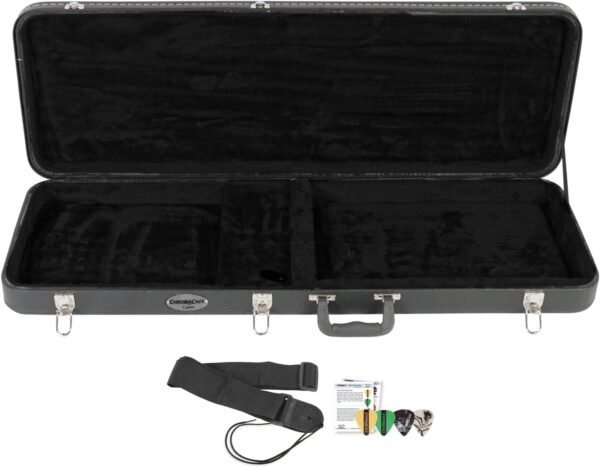
The listing states the purchase includes the hard case, a guitar strap and a four pick sampler.
Not included and not mentioned: a humidity control pack, a shoulder strap for the case itself, a cable, a stand, spare keys beyond whatever ships with the locks, and any padding inserts to adapt the interior to a smaller guitar. A guitar is obviously not included. Buyers with a guitar smaller than the stated interior should plan on adding soft padding themselves, since a guitar that shifts inside a hard case can be damaged by the movement.
Who It Suits
This suits an owner of a standard outline electric guitar who transports it by car, stores it in a shared or busy space, or wants better protection than a padded bag provides. It also suits anyone storing a guitar long term, since a closed hard case buffers against dust and short humidity swings better than an open stand.
It does not suit anyone who walks or cycles with a guitar regularly, where the weight of a wooden case and its single handle become the deciding factor. It does not suit an owner of an unusually shaped instrument, a semi hollow body, or a guitar with a thick body, without measuring first against the published interior figures. Anyone comparing options should look at the Gator deluxe wood case for double cutaway electrics and the MONO M80 Sleeve, which sits at the other end of the weight and rigidity trade.
How to Maintain
Let a guitar reach room temperature inside a closed case before opening it after transport in cold weather. A cold finish exposed suddenly to warm humid air is how finish crazing happens, and the case is the buffer that prevents it.
Keep the interior dry. If the case has been out in rain, open it and let it air rather than closing a damp lining onto an instrument. Wipe the chrome latches occasionally, since latch springs corrode first and a seized latch is what turns a case into a problem. Check the latch alignment periodically, because a wooden shell moves slightly with humidity. Store the case flat or standing on its bumpers rather than balanced on an edge, and avoid stacking heavy items on the lid even though the shell is rigid.
Tips and Recommendations
Measure the guitar before ordering. The three numbers that matter are the total length from the headstock tip to the strap button, the width across the widest part of the lower bout, and the body depth including any hardware standing proud of the top. Compare those against the published interior figures rather than assuming a standard outline will fit.
Add a humidity control pack if the guitar is stored cased for long periods, since a sealed case holds whatever moisture level it was closed with. Use the interior compartment for a spare set of strings and a cloth so they are always with the instrument. The guide on how to store a guitar covers longer term storage, and the guide on guitar accessories beginners need puts a case in context against the other early purchases.
Product FAQ
What are the interior dimensions?
Inside length 41 inches, inside body length 19.75 inches, inside lower bout width 13.25 inches, inside upper bout 14 inches and inside height 3 inches.
Which guitars does it fit?
The listing names no specific models. Fit has to be determined by measuring the guitar against the published interior dimensions, paying particular attention to the 3 inch interior height.
Is it lockable?
Yes. The listing describes it as a lockable wood hard case with sturdy chrome latches, though it does not state how many keys are supplied.
What else is in the box?
A guitar strap and a four pick sampler. No humidity pack, cable or stand is included, and the strap and pick specifications are not described.