


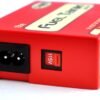
Description
Review of the T-Rex Engineering Fuel Tank Chameleon Pedal Power Supply
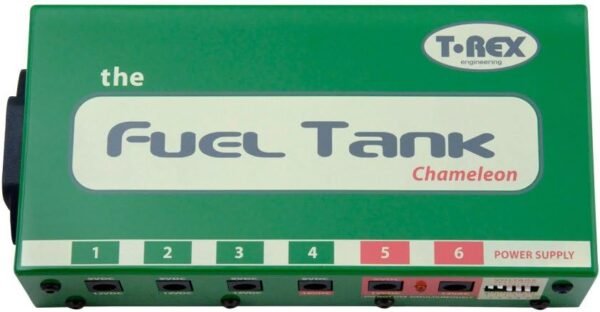
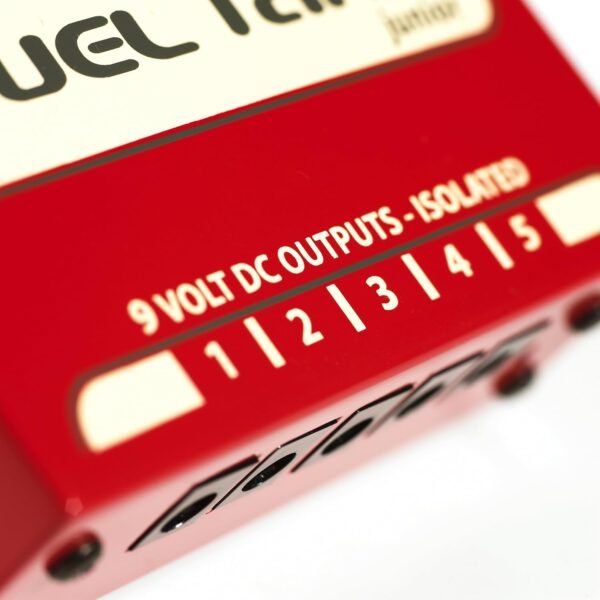
This is a mains-powered supply for effects pedals, built into a metal enclosure with five isolated outputs and a choice of four voltages. It is aimed at players running a populated pedalboard where a daisy chain has started to introduce hum, and at anyone whose board mixes standard nine volt pedals with units that want twelve or eighteen volts.
The listing dates the unit to August 2010 and gives its dimensions as 6.3 by 3.2 by 1.5 inches with a weight of 1.74 pounds.
Pros & Cons
Pros
- Five galvanically isolated outputs. Isolation means each output has its own transformer winding with no shared ground path. That is what removes the ground-loop hum a daisy chain creates once more than two or three pedals share one adaptor, and it is the whole reason to buy a supply like this.
- 300mA per output. Most analogue pedals draw well under 50mA, but digital delays, reverbs and multi-effects can draw ten times that. Three hundred milliamps per output means a digital unit does not have to be given its own separate adaptor.
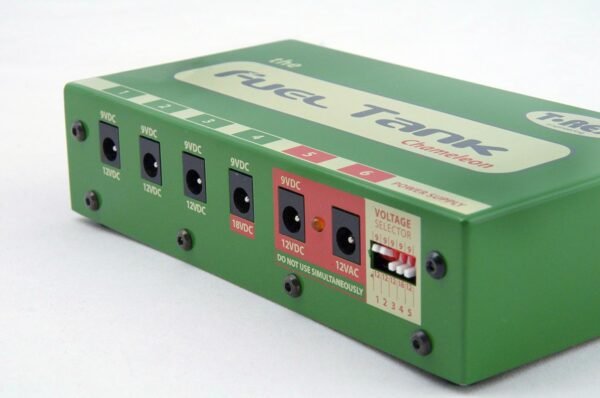
- Four voltage options. Nine volts DC, twelve volts DC, twelve volts AC and eighteen volts DC. Twelve volt AC in particular is uncommon and is what certain older analogue delays and choruses require; supplies that omit it force a second adaptor onto the board.
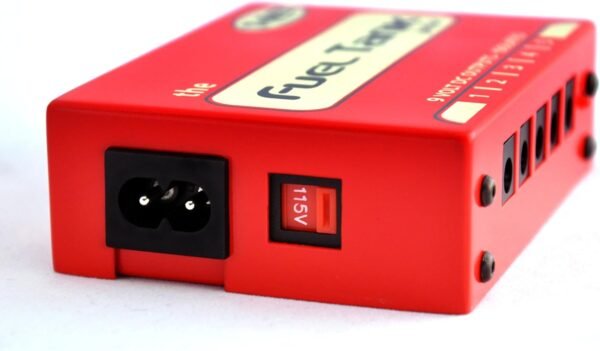
- Switchable between 115 and 230 volts. A built-in mains voltage selector means the unit travels internationally with a change of lead rather than a change of supply.
Cons
- The specification table has been filled with fields from an unrelated product. It lists Fuel Type as gasoline and diesel, which belongs to a generator rather than a pedal supply, and it names the manufacturer as Gator Cases when this is a T-Rex Engineering product. Three separate UPC codes are crammed into one field. None of that describes what is being sold.
- The current rating is stated inconsistently. The headline says five isolated outputs at 300mA each for 1500mA total, while the voltage bullet reads eighteen volts DC at 150mA. Whether the eighteen volt setting is limited to 150mA or whether that figure applies elsewhere is not made clear, and it matters when planning what to plug where.
- The wattage entry of 40 watts does not reconcile with the output figures. Five outputs at nine volts and 300mA comes to roughly 13.5 watts of delivered power. Forty watts may be the transformer rating rather than the usable output, but the listing does not say.
- No power cables are listed. Nothing in the product data confirms which patch leads, if any, are supplied, or whether the mains lead is included.
Detailed Product Description
A pedal power supply replaces the tangle of individual adaptors and daisy chains under a pedalboard with a single unit. The important distinction between models is isolation. A daisy chain gives every pedal the same ground reference, so noise generated by one unit travels into all of them; isolated outputs each have their own winding, so a noisy digital pedal cannot pollute a quiet analogue one.
This unit provides five isolated outputs, each rated at 300mA, described by the manufacturer as noise-cancelling galvanic isolation. Total available current is quoted as 1500mA.
The four voltage options cover the common cases. Nine volts DC is the standard for the overwhelming majority of pedals. Twelve volts DC is used by some overdrives and preamps that want more headroom. Twelve volts AC, which is alternating rather than direct current, is required by certain older analogue units and cannot be substituted with a DC supply without damage. Eighteen volts DC is used by pedals that want extra headroom again, most often boosts and compressors.
The enclosure is metal, measuring 6.3 by 3.2 by 1.5 inches, which is small enough to mount underneath most pedalboards. Mains input is switchable between 115 and 230 volts.
What Comes with the Product
The listing describes the power supply unit itself. It does not state what else is in the box.
Specifically not confirmed anywhere in the product data: the number or type of DC patch cables supplied, whether reverse-polarity or AC cables are included, whether a mains lead is supplied and which plug type it carries, and whether mounting hardware or adhesive fastener for underboard mounting is provided. Check with the seller before ordering if the board needs a particular cable type, since specialist leads for twelve volt AC pedals are not interchangeable with standard DC ones. A broader view of what a growing rig needs is in the accessories guide.
Who It Suits
This suits a player with a pedalboard of roughly four or five pedals, at least one of which is digital and current-hungry, and at least one of which wants a non-standard voltage. It also suits anyone whose rig has developed hum since a daisy chain replaced individual adaptors, since that is exactly the problem isolation solves.
It suits less well a player with one or two pedals, where a single adaptor each is simpler and far cheaper. It also suits less well a large board of eight or more pedals, where five outputs will run short and a bigger unit is the better purchase. Beginners who have not yet bought pedals should put the money into an amplifier first; amp wattage for home practice and quiet practice options are the more useful reading at that stage.
How to Maintain
Check the mains voltage selector before first use, particularly if the unit has been bought from an overseas seller. Powering a supply set to 115 volts from a 230 volt outlet will damage it immediately.
Keep the unit ventilated. Transformers generate heat, and mounting a metal supply in a sealed compartment under a board shortens its life.
Inspect the DC leads periodically. On a gigging board the cables fail long before the supply does, usually at the plug where repeated coiling fatigues the solder joint. Label each output with the pedal it feeds so a twelve volt AC lead never finds its way into a nine volt DC pedal.
Tips and Recommendations
Add up the current draw of every pedal on the board before ordering. Each pedal’s requirement is normally printed on its base or in its manual, and totalling them shows whether five outputs at these ratings is enough.
Give the noisiest digital pedal its own output rather than sharing. Isolation only helps if the offending unit is genuinely on its own winding.
Product FAQ
How many pedals can it power? Five, one per isolated output, at up to 300mA each and 1500mA in total.
Does it supply twelve volt AC? Yes. The four options are nine volts DC, twelve volts DC, twelve volts AC and eighteen volts DC.
Why does the specification table mention fuel type and Gator Cases? Those entries do not belong to this product. The table has been populated with fields from unrelated listings, and the manufacturer of this unit is T-Rex Engineering.
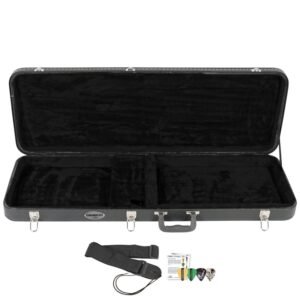
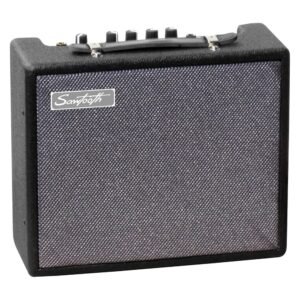
Related equipment sits under amps and accessories. Comparable items in that category include the Sawtooth 10 watt practice amp, the Fender Rumble LT25 bass amplifier and the Gator deluxe wood case.