Description
Review of the Sawtooth ST-AMP-10 10 Watt Electric Guitar Amp
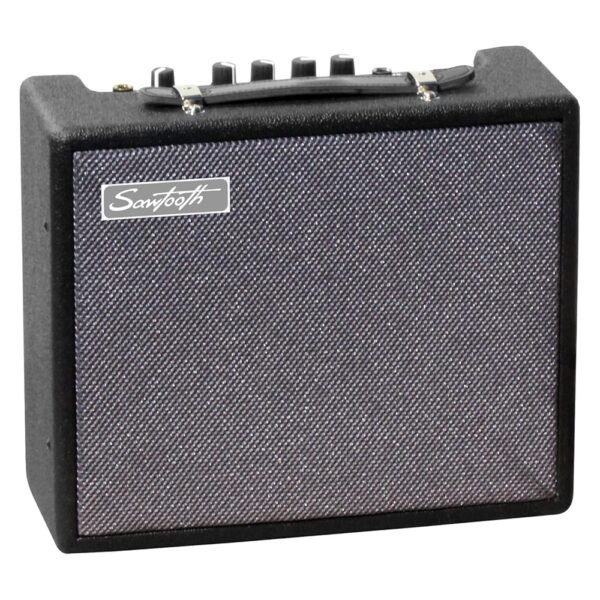
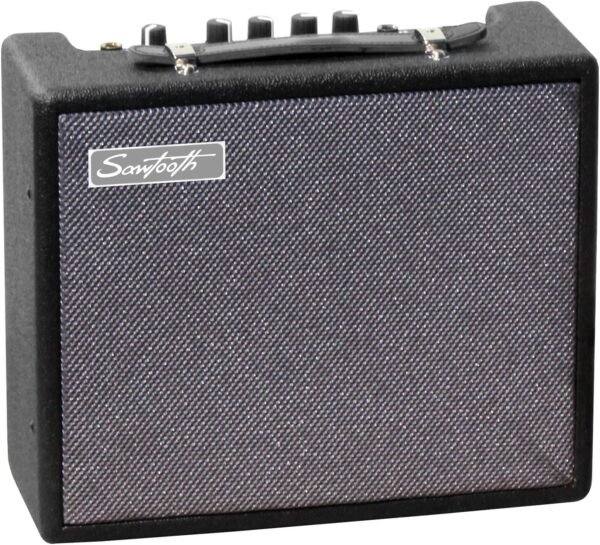
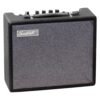
The Sawtooth ST-AMP-10 is a small mains-powered practice combo rated at 10 watts RMS into 4 ohms, driving a 6.5 inch speaker. It carries volume, gain and drive controls with a three band master EQ, plus a headphone output. It is built for bedroom and rehearsal-room practice rather than for playing over a drummer.
Pros & Cons
- Three band EQ is more than this size usually offers. Separate treble, middle and bass controls let a player cut the harshness out of a bright guitar or add body to a thin one. Many amps at this size give a single tone knob, which only rolls off treble.
- The headphone output makes silent practice possible. A 6.35mm stereo headphone jack means the speaker can be bypassed entirely, which matters in a flat, a shared house or late at night.
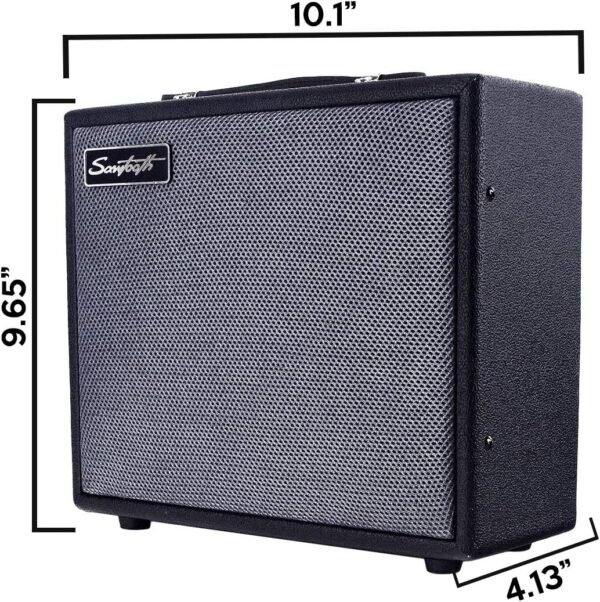
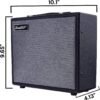
- Small and light enough to move. At 5.35 pounds and 10.5 by 5 by 11 inches, it can be carried in one hand to a lesson or a friend’s house without a case.
- Separate gain and volume give control over dirt. With gain setting how hard the preamp is pushed and volume setting how loud the result is, a player can get an overdriven sound at a low room level rather than only when turned up.
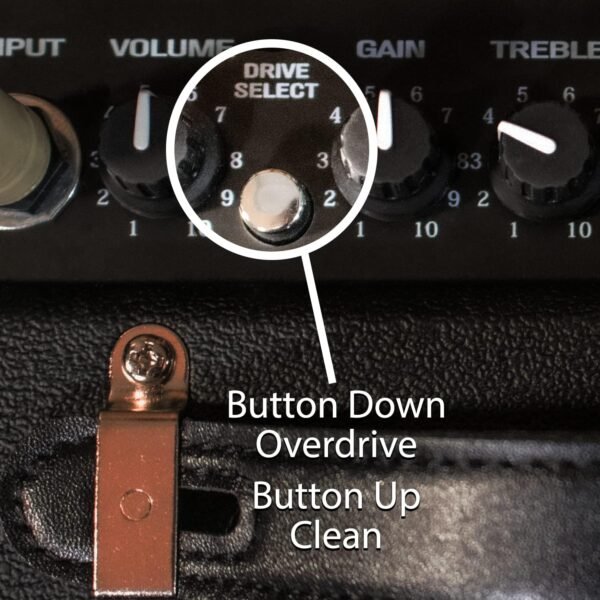
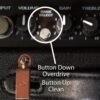
- The control description is inconsistent. The feature bullets on this page describe an overdrive switch, while the manufacturer specification lists volume, gain and drive as controls. A switch and a continuously variable knob behave differently, and the listing does not resolve which is fitted.
- Channel count is never stated. Nothing in the data says whether clean and driven sounds live on two switchable channels or on one gain stage. That decides whether a player can jump between a clean and a dirty sound mid-song or has to reach for a knob.
- 10 watts through a 6.5 inch speaker will not hold up against drums. That output is enough for a bedroom and marginal for a band rehearsal. A small speaker also limits low end, so the bottom strings will sound thinner than through a 10 or 12 inch driver.
- No built-in effects, tuner or aux input are listed. There is no mention of reverb, delay, a tuner or a jack for playing along with a phone, all of which appear on some competing practice amps. Power is also listed as 120VAC 60Hz, so it is a mains-only design.
Detailed Product Description
Output is quoted as 10 watts RMS into a 4 ohm load, which is a genuine RMS figure rather than a peak number. The speaker is a 6.5 inch driver. Speaker size sets much of the character of a small amp: a 6.5 inch cone moves less air than the 8, 10 or 12 inch speakers used in larger combos, so the result is tighter and more mid-focused, with less weight underneath the low E string.
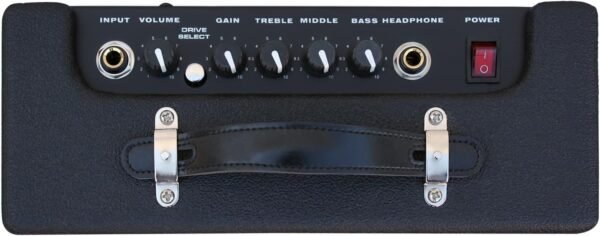
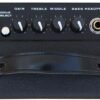
The control set is volume, gain and drive, with a master EQ of treble, middle and bass. Volume sets output level, gain sets how hard the input stage is driven, and the EQ shapes the result afterwards. In practice this is the layout that lets a player dial in a crunchy sound at conversational volume, which is the main thing a home practice amp needs to do. The amp wattage for home practice guide covers how little power a home setup actually needs.
Connections are a 6.35mm mono input jack for the guitar and a 6.35mm stereo jack for headphones. A 6.35mm jack is the standard quarter inch guitar connector, so a normal instrument cable fits, but headphones with a 3.5mm plug will need an adapter. There is no listed line output, effects loop, footswitch jack or auxiliary input. The cabinet is finished in black, weighs 5.35 pounds and measures 10.5 by 5 by 11 inches. The model number is ST-AMP-10 and country of origin is listed as China.
What Comes with the Product
The listing covers the amplifier itself. No instrument cable is mentioned, and a cable is required to connect a guitar, so that is the first thing to add. No headphones, footswitch, cover or carry bag are listed either. The amp is mains powered, so no batteries are needed. Anyone buying this alongside a bare electric guitar should count the cable as a necessary extra rather than an accessory.
Who It Suits
This suits a beginner or a returning player who needs a first amplifier for home practice, particularly one who wants real tone shaping rather than a single tone knob, and who values a headphone socket for quiet hours. It suits a second amp for a spare room too. Look elsewhere if the amp needs to keep up with a live drummer, if built-in effects or amp modelling are wanted, or if battery power for busking is the requirement. Browse the rest of the amps and accessories section for alternatives, and read quiet guitar practice options if noise is the constraint. For comparison, the Fender Rumble LT25 is the bass equivalent at a higher power rating, the RockJam electric guitar superkit bundles a 10 watt amp with a guitar, and the T-Rex Fuel Tank Chameleon covers powering pedals once effects enter the picture.
How to Maintain
Turn the volume down before powering on or off, since the thump a hot amp makes on switching can stress a small speaker. Keep the grille clear of dust and do not push objects through it, because a torn cone is not cheaply repaired at this size. Unplug the cable when it is not in use rather than leaving it hanging, as its weight pulls on the input jack and loosens the solder joint. Store it dry and avoid stacking heavy items on the cabinet.
Tips and Recommendations
Set the gain first and the volume second. Dial in the amount of dirt at a low volume, then bring the master up to what the room needs. Start with the EQ flat and cut rather than boost, since boosting everything simply raises noise. If the headphone jack becomes the main route, closed-back headphones will do more for the sound than any amp setting. Budget for a decent instrument cable, since a failing cable is the most common cause of crackle blamed on an amp.
Product FAQ
How loud is 10 watts? Enough for a bedroom or a small room. It is generally not enough to be heard clearly alongside an acoustic drum kit.
Can headphones be used with it? Yes. There is a 6.35mm stereo headphone jack. Headphones with a 3.5mm plug will need an adapter.
Does it come with a cable? No cable is listed. A quarter inch instrument cable is needed to connect a guitar.
Does it have built-in effects? None are listed. The published controls are volume, gain, drive and a treble, middle and bass EQ.