Description
Review of the Fender Rumble LT25 Bass Amplifier
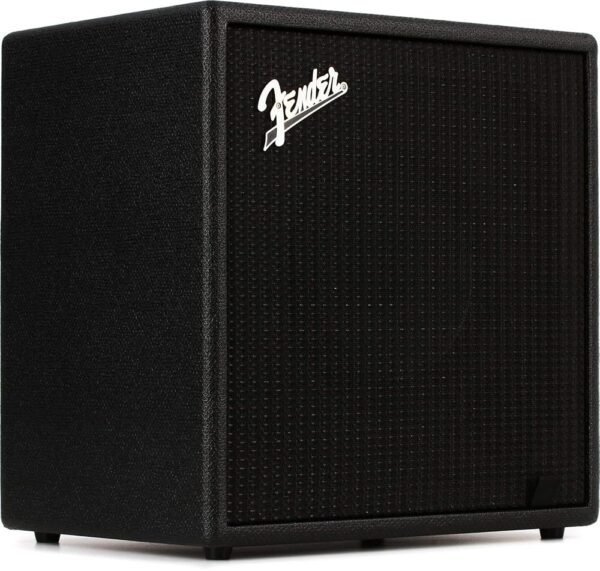
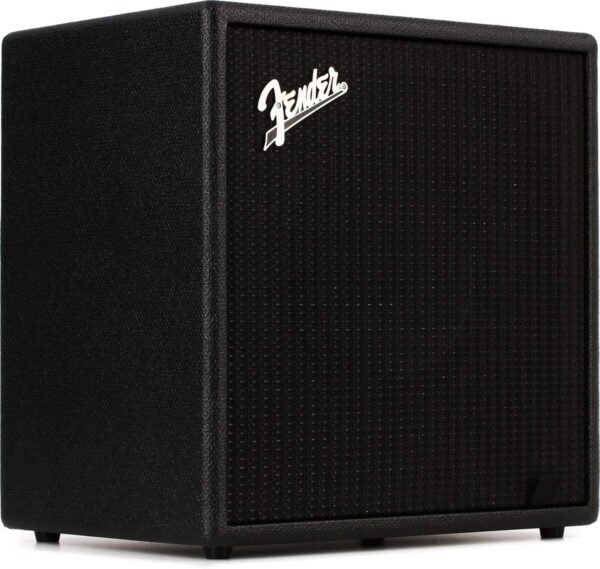
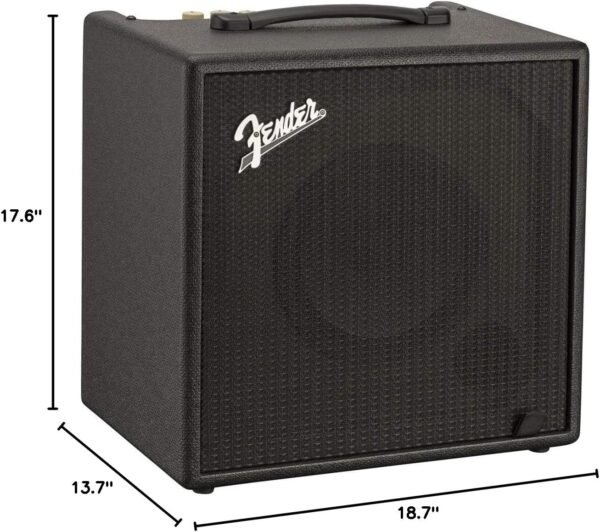
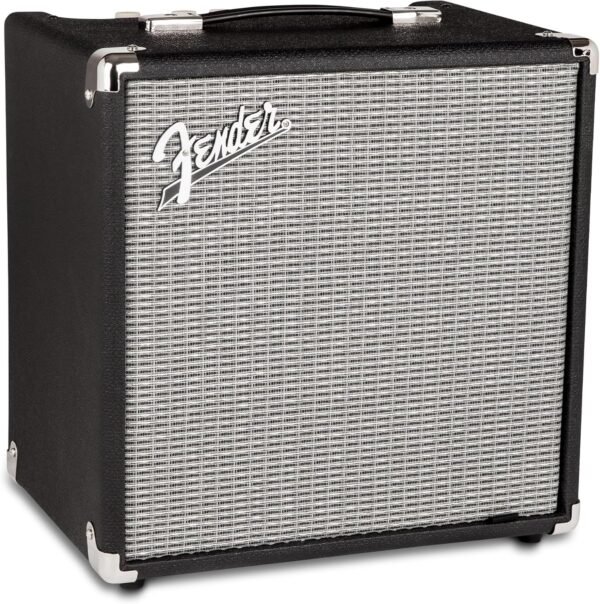
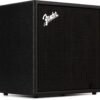
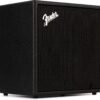
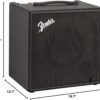
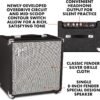
This is a 25 watt bass combo amplifier in black, built around a single 8 inch speaker in a ported wooden cabinet, with a colour display and a USB connection. It is aimed at bass players who practise at home and want a range of stored tones to work through rather than a single voice shaped by three knobs.
Pros & Cons
- A colour display makes preset navigation practical. Modelling amplifiers usually hide their settings behind blinking lights and button combinations. A screen shows what is loaded and what is being changed, which is the difference between preset banks being used and being ignored.
- 25 watts is the right power for a bass practice amp. Bass needs considerably more amplifier power than guitar to reach the same perceived volume, so a 25 watt bass amp sits roughly where a 10 watt guitar amp does in usefulness.
- A ported cabinet extends the low end. The port lets the rear of the speaker cone contribute to the bass output instead of cancelling it, which is how a small 8 inch box produces usable low frequencies at all.
- USB connectivity opens up computer recording. A direct digital connection avoids the need for a separate audio interface or a microphone, which matters for anyone recording bass at home.
- The specification lists a stainless steel body against a wooden cabinet. The description states a ported wooden cabinet and the material type field says wood, while the body material field says stainless steel. Those cannot both be right, and the description is the more credible source.
- The specification carries guitar fields that make no sense on an amplifier. String gauge is recorded as light, string material as bronze, bridge system as fixed and pickup configuration as combination. An amplifier has no strings, no bridge and no pickups. These are template fields left populated and they should be disregarded entirely.
- The preset count and amp models are never stated. The whole point of a screen-driven modelling amplifier is what is stored inside it, and the listing does not say how many presets there are, what amp voices are modelled or what effects are available.
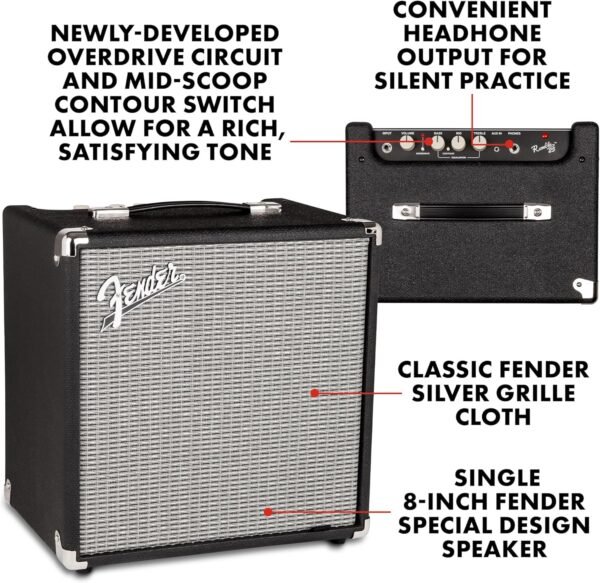
- Nothing is stated about a headphone output or an aux input. Both are standard on practice amplifiers and both matter for home use, but neither is confirmed by the published data.
- At 23.3 pounds it is not a light carry. Bass cabinets are heavy by nature, but this is a two-handed lift rather than something to sling over a shoulder.
Detailed Product Description
The amplifier is rated at 25 watts output driving a single 8 inch bass speaker. Speaker size matters more on bass than on guitar: an 8 inch driver moves less air than a 10 or 12 inch one, which limits how much low end can be produced at volume. In a bedroom that limit is rarely reached; in a rehearsal room with a drummer it would be.
The cabinet is ported wood. A port is a tuned opening that uses the pressure behind the speaker cone to reinforce a chosen band of low frequencies, which is why a small ported box sounds fuller than a sealed one of the same size. Wood is also stiffer and less resonant than moulded plastic at these frequencies, so the cabinet contributes less unwanted colouration.
The 1.8 inch colour display is the control interface. On amplifiers of this design the screen selects stored presets, amplifier voices and effects, and the quality of that interface largely decides whether the features get used. The listing does not describe what those voices or effects are.
The connector type is recorded as USB. On modern practice amplifiers a USB port typically serves two purposes: recording the amplifier’s output directly into a computer, and connecting to editing software to manage presets. Neither use is described in the listing. The amplifier is described as ambidextrous, which simply means nothing about its layout favours left or right-handed players. How much power is actually needed at home is covered in the amp wattage guide for home practice.
What Comes with the Product
The listing does not itemise anything beyond the amplifier itself. No instrument cable, footswitch, cover, power lead or documentation is described as included.
A mains-powered amplifier will normally ship with a power cable, but since the listing does not state it, that should not be assumed. An instrument cable is definitely needed and is not mentioned. Headphones would also be needed for silent practice, if a headphone socket is fitted, which the listing does not confirm.
Who It Suits
This suits a bass player practising at home who wants more than one sound available, a beginner who would benefit from stored tones to explore, or anyone recording bass into a computer who would rather not buy a separate interface.
It suits less well a player rehearsing with a drummer, where 25 watts through an 8 inch speaker will be buried, or someone who wants a simple amplifier with three knobs and no menus. A player who never records has no use for the USB connection. Other amplifiers and related gear sit in amps and accessories, and options for practising without disturbing anyone are covered in the quiet practice guide.
How to Maintain
Keep the amplifier off the floor if possible, or on a stand, since a cabinet sitting directly on carpet loses definition and one sitting on a hollow floor exaggerates the bass unpredictably.
Keep it away from damp and out of direct sun, and avoid stacking anything heavy on top of the cabinet. Coil the instrument cable loosely rather than wrapping it tightly around the handle, which breaks the internal conductor over time. Wipe dust off the speaker grille rather than vacuuming it. Turn the volume down before switching on or off, which protects the speaker from the thump that a powered-up circuit can produce.
Tips and Recommendations
Start from a flat setting and cut rather than boost. Small bass cabinets sound tighter with the low control pulled back in a small room, because room boundaries reinforce bass frequencies far more than most players expect.
Move the amplifier away from the corner of the room before assuming it lacks bass, or towards it before assuming it lacks power. Position changes the low end more than any control on the panel. Work through the stored presets systematically early on rather than settling on the first usable one. If recording over USB, set the level so the loudest notes stay clear of the top of the meter, since bass transients clip more easily than they sound like they will.
Warranty & Support Information
The listing states a two-year warranty. No further detail about coverage, exclusions or the claims process is given in the published data.
Product FAQ
Is the cabinet wood or steel? The description states a ported wooden cabinet and the material type field agrees. A separate body material field says stainless steel, which contradicts both and should be disregarded.
Why does the specification mention strings and a bridge? Those are template fields left populated from a guitar listing. An amplifier has no strings, bridge or pickups, and those entries carry no meaning here.
How many presets does it have? Not stated. The listing describes a colour display but never says how many presets, amp models or effects are stored.
What would this pair with? Basses reviewed alongside it include the Squier Mini Precision Bass and the Ibanez GSR200 bass. A smaller guitar amplifier for comparison is the Sawtooth 10 watt guitar amp.