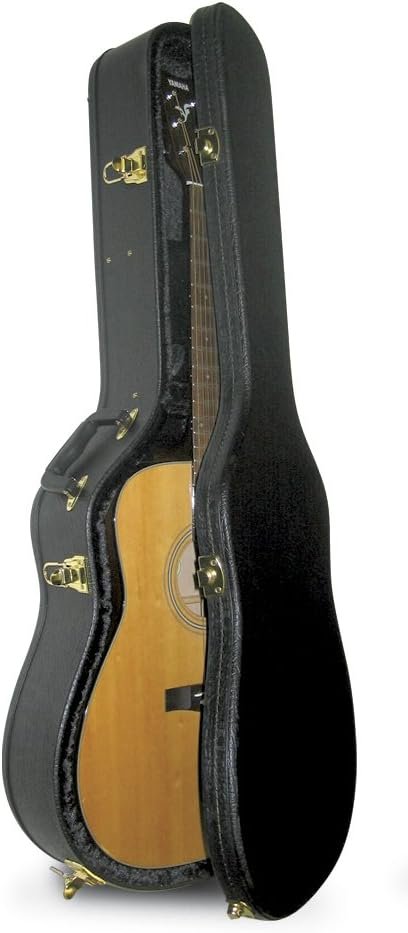

An acoustic guitar’s body shape decides two things: how loud and bass heavy it sounds, and how comfortable it is to hold. A dreadnought is the big, loud, bass forward standard. A concert or grand auditorium body is smaller, more balanced, and easier to sit with. Parlor and travel sizes trade volume for portability.
Shape matters more than most beginners expect. Two guitars built from identical woods will sound noticeably different if one has a dreadnought body and the other a concert body, and the smaller one will very likely be the one that actually gets picked up and played.
Key takeaways
- Bigger body means more volume and more low end. Smaller body means better balance and more comfort.
- Dreadnought is the default for strumming, folk, and country. It is also the least comfortable for smaller players.
- Concert and grand auditorium shapes sit between the extremes and handle fingerstyle and strumming equally well.
- Parlor and travel bodies are quiet by design, which makes them good for practice and for taking places.
- A cutaway improves access to the high frets and removes a small amount of the soundbox, with a minor effect on volume.
Dreadnought
The dreadnought is the shape most people picture when they hear the words acoustic guitar. It has broad shoulders, a deep body, and a large soundboard area, and it produces the loudest and most bass heavy sound of the common shapes.
That suits flatpicking, strummed rhythm, country, bluegrass, and anyone who needs to be heard alongside other instruments without amplification. The trade off is that the low end can swamp fingerstyle playing, and the body depth makes it awkward for shorter players and for anyone playing seated for long periods.
Concert and grand concert
A concert body has a narrower waist and a smaller lower bout than a dreadnought. It gives up some volume and low end in exchange for a more even balance across the frequency range and a much more comfortable hold.
This is often the smarter choice for a first acoustic. The midrange comes forward, individual notes stay distinct in a chord, and the smaller body suits fingerpicking and quieter singing accompaniment. It is also the shape most commonly recommended for players with smaller frames, which our guide to guitars for small hands covers in more detail.
Grand auditorium and orchestra models
Grand auditorium sits between concert and dreadnought. It has a lower bout close to dreadnought width but a tighter waist and a shallower body, which produces most of the volume with better balance and a more manageable hold.
Orchestra models, usually written as OM, follow similar thinking with a slightly wider string spacing that fingerstyle players tend to prefer. Both are good all rounder shapes, which is why they are so common among singer songwriters who need one guitar to do everything.
Parlor, travel, and 3/4 bodies
Parlor guitars are small bodied instruments with a compact, focused, midrange heavy voice. They are quiet compared with a dreadnought, which is a genuine advantage for practising in a flat or recording in a small room. Blues and old time players often prefer them for the dry, direct tone.
Travel guitars go further, shrinking the body and often the scale length to fit an overhead locker. Expect noticeably less volume and bass. That is the deliberate trade, and it is worth it if the alternative is not having a guitar with you at all. Three quarter size instruments follow the same logic for younger players, a subject covered in what size guitar for a child.
Jumbo, cutaways, and other variables
Jumbo bodies are larger again than a dreadnought, with a rounded lower bout and enormous projection. They are built for big strumming and stage presence, and they are the least practical shape for a small player.
A cutaway is the scooped section next to the neck joint that lets you reach the upper frets. It removes a small piece of the soundbox, so it costs a little volume and low end, though on most guitars the difference is subtle. If you play lead lines or chords high up the neck, take the cutaway.
Body depth is the variable people forget. Two guitars with the same outline can feel very different if one is a full depth body and the other is a thinline. Shallower bodies are easier to hold and quieter unplugged, which is why so many thinline models include electronics. Shape is also not the whole tonal story, since the top construction matters just as much. That is the subject of solid top versus laminate acoustic guitars.
Four guitars that show the differences
These four sit at different points on the size scale, and each is reviewed in full on this site.
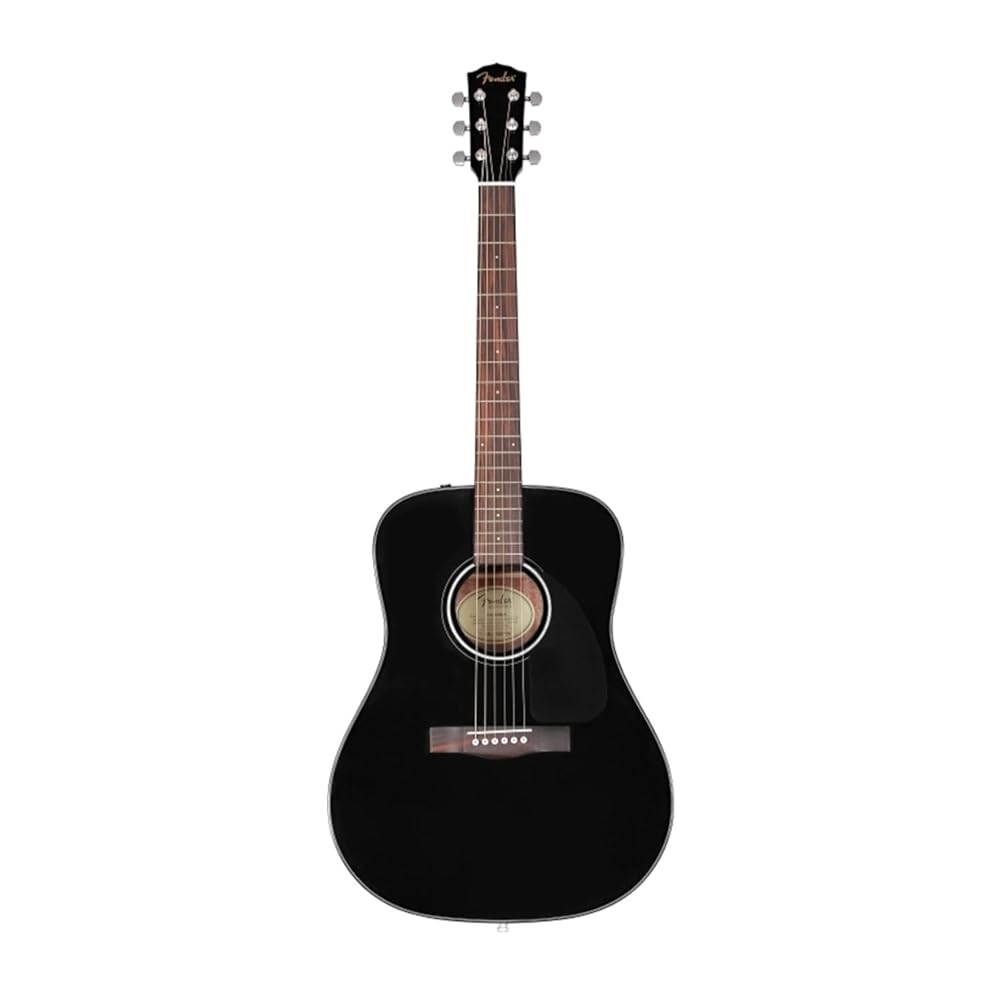
- Fender CD-60 dreadnought. A classic dreadnought with a solid spruce top and mahogany back and sides, delivering the bold, bass forward tone the shape is known for. The reference point if you want to hear what a dreadnought does.
- Fender CC-60S concert. A concert size body with a solid mahogany top and a walnut fingerboard with rolled edges. The obvious comparison against the CD-60, and the better pick if a dreadnought feels too big to hold comfortably.
- Washburn HG12S grand auditorium. A grand auditorium with a solid mahogany top, low action, and light gauge strings. Suits a player who wants dreadnought scale volume without dreadnought bulk.
- Martin Backpacker travel guitar. A radically compact travel instrument with a padded carrying case. Not a replacement for a full size acoustic, but a genuinely portable one for trips and holidays.
More shapes and sizes are covered across our acoustic guitars section and the full review library.
Common questions
Which body shape is best for a beginner?
Concert or grand auditorium suits most beginners, because both are comfortable to hold and balanced enough for strumming and fingerpicking alike. Choose a dreadnought if you already know you want a loud, bass heavy strummer and you are big enough to hold one easily.
Does body shape matter on an electric guitar?
Far less, because the sound comes from the pickups rather than the resonating body. Electric shape mainly affects weight, balance on a strap, and upper fret access. Semi hollow and hollow body electrics are the exception, since their chambers do influence the tone.
Is a smaller guitar always quieter?
Generally yes, since a smaller soundboard moves less air. The gap is smaller than people assume though, and a well built small body can outperform a poorly built large one. Body depth affects volume as much as the outline does.
Should I choose the shape or the wood first?
Shape first. If the guitar is uncomfortable to hold, you will play it less, and no combination of tonewoods fixes that. Once the size is right, look at whether the top is solid or laminate, since that has the larger effect on tone of the remaining choices.