
Squier is Fender’s own budget brand. Fender owns the name, draws the designs, and puts the same body shapes and the same model names on them, then has them built in lower cost factories using cheaper woods, hardware and electronics.
That is the honest one line answer. What matters when you are actually buying is where those savings show up in the instrument you end up holding, and whether any of it will hold your playing back. Here is what changes between the two names, tier by tier.
Key takeaways
- One company, one set of designs, two very different parts budgets and two different sets of factories.
- Most of the money goes into pickups, tuners, fretwork and final setup, not into the shape of the guitar.
- Squier has its own internal ladder, from Mini and Debut at the bottom to Classic Vibe at the top.
- A Squier that has been set up properly will play better than a Fender that has been left alone.
- The Fender logo mainly buys consistency and resale value, not a different kind of tone.
One company, two price tiers
Fender picked up the Squier name in 1965 from a string making business, then relaunched it in 1982 as its affordable guitar line. The point was to sell Stratocasters and Telecasters at a lower price without putting the Fender logo on the headstock. Every Squier is a Fender design. The Stratocaster outline, the Telecaster outline, the Precision Bass and the Jazz Bass are the same shapes with the same scale lengths and the same control layouts.
Fender branded guitars come out of Fender’s own plants in the United States and Mexico. Squier instruments are built by contract factories overseas. That single difference accounts for most of the price gap: labour costs, how materials are sourced, and how much time each instrument gets on the bench before it ships.
Where the money actually goes
Pickups. This is the biggest audible difference. Entry level Squier pickups are wound to a price and tend to sound flatter and noisier. Move up the Squier ladder and you start getting Fender designed alnico pickups, which is why the Classic Vibe line sounds closer to a Fender than its position in the range suggests.
Tuners. Cheap tuning machines have more play in the gears and slip more readily under bends. This is the single most common complaint about budget guitars, and it is also the cheapest thing to fix later.
Fretwork. Levelling and dressing frets is slow, skilled handwork. Higher tiers get more of it, which means fewer buzzing notes and smoother fret ends along the edge of the neck. This is the thing most players notice within the first minute even if they cannot name it.
Wood. Budget Squiers usually use poplar or basswood, while Fender’s own lines lean on alder and ash. The tonal effect is smaller than internet arguments suggest, but weight and finish quality differ.
Setup time. A guitar leaving a Fender plant gets more attention to action, intonation and nut slots. A budget Squier may arrive playable or may arrive needing an hour of adjustment, and that variance is the real cost of buying at the bottom. Our guide to guitar action and setup covers what that hour involves.
The Squier ladder, bottom to top
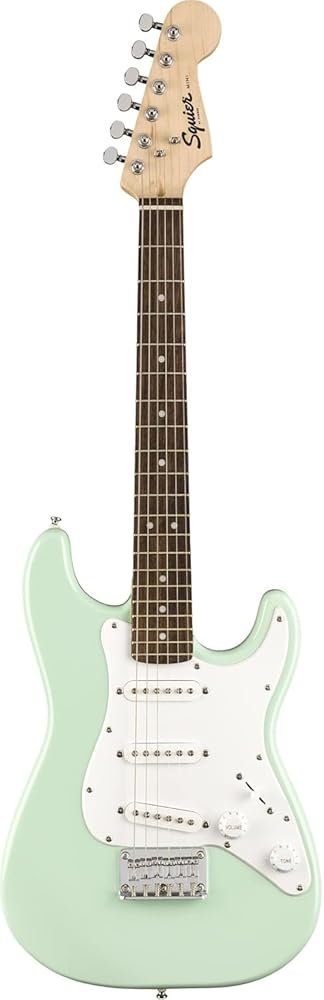
Mini. Short scale versions of the Stratocaster and Precision Bass, built for children and for adults with small hands. Real Fender geometry, shrunk.
Debut. The current entry point. Thin, light bodies and simplified hardware, aimed at somebody buying a first electric.
Sonic. The line that replaced the long running Bullet series. Slightly better appointments than Debut, still a starter guitar.
Affinity. The middle of the range, and the point at which a Squier stops feeling like a compromise for most players.
Classic Vibe. The top of the range, built around vintage era specifications and Fender designed alnico pickups. Plenty of working players use these without apology.
What the Fender logo actually buys
Consistency is the honest headline. Two Fender Player Stratocasters off the same line will feel much closer to each other than two guitars from the bottom of the Squier range. If you cannot try before you buy, that predictability is worth something real.
Resale is the second thing. A Fender holds value considerably better than a Squier, and the gap widens the further down the Squier ladder you go. If there is any chance you will move the guitar on within a couple of years, that matters more than the spec sheet.
What the logo does not buy is a different instrument. A Squier Stratocaster and a Fender Stratocaster have the same 25.5 inch scale, the same pickup positions and the same bridge geometry. Everything you learn on one transfers directly to the other.
Which one you should buy
Buy Squier if this is your first electric, if you are not yet sure the instrument will stick, or if you would rather spend the difference on an amp and lessons. Nothing about a mid tier Squier will stop you learning every technique you will need for years.
Buy Fender if you already play, if you know which neck profile and pickup layout you want, or if you are buying without the chance to inspect the guitar first. The premium is really a premium on knowing what will arrive. If you are still weighing the total outlay, our note on how much to spend on a first guitar puts numbers around it.
Guitars from the review library worth a look
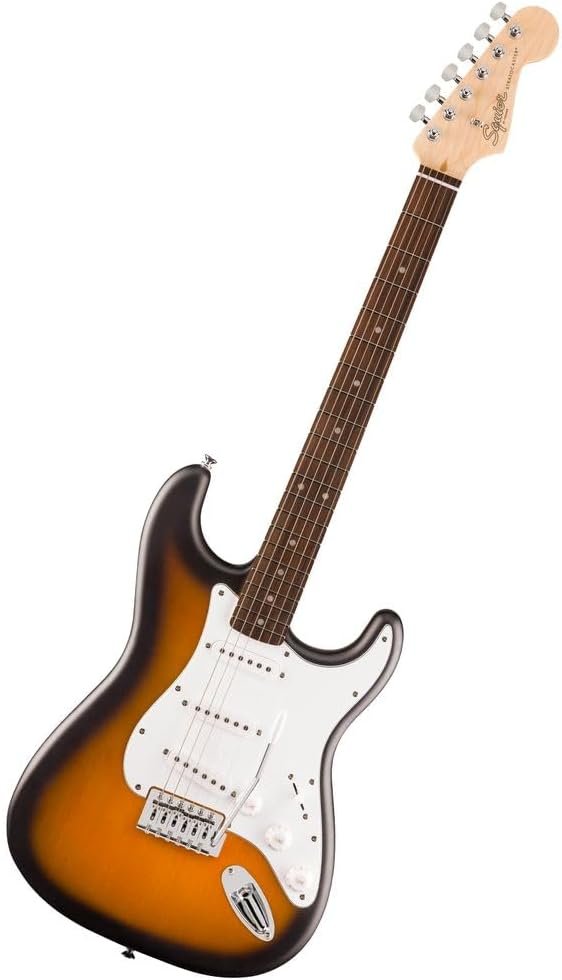
Squier Debut Series Stratocaster. The lowest rung, with a comfortable C shaped neck, a thin body and three single coils with five way switching. Suited to a first electric where the priority is getting playing rather than getting the last word in tone.
Squier Sonic Stratocaster. A step up, with sealed gear tuners that hold pitch more reliably and a six saddle tremolo bridge. A sensible pick if you want the classic Strat setup and expect to keep the guitar past the first year.
Squier Classic Vibe ’50s Stratocaster. The top of the Squier range, with Fender designed alnico single coils and a vintage tint gloss neck. The review notes the tuners feel less secure than some rivals and that a setup clears up buzz on the high E, which is typical of the tier.
Fender Player Stratocaster HSS. Where the Fender name starts for most buyers, with an alder body, a modern C neck and a humbucker in the bridge for heavier tones. For a player who already knows what they want and intends to keep it.
More options sit in the electric guitars section, and the same brand logic plays out elsewhere in the market, which is covered in Epiphone vs Gibson and budget guitar brands.
Common questions
Is a Squier good enough to learn on?
Yes. The scale length, string spacing and control layout match a Fender, so every chord shape and technique transfers directly. The limitation is not what you can learn, it is how much variation you might get between one unit and the next.
Can you upgrade a Squier into a Fender?
You can swap pickups, tuners and the bridge, and those parts fit because the routing and spacing follow Fender standards. What you cannot easily change is the wood and the fretwork. Upgrading a mid tier Squier usually makes sense; upgrading the cheapest one rarely does, because the parts cost approaches the price of a better guitar.
Which Squier tier is the value sweet spot?
Affinity and Classic Vibe. Affinity is where the finish work and hardware stop feeling like an entry level compromise. Classic Vibe adds Fender designed pickups and vintage specifications, and it is the tier most often kept long term rather than traded up.
Does the Squier name hurt resale?
It does, and the effect is strongest at the bottom of the range. Entry level Squiers lose a large share of their value quickly. Classic Vibe models hold on better because there is steady second hand demand for them. If resale matters, that is an argument for buying one tier higher than you first planned.