
String gauge is the thickness of a string, measured in thousandths of an inch, and a set is named after its thinnest string. A set labelled 9s has a high E string measuring 0.009 inches. Beginners on electric guitar should start with 9s, and beginners on steel string acoustic should start with lights, which are 12s.
Thinner strings are easier to press down and easier to bend, so they hurt less while your fingertips toughen up. Thicker strings are louder, fuller and more stable, but they need more finger strength. Almost every gauge decision is a trade between comfort and tone, and there is no single correct answer for everyone.
Key takeaways
- Electric beginners: 9 to 42, usually called 9s or extra light.
- Acoustic beginners: 12 to 53, called light. Drop to 11s if fingertips are struggling.
- Thicker strings mean more volume and sustain, more finger effort and more tension on the neck.
- Nylon strings are sold by tension, not by gauge. Normal tension is the safe default.
- A big gauge change usually needs a setup afterwards, since neck relief and action shift.
How gauge numbers actually work
A packet marked 10 to 46 tells you the high E is 0.010 inches and the low E is 0.046 inches. The four strings in between follow a fixed progression the manufacturer chooses. Because everyone quotes the first number, players talk in shorthand: 9s, 10s, 11s, 12s and 13s.
The common electric sets run like this. Extra light is 8 to 38, very slinky but flabby. Super light is 9 to 42, the standard beginner choice. Light is 10 to 46, the most common set overall. Medium is 11 to 49, favoured for lower tunings and heavier styles.
Acoustic sets sit thicker across the board because an acoustic guitar has no pickups and needs string energy to drive the top. Extra light is 10 to 47, custom light is 11 to 52, light is 12 to 53, and medium is 13 to 56. Light 12s are the factory standard on most steel string acoustics.
What changing gauge really does
Playability. Thicker strings need more downward force to fret cleanly and far more sideways force to bend. For a beginner still building calluses, jumping two gauges up can turn practice into a chore. Going down a gauge is one of the fastest fixes for a guitar that feels hard to play.
Tone and volume. More mass means more energy moving the top or the pickups, so heavier strings give a fuller low end, more sustain and more volume. Lighter strings sound brighter and thinner, and they respond faster to a light touch. On acoustic guitar this difference is large. On a heavily distorted electric tone it is much smaller than people claim.
Tension on the neck. A full acoustic set at light gauge pulls roughly 160 to 180 pounds of total tension. Move up to mediums and that climbs meaningfully. The neck responds by bowing forward slightly, which raises the action and can buzz or choke bends if the truss rod is not adjusted to match.
Tuning stability in altered tunings. Detuning slackens strings, so in drop D or a half step down, light strings can feel loose and rattle. Players who live in lower tunings move up a gauge to restore tension, which is why 11s and 12s are common on drop tuned electrics.
Picking a gauge for your situation
- Absolute beginner, electric: 9s. Easiest on untoughened fingertips, and forgiving of imprecise fretting pressure.
- Absolute beginner, acoustic: 11s or 12s. Many beginners find factory 12s hard for the first month and are better served by 11s until calluses form.
- Child or small hands: the lightest gauge that stays in tune, on a short scale instrument. Scale length matters as much as gauge here.
- Blues and rock lead: 9s or 10s. Bending a full tone on the 3rd string is comfortable on 9s and hard work on 11s.
- Heavy strumming or flatpicking acoustic: 12s or 13s if the instrument is rated for them. Check the maker’s guidance before fitting mediums to a small bodied guitar.
- Fingerstyle acoustic: lights or custom lights. Less tension suits the lighter attack of bare fingers and nails.
Scale length changes how a gauge feels
Two guitars with identical strings can feel completely different because of scale length, which is the vibrating distance from nut to saddle. A 25.5 inch Fender style scale holds more tension at pitch than a 24.75 inch Gibson style scale, so 10s on the shorter scale feel slacker.
Short scale instruments take this further. On a guitar with a scale under 23 inches the same gauge feels considerably looser, which is part of why short scale guitars are recommended for younger players and for anyone with smaller hands. Bass follows the same logic, which is covered in short scale versus full scale bass.
Nylon string guitars work on a different system entirely. There is no gauge number on the packet. Sets are sold as low, normal or hard tension, and normal tension is the right starting point for almost everyone. Never fit steel strings to a classical guitar, since it is not braced for the load and the top can be damaged.
Guitars that suit a light gauge start
Four instruments from the review library that pair well with the advice above.
- Yamaha C40II Classical sidesteps the gauge question altogether. Nylon strings under normal tension are the gentlest option on new fingertips, and the full size body still gives an authentic feel.
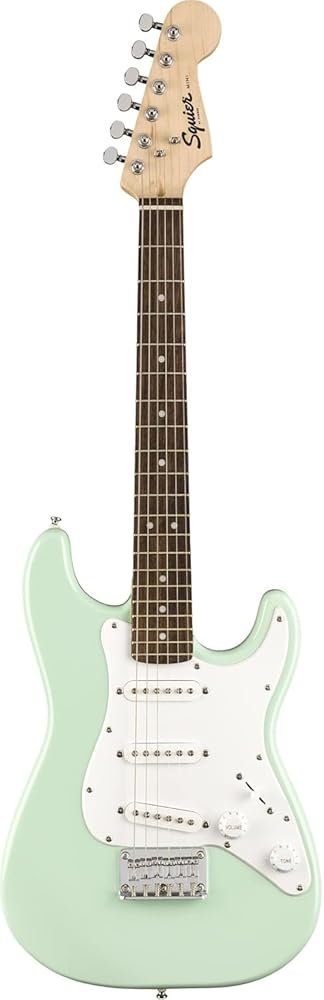
- Fender Squier Debut Series Stratocaster has a thin lightweight body and a comfortable C shaped neck, which is a good match for 9s while a beginner builds strength. It also includes a Fender Play subscription.
- Ibanez RG MiKro runs a 22.2 inch scale, so strings feel slacker at pitch than on a full scale electric. Worth a look for smaller hands and for anyone who finds bends hard work.
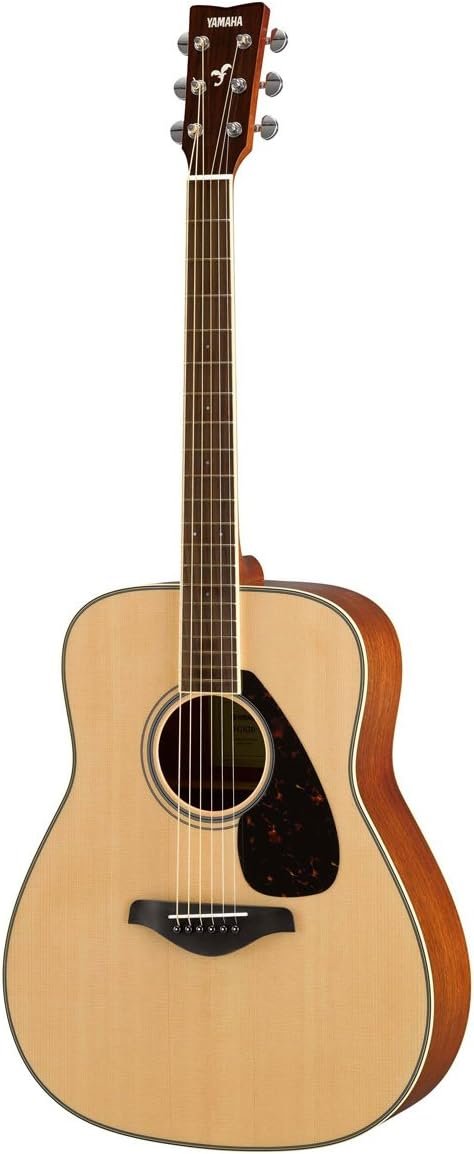
- Yamaha FG820 is a solid spruce top dreadnought with mahogany back and sides and a matte neck finish. A sensible full size acoustic for a player ready to commit to steel strings at light gauge.
More options sit in the electric guitar reviews and the acoustic guitar reviews. If hand size is the driving concern, see guitars for small hands.
FAQ
Do lighter strings sound worse?
They sound different, not worse. Lighter strings are brighter and thinner with less low end, which suits some styles perfectly well. A guitar you actually enjoy playing produces better music than a guitar with theoretically superior tone that hurts to fret.
Can I put electric strings on an acoustic guitar?
Physically yes, musically no. Electric strings are nickel or steel wound and are designed to be read by magnetic pickups, so on an acoustic they sound quiet and thin. Acoustic guitars need bronze wound strings to drive the soundboard properly.
Will changing gauge damage my guitar?
A one step change is generally safe on a healthy instrument. A large jump, such as light to medium on an acoustic, raises tension enough that the neck relief and action will move and may need a truss rod adjustment. Fitting steel strings to a nylon string guitar can genuinely cause damage and should never be done.
What gauge do most guitars ship with?
Steel string acoustics usually leave the factory with light 12s. Electrics vary by brand, with 9s common on Fender style instruments and 10s on Gibson style ones. Checking the stated factory gauge is worthwhile, because the setup is usually done to match it.