
With twenty to thirty minutes on most days, you can play recognisable songs within one to three months, hold your own alongside other people at six to twelve months, and start sounding genuinely good somewhere in years two to three. Those are the realistic markers for an adult starting from nothing.
The reason the question is hard to answer is that learning guitar has no finish line. There is a point where it stops being frustrating, a point where it becomes useful socially, and a point where it sounds musical, and they arrive months apart. Here is what each of those stages actually looks like.
Key takeaways
- First simple song: two to six weeks. First song that sounds good: two to three months.
- Frequency beats session length. Twenty minutes daily outruns two hours once a week by a wide margin.
- Fingertip soreness lasts roughly two to four weeks and then stops being an issue for good.
- Barre chords are the usual wall, and they typically arrive somewhere between months three and six.
- A guitar that is hard to fret adds months to every one of these numbers.
The honest timeline
Weeks one to four. You learn to tune the guitar, hold a pick, and press a few chord shapes. Your fingertips hurt and your chord changes are slow enough that songs fall apart. Almost everyone who quits, quits here, and almost nothing about this stage predicts how good you will eventually be.
Months one to three. The open chords start to land. E minor, A minor, C, D, G and E become shapes your hand finds without a diagram. You can strum through a simple song end to end. It will not sound polished, but it will be recognisable to somebody in the next room.
Months three to six. Changes get clean and your strumming hand starts keeping time on its own. Barre chords appear and initially refuse to sound. This is the second common quitting point and the one worth pushing through, because the technique unlocks most of the popular song repertoire.
Months six to twelve. You can learn a new song from a chord chart without much help, play through it without stopping, and keep up with other people. This is the stage where guitar becomes genuinely enjoyable rather than a project.
Years two to three. Your playing starts to have a character rather than just accuracy. Dynamics, timing feel and tone choices become deliberate. Most people who describe themselves as being able to play the guitar are somewhere in this band.
What actually controls the pace
How often, not how long. Motor skills consolidate between sessions rather than during them. Six short sessions across a week produce far more progress than one long one, because you get six opportunities for that consolidation instead of one.
Whether you have a plan. Twenty structured minutes beats an hour of noodling through half remembered riffs. A simple, repeatable structure is laid out in our beginner practice routine.
Whether songs are involved. Practising chords in isolation is dull, and dull practice gets skipped. Learning real songs is slower per exercise but far faster overall, because you keep coming back.
Whether anyone corrects you. A teacher, even occasionally, catches the small habits that quietly cap your ceiling. Thumb position, wrist angle and how you anchor the picking hand are all easier to fix at month two than at year two.
The parts that take the longest
Barre chords. The physical difficulty is real but temporary. What takes time is the hand strength combined with the precise placement, and it usually needs several weeks of short daily attempts rather than one determined session.
Rhythm. The most underrated skill and the one that separates players who sound like beginners from players who do not. It develops through playing along with recordings and a metronome rather than through chord practice.
Chord transitions. Knowing a chord and finding it in time are different skills. The fix is to practise the change itself, not the chord, moving between two shapes repeatedly for a fixed period.
Playing without looking. This arrives slowly and mostly by itself, once your hand has built a map of the neck. There is no shortcut worth chasing.
Why the guitar itself changes the numbers
Every stage above assumes an instrument that fights you as little as possible. If the action is high, fretting takes more force, your hand tires sooner and your sessions get shorter. If the guitar will not hold tuning, everything you play sounds wrong and you cannot tell whether the problem is you.
This is why a setup matters more for a beginner than for an experienced player. An experienced player compensates without noticing. A beginner just concludes they have no talent. Read action and setup explained, and learn how to tune a guitar properly in the first week rather than the first month.
Size matters too. A guitar that is physically too large forces your fretting arm into an awkward angle, and that alone can make the first months harder than they need to be.
Guitars that take friction out of the first year
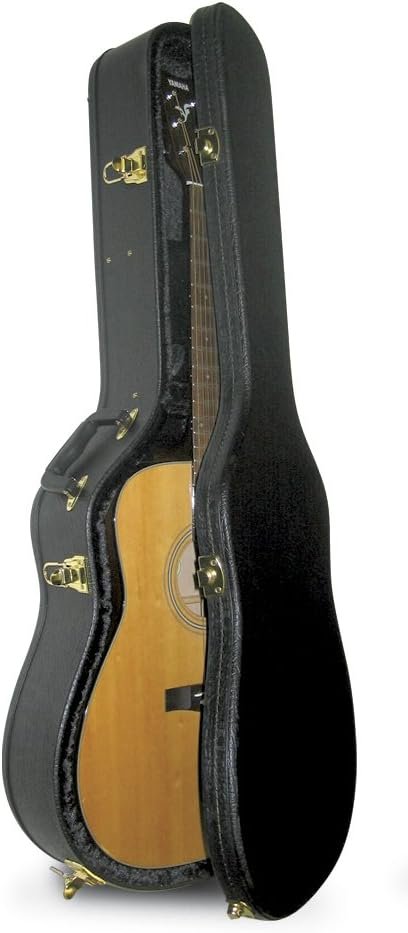
Yamaha FG800J. A solid spruce top dreadnought with scalloped bracing and a fixed bridge that holds tuning well. A dependable one guitar answer for an adult beginner who wants to strum songs and not think about the instrument.
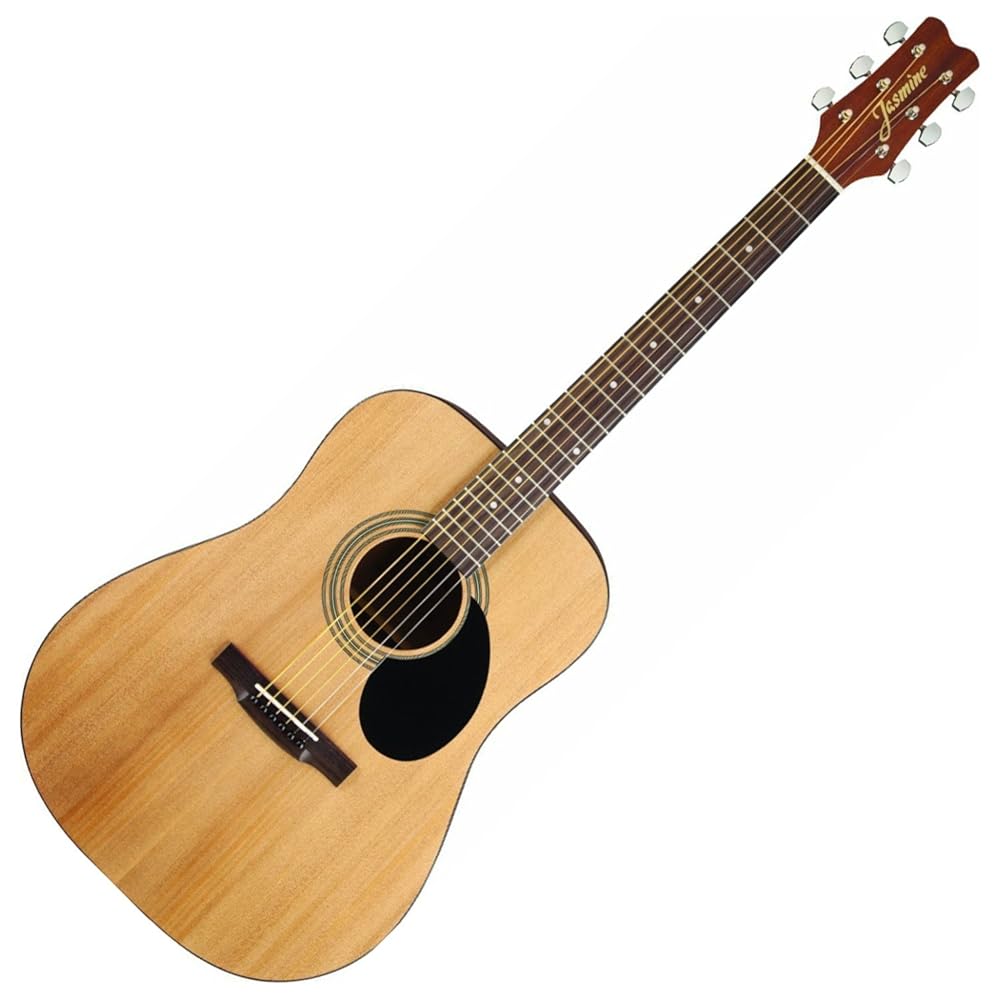
Jasmine S35. A slim neck and a comfortable scale length, and the review notes it needs little adjustment out of the box. Worth a look if your budget is tight or if you have smaller hands.
Yamaha C40II. Full size nylon string classical. Lower string tension means less pain in weeks one to four, which is precisely the period when most people give up. Suited to fingerstyle and classical study, less so to strumming pop songs.
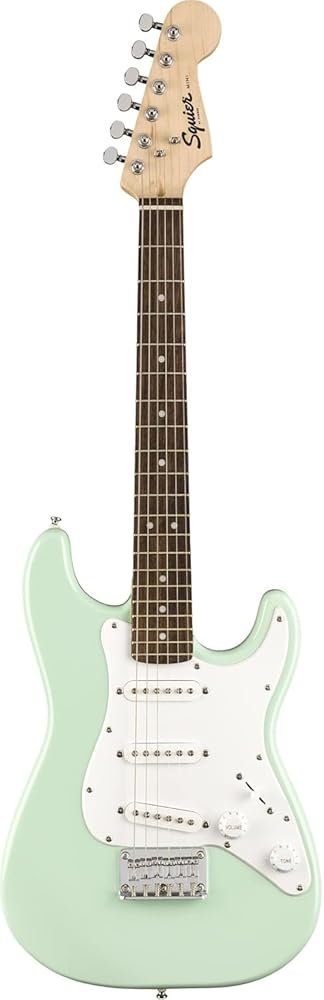
Squier Debut Series Stratocaster. If you want an electric, this one has a thin light body and a comfortable C shaped neck. Electric strings are lighter than acoustic strings, so chords take less finger pressure, which is a genuine advantage early on.
If you are still deciding between the two families, read acoustic versus electric for beginners, then browse the acoustic guitars section.
Common questions
How long until my fingers stop hurting?
Around two to four weeks of regular playing. Calluses build from frequency rather than intensity, so short daily sessions get you there faster than occasional long ones. Nylon strings shorten the process because they need less pressure.
Is guitar harder to learn as an adult?
Not physically. Adults usually progress faster in the early months because they can follow structure and diagnose their own mistakes. The real difference is time. A child with a weekly lesson and daily practice simply logs more hours over a year.
How much should I practise each day?
Twenty minutes is a good target and thirty is better. Beyond about forty five minutes, concentration drops and the extra time returns much less. Consistency across the week is what moves the numbers in this article.
Can I learn without a teacher?
Yes, and many people do. The risk is developing habits that cap your progress later, such as a collapsed fretting wrist or a locked picking hand. A handful of lessons spread across the first year catches most of that at a fraction of the cost of weekly tuition.