
For practising guitar at home, 5 to 20 watts is plenty. Anything above about 30 watts is bought for band rehearsals and small stages, not for a bedroom, and most of it will never be used.
Wattage is the single most misunderstood number in guitar gear. It is a rating of electrical power, not a measurement of loudness, and the relationship between the two is far less direct than the numbers suggest. A 100 watt amp is nowhere near ten times louder than a 10 watt amp. Understanding why saves beginners from buying something too loud to ever turn up.
Key takeaways
- 5 to 20 watts covers home practice for electric guitar. 10 watts is the most common starter rating and it is genuinely loud in a small room.
- Doubling the wattage adds roughly 3 decibels, which is a small perceived change. Ten times the power is nothing like ten times the volume.
- Tube amps sound louder than solid state amps at the same rating, so a 15 watt tube amp is already too much for most flats.
- Bass needs roughly three to four times the power of guitar for the same perceived level. Plan on 25 watts or more for home bass practice.
- A headphone output matters more than watts if you share walls with anyone.
Why watts and loudness are not the same thing
Human hearing responds to sound pressure on a logarithmic scale. Doubling amplifier power raises the output by about 3 decibels, and 3 decibels is a change most listeners describe as slightly louder rather than twice as loud. Getting something that genuinely sounds twice as loud takes roughly ten times the power.
Speaker size and efficiency matter at least as much. A 10 watt amp driving an efficient 10 inch speaker in a well made cabinet can easily out project a 20 watt amp with a small, poorly ported 6 inch driver. When two amps share the same wattage but sound different, the speaker and cabinet are usually the reason.
This is also why the wattage printed on the back panel tells you very little on its own. It is a useful rough category, nothing more.
Sensible wattage ranges by situation
- 1 to 5 watts. Micro amps and battery powered practice units. Fine for a bedroom, quiet enough not to worry the household, usually thin sounding at low volume.
- 10 to 20 watts. The standard home practice range. Loud enough to be uncomfortable at full volume indoors, which is exactly where you want the headroom to sit.
- 30 to 50 watts. Rehearsal territory. This is what it takes to sit alongside an unamplified drum kit without disappearing.
- 60 watts and up. Small stages and outdoor use, and in practice most modern venues mic a smaller amp instead.
A beginner buying a first electric almost always lands in the second band, and the amps bundled with starter packs are built for it. If you are still working out whether the electric route is right for you, acoustic vs electric guitar for beginners is the better place to start.
Tube, solid state and modelling
Tube amps produce their characteristic warmth and compression when the power section is worked hard, which means they need volume to sound their best. A 5 watt tube amp turned up is already loud enough to annoy neighbours, and a 15 watt tube amp at home mostly sits on a setting where it is not doing what it was built to do.
Solid state amps deliver the same character across the volume range, so a 10 watt solid state amp at low volume still sounds like itself. Modelling amps go further by simulating a range of amp voices digitally, which is why they dominate the practice market. For a first amp, solid state or modelling is the sensible default.
If you already own a tube amp that is too loud, an attenuator or a built in power soak reduces the output while keeping the tone. That is a solution to a problem beginners rarely have.
Bass is a different calculation
Low frequencies take much more power to reproduce at the same perceived loudness, so bass amps are rated far higher than guitar amps for the same job. A 10 watt bass amp is a practice toy. Home practice generally starts around 25 watts, rehearsal with a drummer starts around 100 watts, and gigging bass amps commonly run 300 watts or more.
The 5 watt amps bundled with beginner bass kits are enough to hear yourself in a quiet room and nothing more. If the bass is going to be a serious instrument rather than an experiment, budget for a dedicated practice amp early. Players choosing an instrument first should look at short scale vs full scale bass.
Features that matter more than the wattage number
A headphone output turns any amp into a silent practice rig, which is the difference between practising at 11pm and not practising at all. An aux or Bluetooth input lets you play along with backing tracks through the same speaker, which is the fastest way to build timing. A clean and overdrive channel or a gain control gives you two usable sounds instead of one.
Onboard effects and presets are pleasant but not essential. A simple three band tone stack of bass, mid and treble will get you further than fifty presets you never learn to edit. If quiet practice is your main constraint, quiet guitar practice options covers headphone amps and silent guitars in more depth.
Practice amps and packs worth looking at
These entries from the review library sit in the range that suits a home setup.
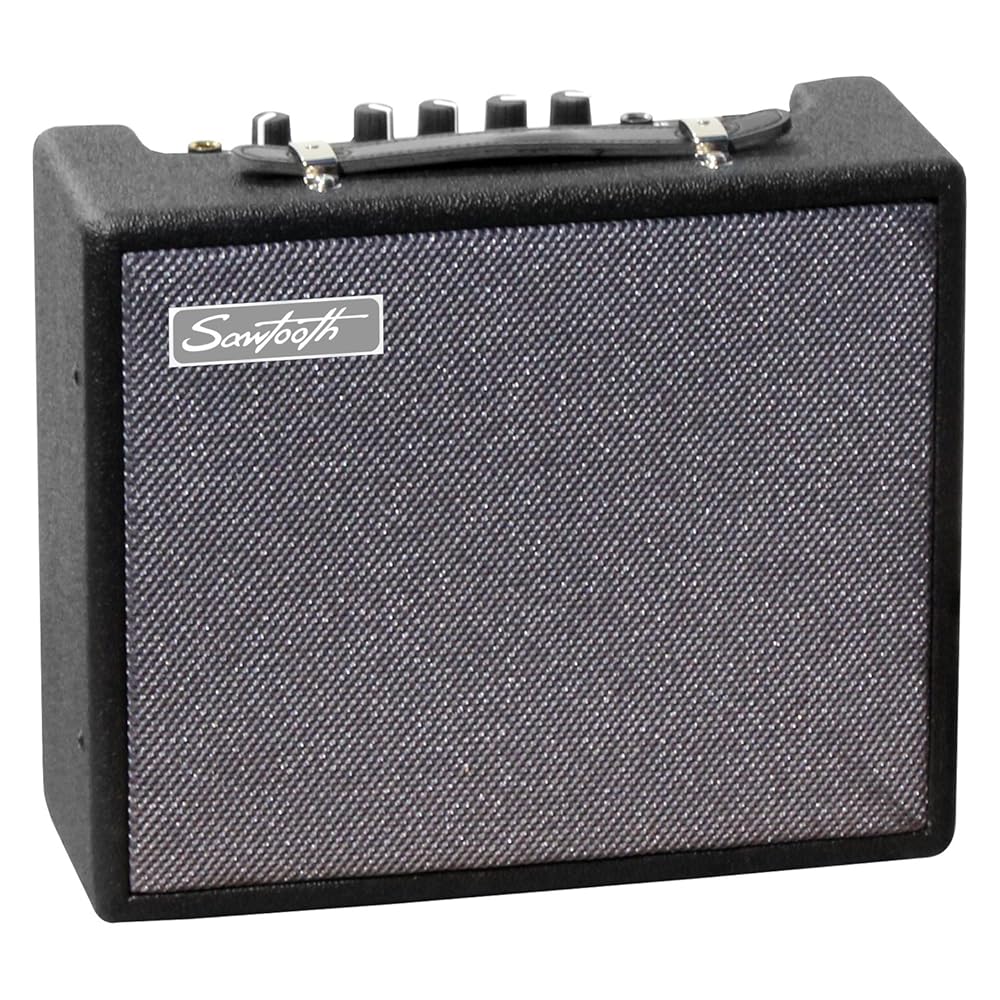
- Sawtooth 10 watt guitar amp. A compact practice amp with volume, treble, mid and bass controls plus an overdrive switch for clean and dirty tones. Suits a player who already owns an electric and needs a first amp without extras.
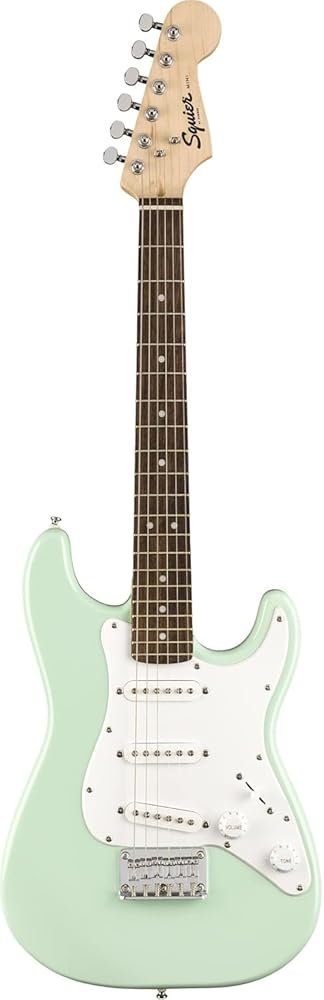
- Squier Stratocaster electric guitar pack. Bundles a Frontman 10G amp with an aux input and a headphone jack alongside the guitar and a gig bag. The sensible route for a complete beginner in a shared home.
- RockJam Electric Guitar Superkit. Includes a 10 watt amp with tone and gain controls and a headphone output, plus a padded gig bag. A good fit if you want the amp, the guitar and the accessories to arrive together.
- Fender Rumble LT25 bass amplifier. A 25 watt bass practice amp with a bank of presets and a simple interface. This is the right size for a bassist practising at home rather than rehearsing with a band.
You can see the full range of instruments these pair with in the electric guitars section.
Frequently asked questions
Is a 10 watt amp loud enough for a beginner?
Yes, comfortably. A 10 watt solid state guitar amp at half volume is loud in a bedroom and uncomfortable at full volume indoors. The only situation where it falls short is playing alongside a live drummer.
Will a bigger amp sound better at low volume?
Not usually. Larger amps often have larger speakers and more headroom, which can help clean tones, but a big tube amp specifically sounds worse at whisper level because its power section never engages. A small solid state or modelling amp is designed to sound right quietly.
Can I use a guitar amp for a bass guitar?
At low volume for short periods, yes, but it is not a good idea. Guitar speakers are not built to handle low frequency excursion and pushing bass through one at volume risks damaging the speaker. A dedicated bass amp or headphones is the safer route.
Do I need an amp for an acoustic electric guitar?
Not for practice. The pickup in an acoustic electric only matters when you need to be heard over other instruments or through a PA. There is a fuller answer in do you need an amp with an acoustic electric guitar.