
Epiphone is Gibson’s own lower priced brand. Gibson bought the company in 1957, and today Epiphone builds Gibson designs, including the Les Paul and the SG, in overseas factories using different woods, hardware and electronics from the instruments that carry the Gibson logo.
So the two names are not competitors. They are two rungs of one ladder. What changes as you climb is construction, component quality, how much handwork each instrument gets, and how well the guitar holds its value. Here is what each level actually gives you.
Key takeaways
- Gibson owns Epiphone, so the model names, body outlines and scale lengths are shared by design.
- The real differences are neck joint, body construction, pickups, hardware and the amount of hand finishing.
- Epiphone itself has tiers, from bolt on neck E1 models up to the Inspired by Gibson collection.
- Guitar Harbor’s review library covers Epiphone in depth and does not currently cover Gibson’s United States built line, so every recommendation below is an Epiphone.
- For a first or second electric, the Epiphone tier is where the sensible money sits.
One company, two brands
Epiphone began life as an independent instrument maker and was a genuine rival to Gibson through the archtop era. Gibson acquired it in 1957. For decades afterwards Epiphone was used for models built outside Gibson’s own plants, and since the 1980s it has functioned as Gibson’s affordable line.
That history matters because it explains why the shapes are identical rather than merely similar. An Epiphone Les Paul is not a copy of a Les Paul. It is a Les Paul built to a different budget by the company that owns the design. Gibson builds in the United States. Epiphone builds overseas.
Where the two brands actually diverge
Neck joint. This is the biggest structural difference and it varies within Epiphone itself. Gibson uses a set neck, glued into the body. The cheapest Epiphone models use a bolt on neck, which is faster and cheaper to build. Higher Epiphone tiers move back to a set neck. Neither is broken, but a glued joint puts more wood in contact and is generally treated as the more premium approach.
Body construction. A Gibson Les Paul is mahogany with a carved maple cap. Budget Epiphone models may use poplar or a thinner veneer instead of a real carved top. Move up the Epiphone range and you get mahogany bodies with maple tops again.
Pickups. Gibson uses its own humbuckers with specific magnet and winding recipes. Epiphone humbuckers are built to a lower cost and tend to be hotter and less detailed, particularly at the entry level. This is one of the most commonly swapped parts on an Epiphone and one of the cheapest meaningful upgrades.
Hardware. Tuners, bridges and tailpieces all step down in quality as the price drops. Epiphone’s LockTone Tune-O-Matic bridge and stopbar design, which appears on several models in this catalogue, is a genuinely useful piece of engineering because the parts lock in place and do not fall off during a string change.
Finish and fretwork. Hand levelling frets, rolling fretboard edges and buffing a deep finish are all labour. Gibson spends more of it. On an Epiphone, a setup by a competent technician closes a surprising amount of that gap. Our guide to action and setup explains what that work covers.
The Epiphone ladder
E1 and Special series. The entry point. Simplified bodies, bolt on necks on some models, and basic hardware. Built to get a Les Paul or SG shape into a beginner’s hands.
Les Paul 100 and Studio level. Mahogany bodies, maple tops, set necks and more capable humbuckers. This is where an Epiphone stops feeling like a starter instrument.
Inspired by Gibson. The top of the Epiphone range, using Gibson’s own headstock outline and specifications drawn much closer to the United States built models. Working players gig these without a second thought.
What the Gibson name buys, and whether you need it
Three things, honestly. Consistency, because more handwork means less variation between one instrument and the next. Resale, because a Gibson holds a far larger share of its value than an Epiphone does. And the finish detail that shows up when you look closely at binding, fret ends and the depth of the top.
What it does not buy is a different set of skills. Scale length, fret spacing, control layout and pickup positions are shared. Nothing you learn on an Epiphone has to be relearned on a Gibson.
For a first electric, or a second one, the Epiphone tier is the sensible place to spend. The Gibson tier makes sense when you already know exactly which neck profile and which pickup voicing you want, and when you intend to keep the instrument for a long time.
What this site covers
Worth saying plainly: the Guitar Harbor review library is built around instruments that most players actually start on and step up to. It covers Epiphone across several tiers. It does not currently cover Gibson’s United States built line, so this article recommends only Epiphones. If a Gibson is what you are after, use the sections above to know what you are paying for, then shop it elsewhere with clear eyes.
Epiphones from the review library worth a look
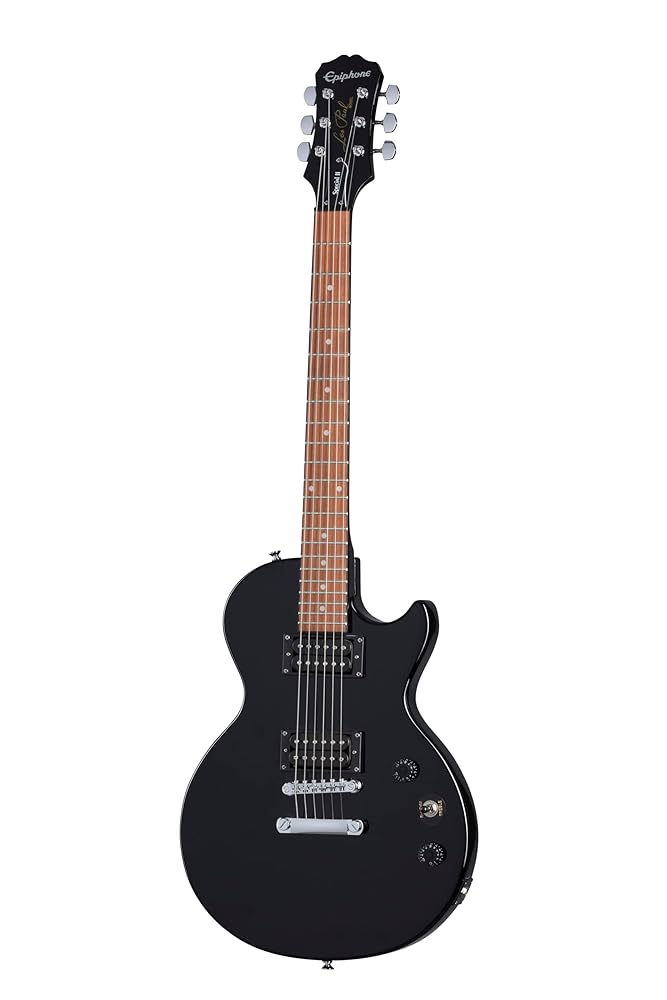
Epiphone Les Paul Special-II. A solid mahogany body, humbucking pickups and the LockTone Tune-O-Matic bridge with stopbar tailpiece, which makes string changes straightforward. Suited to a beginner who wants the Les Paul shape and the thicker humbucker sound rather than a Stratocaster style guitar.
Epiphone Les Paul Special Satin E1. A lighter poplar body with a mahogany bolt on neck in the 1960s SlimTaper D profile and open coil humbuckers. A good pick if the weight of a full mahogany Les Paul puts you off, or if you have a smaller frame.
Epiphone SG Special Satin Walnut. The SG is the lighter of the two classic Gibson shapes, with easier access to the upper frets. This one uses the same SlimTaper D neck. Worth considering if you play standing up for long stretches.
Epiphone Les Paul 100. Mahogany body with a maple top, a mahogany neck and 700T and 650R humbuckers. This is the step where an Epiphone starts to sound and feel like the instrument it is modelled on. For a second guitar or a first serious one.
The wider electric guitars section has the rest, and the same two tier pattern shows up at Fender, which is covered in Fender vs Squier. If you are earlier in the decision, start with acoustic or electric for beginners.
Common questions
Is an Epiphone Les Paul a real Les Paul?
Yes, in the sense that matters legally and practically. Gibson owns both the design and the Epiphone brand, so an Epiphone Les Paul is an officially built Les Paul at a lower price point. It is not a Gibson, and the specification sheet differs, but it is not a knock off either.
Which Epiphone upgrade gives the biggest improvement?
A proper setup first, then pickups. A setup fixes action, intonation and nut slots, and it changes how the guitar feels every time you pick it up. Pickups change the sound, and on entry level Epiphones they are the component most obviously built to a price.
How can you tell the Epiphone tiers apart?
Look at the neck joint and the body woods. A bolt on neck and a poplar body place a model at the entry level. A set neck, a mahogany body and a maple top place it higher. The Inspired by Gibson collection is identifiable by the Gibson style headstock outline.
Will an Epiphone hold up for gigging?
The mid and upper tiers do, and plenty of working musicians use them. The practical weak points on cheaper models are tuners and output jacks, both of which are inexpensive to replace with sturdier parts if the guitar starts leaving the house regularly.