
A practice routine sticks when it is short, fixed and impossible to avoid. Twenty minutes, at the same time each day, on a guitar that is already out of its case and within arm’s reach of where you sit.
Almost every failed practice plan fails for the same two reasons. It was too ambitious to sustain on a bad day, and the guitar was three steps too far away. Fix those and the routine below runs itself. Here is the structure, block by block, plus how to tell it is working.
Key takeaways
- Twenty minutes daily beats two hours once a week, because skills consolidate between sessions.
- Split the time into four five minute blocks: warm up, one drill, one song, free play.
- Keep the guitar on a stand, tuned, with a clip on tuner already attached.
- Measure progress with a one minute chord change count, not with how you felt.
- Protect the free play block. It is what makes you come back tomorrow.
The twenty minute routine
Minutes 0 to 5: tune and warm up. Tune every string, then play a simple chromatic exercise up and down the first four frets, one finger per fret, slowly and evenly. This wakes up the fretting hand and trains finger independence at the same time. Keep it slow enough that every note rings cleanly.
Minutes 5 to 10: one drill, on a timer. Pick two chords and change between them for the full five minutes. Not three chords, not a song, just the change. Set a timer so you are not watching the clock. This is the least entertaining block and the one that produces the most measurable progress.
Minutes 10 to 15: one song, one section. Work on a single part of a single song rather than playing the whole thing badly. Loop the four bars that are giving you trouble. Slow them down until they are clean, then speed up gradually.
Minutes 15 to 20: free play. Play whatever you like. Something you already know, something you are inventing, a riff that sounds good. No goals and no correction. This block is not optional filler. It is the reward that keeps the other fifteen minutes running.
Why the free play block matters
Practice that is purely corrective becomes a chore, and chores get skipped. The last five minutes exist so the session ends on something that sounds like music rather than on a drill you were still getting wrong.
There is a practical benefit too. Free play is where you find out what you can do without thinking. Things that felt impossible in month one turn up in your free play in month three without you deciding to use them.
Frequency beats length
Physical skills consolidate in the gaps between sessions, not inside them. Six twenty minute sessions across a week give you six of those gaps. One two hour session gives you one, and by the end of it your hand is tired and you are reinforcing sloppy repetitions.
On days when twenty minutes is not going to happen, play for five. Five minutes keeps the habit alive and keeps your calluses intact. The goal is never to break the chain, not to hit a number. This is the mechanism behind the timelines in how long it takes to learn guitar.
Set the space up so practice costs nothing
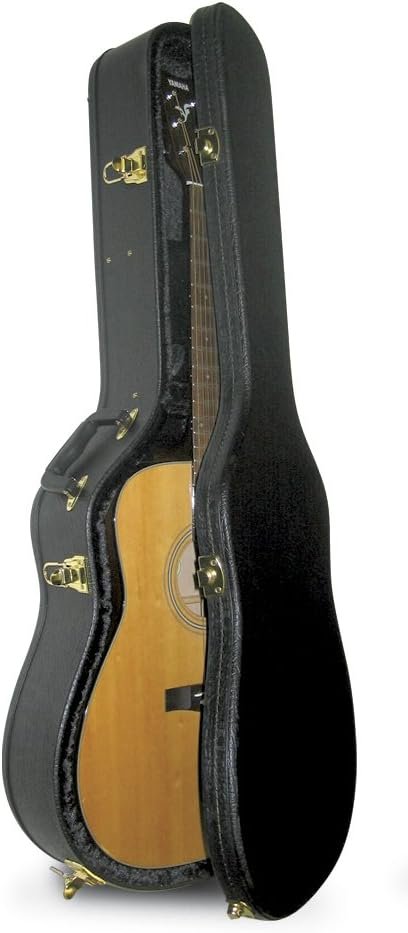
Use a stand, not the case. A guitar in a case at the back of a cupboard adds a decision to every session, and decisions are what get skipped. A guitar on a stand in the room you already sit in gets picked up. If you need the case for storage reasons, our note on how to store a guitar covers the humidity trade offs.
Leave the tuner clipped on. A clip on tuner that lives on the headstock removes twenty seconds and one more excuse. Being in tune also matters more than beginners realise, because an out of tune guitar makes correct playing sound wrong.
Leave the amp plugged in. If you play electric, hunting for a cable and a power socket is enough friction to lose a session.
Solve the noise problem before it stops you. If you skip practice because of housemates, neighbours or a sleeping child, that is a gear problem with a gear answer. Options are set out in quiet guitar practice options.
How to measure progress without guessing
Once a week, run a one minute chord change count. Pick two chords, set a timer for sixty seconds, and count how many clean changes you make. Write the number down. That is it.
The number is useful because progress on guitar is invisible day to day. Sessions feel identical for weeks and then something clicks. A written count shows the climb you cannot feel, and it turns a vague sense that you are stuck into evidence that you are not.
Recording yourself once a month does the same job for rhythm and tone. Phone quality is fine. You are listening for timing, not for fidelity.
What to add around month three
Stretch to thirty minutes by expanding the drill and song blocks to ten minutes each, and keep the warm up and free play at five. Add a metronome to the drill block, starting slower than feels necessary.
This is also the point to introduce barre chords, in short doses. Two minutes a day of attempting an F shape beats twenty minutes once a week, because the limit is hand strength and strength builds through frequency.
Change your strings if you have not. Old strings sound dull and feel rough, and both quietly make practice less appealing. See how often to change guitar strings.
Instruments from the review library that suit a daily routine
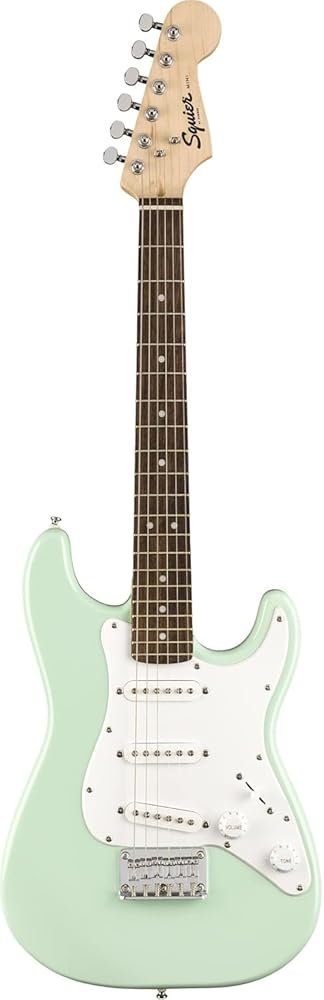
Squier Mini Stratocaster. A short scale, lightweight poplar bodied electric with a C shaped neck and a hardtail bridge that holds tuning. Easy to leave on a stand and easy to pick up for five minutes, which is exactly the behaviour you want to encourage.
Donner DST-152 kit. Arrives with the amp, tuner, capo, strap and gig bag included, so nothing is missing on day one. Useful when the goal is to remove every reason not to start.
Yamaha C40II. Nylon strings are quieter and need less finger pressure, so daily sessions are more comfortable in the early weeks and less disruptive to everyone else in the house.
Yamaha SLG200N Silent Guitar. A nylon string instrument built for headphone practice, with a built in tuner and effects. The serious answer if noise is the actual reason your routine keeps collapsing. If you only need a small amp, the Sawtooth 10 watt practice amp is a simpler option.
More options are in the acoustic guitars section, and the supporting kit is covered in accessories beginners need.
Common questions
Is twenty minutes really enough?
For the first year, yes, provided it happens most days. Twenty focused minutes with a structure produces more than an unfocused hour. Once the habit is solid, extending the session is easy. Building the habit is the hard part.
What time of day works best?
Whichever one you will actually keep. Attaching practice to something you already do every day, such as immediately after dinner, works better than picking a time in the abstract. Consistency of trigger matters more than the hour on the clock.
Should I use a metronome from day one?
Not in the first few weeks. When you cannot yet form chords reliably, a metronome adds pressure without teaching much. Introduce it around the point where your chord changes are landing, then keep it in the drill block permanently.
What do I do when I lose motivation?
Cut the session to five minutes of free play only and drop the drills for a week. The habit is the asset, and it is much harder to rebuild than to maintain. Learning one new song you actually like usually restarts the momentum faster than any change to the routine itself.